Veerangana Durgavati Tiger Reserve
- Home
- Veerangana Durgavati Tiger Reserve
Veerangana Durgavati Tiger Reserve
Veerangana Durgavati Tiger Reserve: The Complete Safari and Travel Guide
If you’ve typed “Veerangana Durgavati Tiger Reserve” into Google, you’ve probably run into the same problem I did while researching this piece: every website quotes a different area, half of them still use the reserve’s old name, and almost none of them tell you what a safari here actually costs or feels like. That’s frustrating when you’re trying to plan an actual trip, not just read trivia.
So here’s the plan for this guide. We’ll walk through the history, sort out the confusing numbers, cover exactly how to book a jeep safari, and be upfront about who this reserve suits and who it doesn’t. No padding, no recycled Wikipedia paragraphs — just what you need before you book tickets.
Best Time to Visit Veerangana Durgavati Tiger Reserve
Best Time to Visit Veerangana Durgavati Tiger Reserve
The “best time” really depends on what you’re hoping to see, so let’s break it down by interest instead of giving one blanket answer.
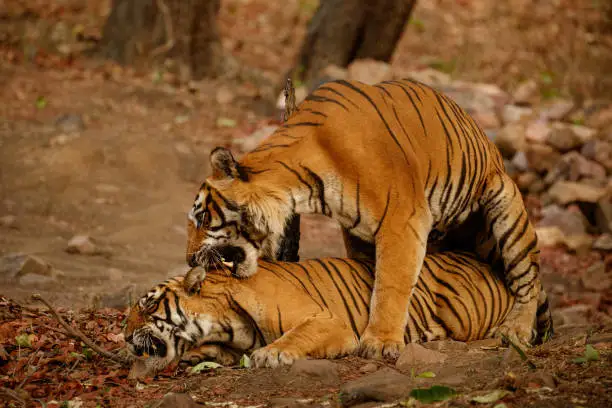
For tiger and leopard sightings — March to June. The forest thins out in the heat, and animals gather near water sources, which improves your odds considerably.
For birdwatching — November to February. Migratory birds arrive along the Bamner River, and cooler mornings make for longer, more comfortable outings.
For wolves and open grassland wildlife — Winter mornings and early summer evenings, when packs are more active across the open stretches of the Mohli range.
For butterflies — Just after the monsoon, roughly September to October, when the trails fill with color.
Similar to many tiger reserves in India, the core zone generally closes during the monsoon season (from July to September) to facilitate breeding and ensure road safety. Always confirm current closure dates with the forest department before you book travel, since these can shift slightly from year to year.
What Is Veerangana Durgavati Tiger Reserve?
Veerangana Durgavati Tiger Reserve sits on the Vindhyan plateau in Madhya Pradesh, spread across the Sagar, Damoh, and Narsinghpur districts. It’s the largest tiger reserve in the state by land area, and it holds a genuinely unique ecological role — it links Panna Tiger Reserve in the north with Satpura Tiger Reserve in the south, working as a wildlife corridor rather than an isolated patch of forest.
Here’s the part that trips up most research: this reserve wasn’t built from scratch. It’s the result of merging two older protected areas — Nauradehi Wildlife Sanctuary and Durgavati Wildlife Sanctuary — into one combined tiger reserve. That merger explains why you’ll see two very different area figures online. Some pages list around 1,197 square kilometers, which reflects the old Durgavati sanctuary alone. The current, accurate figure for the full tiger reserve is 2,339 square kilometers, made up of roughly 1,414 sq km of core zone and 925 sq km of buffer.
| Quick facts table: | |
|---|---|
| Detail | Information |
| Location | Sagar, Damoh, Narsinghpur districts, Madhya Pradesh |
| Total area | 2,339 sq km (core: 1,414 sq km, buffer: 925 sq km) |
| Sanctuary declared | 1996 |
| Upgraded to tiger reserve | September 2023 |
| Rank in Madhya Pradesh | 7th tiger reserve, largest by area |
| Managed by | Madhya Pradesh Forest Department, under NTCA |
If a friend asks you “is this the same as Nauradehi Wildlife Sanctuary?” — yes, essentially. Nauradehi was folded into the current reserve, and you’ll still find that older name on some signage and older documents.
How to Book Veerangana Durgavati Tiger Reserve Safaris
Online safari booking for Veerangana Durgavati Tiger Reserve runs through MPOnline and the forest department’s dedicated portal at forest.mponline.gov.in. The process is straightforward:
Visit the official booking portal.
Select Veerangana Durgavati Tiger Reserve from the list of reserves.
Choose your preferred zone (Mohli range, if wolves or open-terrain sightings are your priority).
Pick your date and slot — morning or evening.
Complete payment and download your confirmation.
If you’d rather not handle jeep safari booking yourself, most rest houses and local operators near Sagar and Damoh can arrange it for you, usually for a small service fee.
How to Book Veerangana Durgavati Tiger Reserve Safaris
Veerangana Durgavati Tiger Reserve Safari Zones
The Mohli range is the reserve’s core safari zone and the one most visitors experience first. Its open, savannah-like terrain — sometimes compared to South African veld — is exactly why it’s such strong wolf and blackbuck territory, and why photographers tend to get cleaner sightlines here than in denser Indian forests.
Beyond Mohli, other ranges across the reserve’s Sagar, Damoh, and Narsinghpur spread are still being developed for tourist access, which is typical for a reserve this young. Within the sanctuary, Chakai Nala offers a quieter interior stream experience, and Chhewla Pond is worth a stop for water-dependent species.
Practical tip: if wolves or open-terrain photography are your priority, specifically request the Mohli range when booking — it has the strongest track record for those sightings.
Veerangana Durgavati Tiger Reserve Packages
Veerangana Durgavati Tiger Reserve Packages
The reserve doesn’t yet have the kind of bundled multi-day tour packages you’d find at Bandhavgarh or Kanha, where private operators combine stay, meals, and multiple safaris into one price. At VDTR, it’s more common to book your safari and accommodation separately — through the forest department portal for the safari, and directly with rest houses or nearby hotels for your stay. If you’re working with a local travel agent in Sagar or Jabalpur, ask whether they can bundle a multi-day itinerary for you, since some regional operators do offer this informally even though it’s not standardized yet.
Practical Booking Tips
Book at least a few days in advance during peak season (March–June and November–February).
Group size per vehicle is typically capped, so larger families should plan for more than one jeep.
Wear neutral-colored clothing, bring sunscreen and a hat — the Mohli range offers very little shade.
Carry a fully charged camera battery; there’s no charging point once you’re out on safari.
Check current photography equipment rules before your trip if you’re bringing professional gear.
Where to Stay: Resorts Near Veerangana Durgavati Tiger Reserve
Let’s be upfront about this one, because it changes how you should plan your trip. If you’re specifically searching for resorts at Veerangana Durgavati Tiger Reserve, you won’t find a luxury resort cluster right at the gate the way you would at Bandhavgarh or Kanha.
Inside the reserve, your main options are forest department rest houses:
Mohli Forest Rest House — considered the heart of the reserve, and the most atmospheric option if you want to actually stay inside the forest.
Sarra Rest House — a smaller property with a couple of double suites available.
Both are clean, functional, government-managed stays — not resort-style amenities, but genuinely good if you want to fall asleep to actual forest sounds.
If comfort is non-negotiable for you, your better move is basing yourself in Sagar or Jabalpur, where you’ll find more conventional hotels, and day-tripping into the reserve for safaris. This is especially worth knowing if you’re a luxury traveler or planning a honeymoon trip where a proper room matters as much as the wildlife.
History of Veerangana Durgavati Tiger Reserve
The land itself was protected long before it became a tiger reserve. It started as a wildlife sanctuary in 1996 and stayed relatively under the radar for over two decades, known mostly to forest officials and dedicated naturalists rather than mainstream tourists.
Everything changed in 2018, when the forest department released an orphaned tigress, known as N1, along with a male tiger, N2, into the sanctuary as part of a tiger reintroduction program. That single decision reshaped the reserve’s future. The population grew steadily in the years after, and by September 2023, the National Tiger Conservation Authority officially notified it as a tiger reserve — Madhya Pradesh’s seventh, and its biggest by area.
Biography of Veerangana Durgavati Tiger Reserve
The reserve is named after Rani Durgavati, a 16th-century Gondwana queen who took charge of her kingdom after her husband’s death and led it through a period of intense pressure from Mughal expansion. When the Mughal general Asaf Khan invaded her territory in 1564, she chose to fight rather than retreat, and died on the battlefield defending her land.
Singorgarh Fort, which still stands inside the reserve today, is tied directly to her reign. If you’re someone who enjoys pairing history with wildlife, building a short stop at the fort into your safari day adds real depth to the trip — it’s a five-minute detour that turns a wildlife outing into something with actual historical weight behind it.
Birding in Veerangana Durgavati Tiger Reserve
For birding, the Bamner River corridor is where you’ll want to spend your mornings. The reserve hosts the Indian Paradise Flycatcher — Madhya Pradesh’s state bird — along with raptors like the Crested Serpent Eagle, plus kingfishers and storks along the riverbanks.
Vulture populations here are also worth noting. VDTR reportedly ranks among the top spots in the state for vulture numbers, which matters more than it sounds — vulture populations have collapsed across much of India over the past few decades, so a healthy population here is a genuine sign the ecosystem is functioning well.
How to Reach Veerangana Durgavati Tiger Reserve
Getting to the reserve isn’t complicated, but it does take some planning since it’s still a developing tourist destination compared to Bandhavgarh or Kanha.
By road:
Sagar – 70 km
Damoh – 70 km
Jabalpur – 95 km
Narsinghpur – 110 km
By rail:
Sagar, Damoh, and Jabalpur are your best railhead options, all well-connected to major Indian cities by regular trains.
By air:
Jabalpur Airport is the closest, roughly 95 km away. If you’re flying in from outside India or from another state, Jabalpur or Bhopal are your realistic entry points, followed by a road transfer.
One thing worth knowing before you set off: mobile signal gets patchy once you’re inside the buffer and core zones. Download offline maps in advance, and share your safari schedule with your accommodation so someone knows your rough plan for the day.
Flora and Fauna of Veerangana Durgavati Tiger Reserve
The vegetation here is mostly tropical dry deciduous forest, with teak mixed in alongside other native tree species, opening into wide grassland stretches that feel closer to African savannah than typical Indian jungle. That open terrain is exactly what makes the wildlife-viewing experience here different from denser reserves.
Predators you might spot:
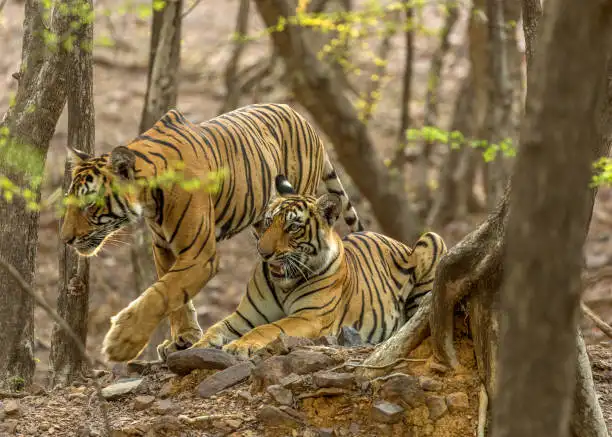
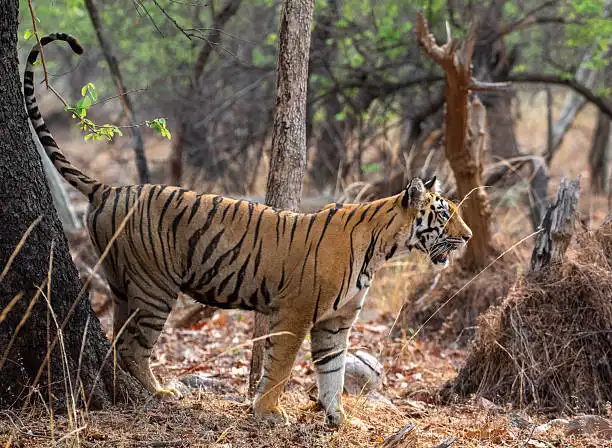
Tigers — the population has grown steadily since the 2018 reintroduction
Leopards — often found along rocky cliffs and outcrops
Indian Grey Wolves — genuinely the reserve’s standout draw, more on this below
Striped hyenas, jackals, jungle cats, and foxes
Herbivores and prey species:
Chital
Sambar
Blackbuck
Several turtle species living along the Bamner River
Here’s the honest comparison most articles skip: if your only goal is a guaranteed tiger photo, Bandhavgarh will serve you better — tiger density there is much higher. What you’re trading for at VDTR is a quieter, far less crowded experience, plus wildlife you genuinely won’t find as reliably elsewhere.
Why the Indian Grey Wolf Matters Here
Most travel writing about this reserve leads with tigers and barely mentions wolves — which is a missed opportunity, because this is one of the better places in India to actually watch wolf pack behavior. The open, scrub-covered Mohli range gives wolves room to move and hunt in the open, unlike the dense forest cover where you’d usually only catch a fleeting glimpse. If you’re a photographer who already has tiger shots from elsewhere and wants something different, pack behavior and territorial displays here are worth building a trip around.
Veerangana Durgavati Tiger Reserve Safari Charges and Ticket Price
Reported safari charges and ticket prices vary noticeably across different booking sources — we found figures ranging from roughly ₹250 to over ₹1,300 per vehicle depending on the source and season, with gypsy hire charged separately. Because these numbers shift, always confirm the current Veerangana Durgavati Tiger Reserve ticket price directly on the official MPOnline portal before finalizing your trip. Third-party travel sites sometimes carry outdated rates.
Veerangana Durgavati Tiger Reserve Timings
Safari timings run in two slots — morning and evening — with exact start times shifting slightly by season (earlier starts in summer, later in winter). Confirm your exact slot timing at the point of booking, since the forest department adjusts these throughout the year based on daylight hours.
Who Should Visit Veerangana Durgavati Tiger Reserve?
Not every reserve suits every traveller, so here’s an honest breakdown by the kind of trip you’re planning.
Wildlife photographers and birdwatchers — a strong match. Low visitor numbers mean less competition for good angles, and the wolf and vulture populations give you shots you won’t easily get elsewhere.
Families with kids — workable, but go in with the right expectations. Roads are rough, sighting guarantees are lower than at Bandhavgarh, and amenities are basic.
Couples and honeymooners — the appeal here is genuine quiet, not luxury. Pair a VDTR safari with a comfortable stay in Sagar or Jabalpur for the best of both.
Luxury travellers — stay in Jabalpur or Sagar and day-trip in, since in-reserve lodging is rest-house standard, not resort standard.
Students and educational groups — an excellent fit. The tiger reintroduction story and the reserve’s corridor role give you a real conservation case study to build a trip around.
International tourists — very doable, provided you plan around patchy mobile connectivity and build in a comfortable base outside the reserve itself.
Adventure and photography-focused travelers — a strong pick precisely because it’s less developed and more unpredictable than the well-worn safari circuits.
| How Veerangana Durgavati Tiger Reserve Compares to Other MP Reserves | |||||
|---|---|---|---|---|---|
| VDTR | Bandhavgarh | Kanha | Pench | Panna | |
| Tiger density | Low, growing | Very high | High | Moderate | Moderate-high |
| Crowds | Low | High | Moderate-high | Moderate | Low-moderate |
| Standout wildlife | Wolves, vultures, upcoming cheetahs | Tigers | Tigers, barasingha | Tigers, birdlife | Tigers, gharials |
| Accommodation | Basic rest houses | Wide luxury range | Wide luxury range | Good mid-to-luxury range | Growing luxury options |
| Best suited for | Photographers, adventure seekers, students | Guaranteed tiger sightings | Classic safari experience | Family safaris | Quieter alternative to Bandhavgarh |
If a guaranteed tiger sighting is non-negotiable, Bandhavgarh or Kanha will serve you better. If you’d rather trade sighting certainty for a quieter, more exploratory trip with genuinely different wildlife, VDTR is the stronger choice.
FAQs
Is Veerangana Durgavati Tiger Reserve the same as Nauradehi Wildlife Sanctuary? Yes, essentially. Nauradehi Wildlife Sanctuary was merged with Durgavati Wildlife Sanctuary to form the current tiger reserve, notified in September 2023. Older documents and some local signage still use the Nauradehi name.
What is the best time to visit Veerangana Durgavati Tiger Reserve? March to June for tiger and leopard sightings, November to February for birding, and just after the monsoon for butterflies. The core zone typically closes during monsoon months.
How do I book a jeep safari at Veerangana Durgavati Tiger Reserve? Book online through MPOnline or forest.mponline.gov.in. Select the reserve, choose your zone and time slot, and complete payment to receive your confirmation.
What are the current safari charges and ticket prices? Prices vary by source and season, so always check the official MPOnline portal for current rates before you travel rather than relying on third-party sites.
What are the safari timings? Safaris run in morning and evening slots, with exact start times shifting slightly by season. Confirm your slot at the time of booking.
Are there resorts near Veerangana Durgavati Tiger Reserve? Not directly at the gate. In-reserve stays are forest rest houses at Mohli and Sarra. For resort-style comfort, base yourself in Sagar or Jabalpur and day-trip in.
Is Veerangana Durgavati Tiger Reserve good for first-time safari visitors? Yes, but expect a quieter, less tourist-optimized experience than Bandhavgarh or Kanha, with more basic infrastructure and lower guaranteed sighting rates.
What is the distance from Jabalpur or Khajuraho to Veerangana Durgavati Tiger Reserve? Jabalpur is about 95 km away. Khajuraho is farther and best combined as part of a multi-day Madhya Pradesh circuit rather than a single day trip.
Veerangana Durgavati Tiger Reserve isn’t trying to be Bandhavgarh, and that’s actually its biggest strength. You’re not getting guaranteed tiger sightings or resort-lined entry gates — you’re getting a quieter, still-developing landscape where wolf packs move across open grassland, vultures still circle in healthy numbers, and cheetahs may soon share the same terrain as tigers for the first time in India. If that kind of trip appeals to you more than a crowded, well-trodden safari circuit, this reserve deserves a spot on your list.
Ready to Plan Your Safari?
Book your Veerangana Durgavati Tiger Reserve jeep safari directly through the official MPOnline portal, and confirm current safari charges, timings, and zone availability before you travel. Still deciding between reserves? Compare VDTR against Bandhavgarh, Kanha, and Pench to see which one actually fits the trip you want to take.