
Jeep Safari Ranthambore
- Home
- Jeep Safari Ranthambore
Jeep Safari Ranthambore
Jeep Safari Ranthambore: The Complete Guide to Zones, Prices, Timings & Booking
You’ve probably already read three or four articles about jeep safari in Ranthambore, and they all sound the same — ten zones, book in advance, spot a tiger, good luck. None of them tell you which zone is actually worth hoping for, why one traveller pays ₹2,200 and another pays ₹4,500 for the same seat, or what to do when the booking site says “no slots” and your trip is in five days.
This guide is built to answer the questions people actually type into Google after they’ve already read the generic version — price, timings, contact numbers, booking steps, and the honest stuff about tiger sightings that most operator websites skip over because it doesn’t sell as well.
By the end, you’ll know exactly how a Ranthambore jeep safari booking works from start to finish, what it should cost, and how to avoid the two or three mistakes that trip up most first-time visitors.
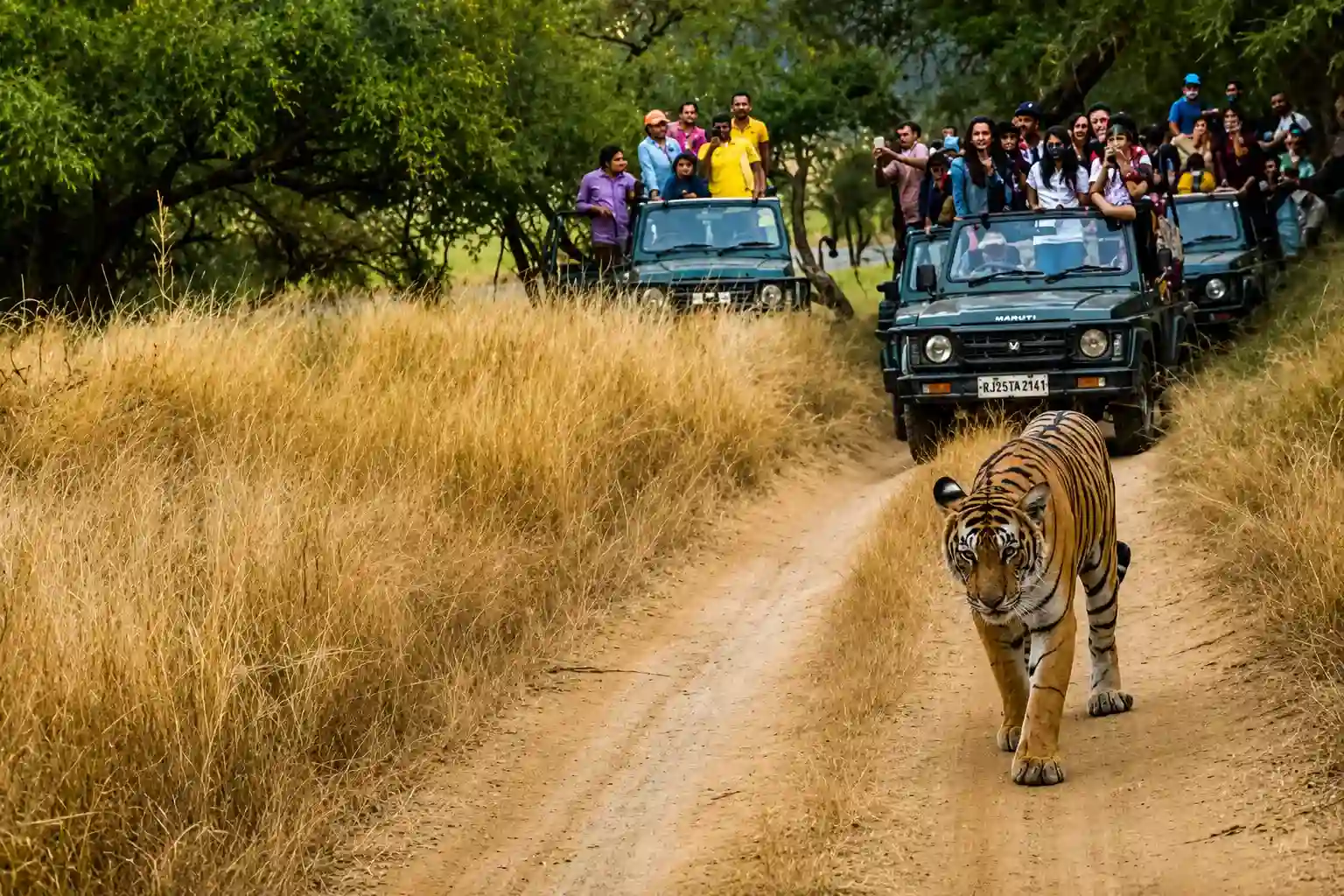
Jeep Safari In Ranthambore National Park
What Is a Jeep Safari in Ranthambore, Exactly?
A jeep safari in Ranthambore means riding through the tiger reserve in an open-top Maruti Suzuki Gypsy — no roof, no doors, just you, a driver, a naturalist guide, and up to five fellow travellers (fewer, if you book a private jeep). It’s the go-to choice for photographers, couples, and anyone who wants a closer, quieter experience than the alternative — a 20-seater canter.
Each shift runs about three and a half hours, twice a day, across ten numbered safari zones. You don’t get to hand-pick your exact zone; you choose a range (Zone 1–6 or Zone 7–10), and the forest department assigns the specific one. I will elaborate further on the significance of that shortly.
If you’re comparing “jeep safari in Ranthambore” against a canter safari, here’s the short version: jeeps are more agile, quieter, and better for photography. Canters are cheaper and give you a height advantage over tall grass, but you lose flexibility. We’ll break this down properly further down.
A Quick History of Jeep Safari in Ranthambore
Ranthambore wasn’t always this regulated. Until the early 1970s, it functioned more like a hunting reserve under royal patronage than a protected park. That changed in 1973, when Ranthambore became one of the first nine reserves brought under Project Tiger, India’s flagship tiger conservation program, launched in response to alarmingly low national tiger numbers.
During the 1980s and 90s, the previously open and unrestricted vehicle access transitioned to a permit-based system, a change largely attributed to conservationists such as Fateh Singh Rathore, who is still fondly referred to in the area as “the Tiger Man of Ranthambore.” His work shaped a lot of what you experience today — fixed zones, limited daily vehicle numbers, and strict guide protocols, all designed to protect the tiger population while still letting people witness it responsibly.
That’s worth knowing, honestly, because it changes how you experience the safari. You’re not just on a game drive — you’re moving through one of India’s genuine conservation success stories. Ranthambore’s tiger population has grown substantially since those early Project Tiger years, and the rules that sometimes feel inconvenient (yes, including the mobile phone ban) exist because they’ve actually worked.
Jeep Safari Ranthambore Zones — Which One Should You Hope For?
This is where most guides get vague. “Zones 1 to 6 are better” is true, but it’s not the full picture, because sighting strength within that range shifts as tiger territories change over time — a dominant tigress moving zones, cubs maturing and dispersing, that kind of thing.
| Here's a realistic, practical breakdown: | |||
|---|---|---|---|
| Zone | Sighting Reputation | Terrain | Best For |
| Zone 1 | Strong, close to Padam Talao & the fort | Mixed forest, lakes | First-timers, classic views |
| Zone 2 & 3 | Consistently strong | Open grassland, water bodies | Photographers |
| Zone 4 | Reliable, quieter than 1–3 | Dense forest patches | Fewer crowds at sightings |
| Zone 5 | Good, near Rajbagh | Lake-adjacent | Birdwatchers + tiger spotting |
| Zone 6 | Solid | Rocky, hilly | Varied-terrain lovers |
| Zone 7 & 8 | Weaker, no canter access | Denser | Solitude over guaranteed sightings |
| Zone 9 & 10 | Improving as territories expand | Mixed, less frequented by tourists | Off-beat safari enthusiasts |
A quick caveat, because honesty matters more than a tidy table: zone allotment is largely random within your chosen range. Even knowing this data doesn’t guarantee you’ll land in a strong zone. If sighting odds are your top priority, it’s worth asking your operator (or the forest department directly) about the most recent week’s sighting activity — that’s more current and useful than anything a static article, including this one, can promise you.
Jeep Safari Ranthambore Timings
Timings shift slightly across the year, following sunrise and sunset:
Winter (Oct–Feb): Morning shift roughly 7:00 AM–10:30 AM, evening shift roughly 2:00 PM–5:30 PM
Summer (Mar–Jun): Morning shift starts earlier, around 6:00 AM–9:30 AM, evening shift runs later, into early evening
Monsoon (Jul–Sep): Only Zones 6–10 operate, with timings similarly split into two shifts
One detail that catches people off guard: the park closes on different days for different zones — Zones 1–5 close on Wednesdays, Zones 6–10 close on Tuesdays. Double-check this against your specific zone range before locking in travel dates, or you might show up to a closed gate.
It’s worth noting that these timings aren’t just bureaucratic guesswork — they’re tied directly to visibility and animal activity patterns, so showing up right at gate-opening time genuinely does make a difference to your sighting chances. Many first-time visitors assume they can be flexible about arrival, only to realize that entry is checked strictly against your permit slot, and turning up even twenty minutes late can mean forfeiting the safari altogether.
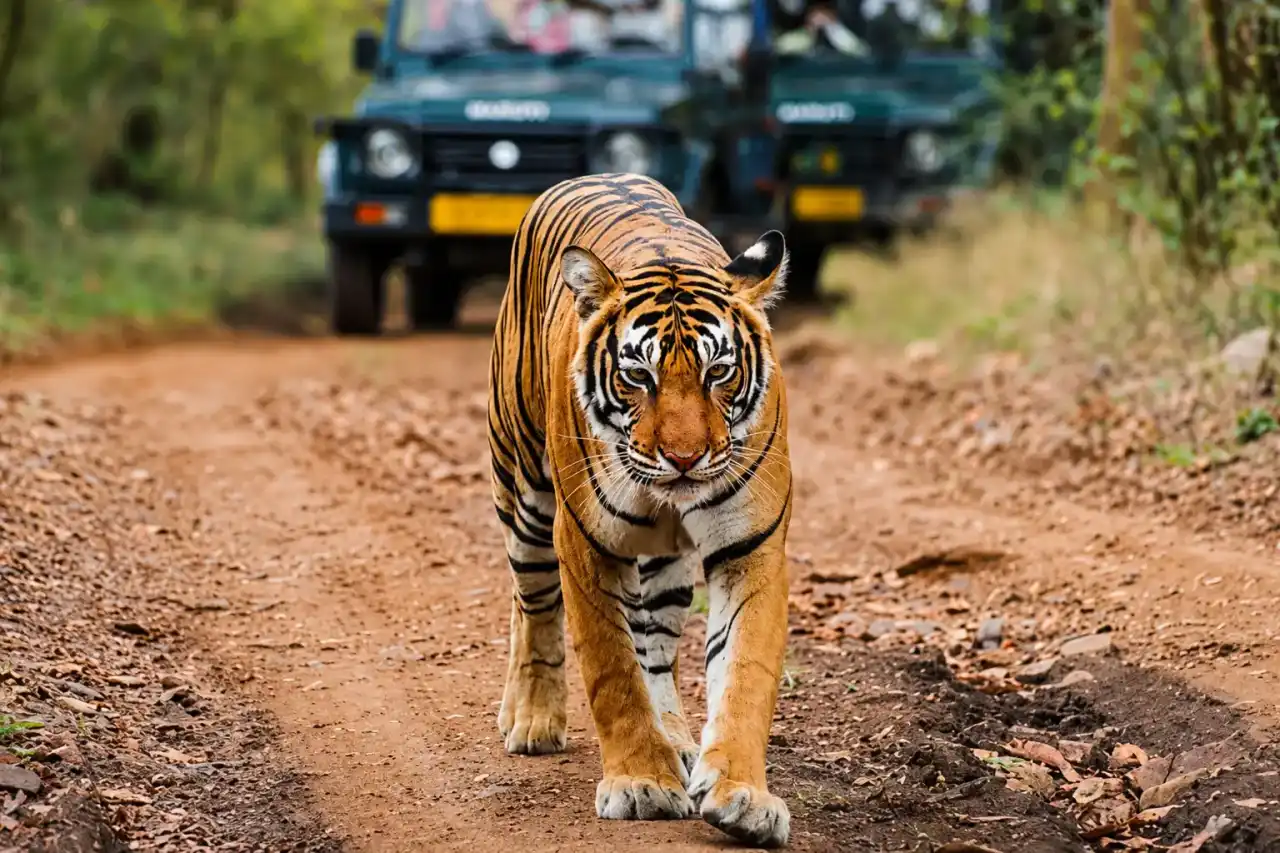
Jeep Safari Ranthambore Timings
| Period | Morning Safari | Evening Safari |
|---|---|---|
| Oct 1 – Oct 31 | 6:30 AM – 10:00 AM | 2:30 PM – 6:00 PM |
| Nov 1 – Jan 31 | 7:00 AM – 10:30 AM | 2:00 PM – 5:30 PM |
| Feb 1 – Mar 31 | 6:30 AM – 10:00 AM | 2:30 PM – 6:00 PM |
| Apr 1 – May 15 | 6:00 AM – 9:30 AM | 3:00 PM – 6:30 PM |
| May 16 – Jun 30 | 6:00 AM – 9:30 AM | 3:30 PM – 7:00 PM |
Private Jeep Safari Ranthambore — Is It Worth the Extra Cost?
A private jeep safari means booking all six seats yourself, so it’s just your group, the driver, and the guide. It costs more, but the trade-off is real: your naturalist can wait longer at a fresh pugmark, reposition for better light, or linger at a sighting instead of rushing to accommodate five strangers with different priorities.
It’s genuinely worth it for photographers who need flexibility, couples wanting a quieter experience, and families who’d rather not share a bumpy three-hour ride with strangers. For a solo budget traveller or someone happy to meet other tourists, a shared jeep or canter does the job just as well for less money.
| Jeep Safari vs Canter vs Private Jeep — Quick Comparison | |||
|---|---|---|---|
| Factor | Shared Jeep | Private Jeep | Canter |
| Capacity | 6, shared | 6, exclusive | 20, shared |
| Comfort | Good | Best | Moderate |
| Flexibility | Low | High | Lowest |
| Price | Moderate | Highest | Lowest |
| Best For | First-timers, couples | Photographers, honeymooners | Groups, budget travellers |
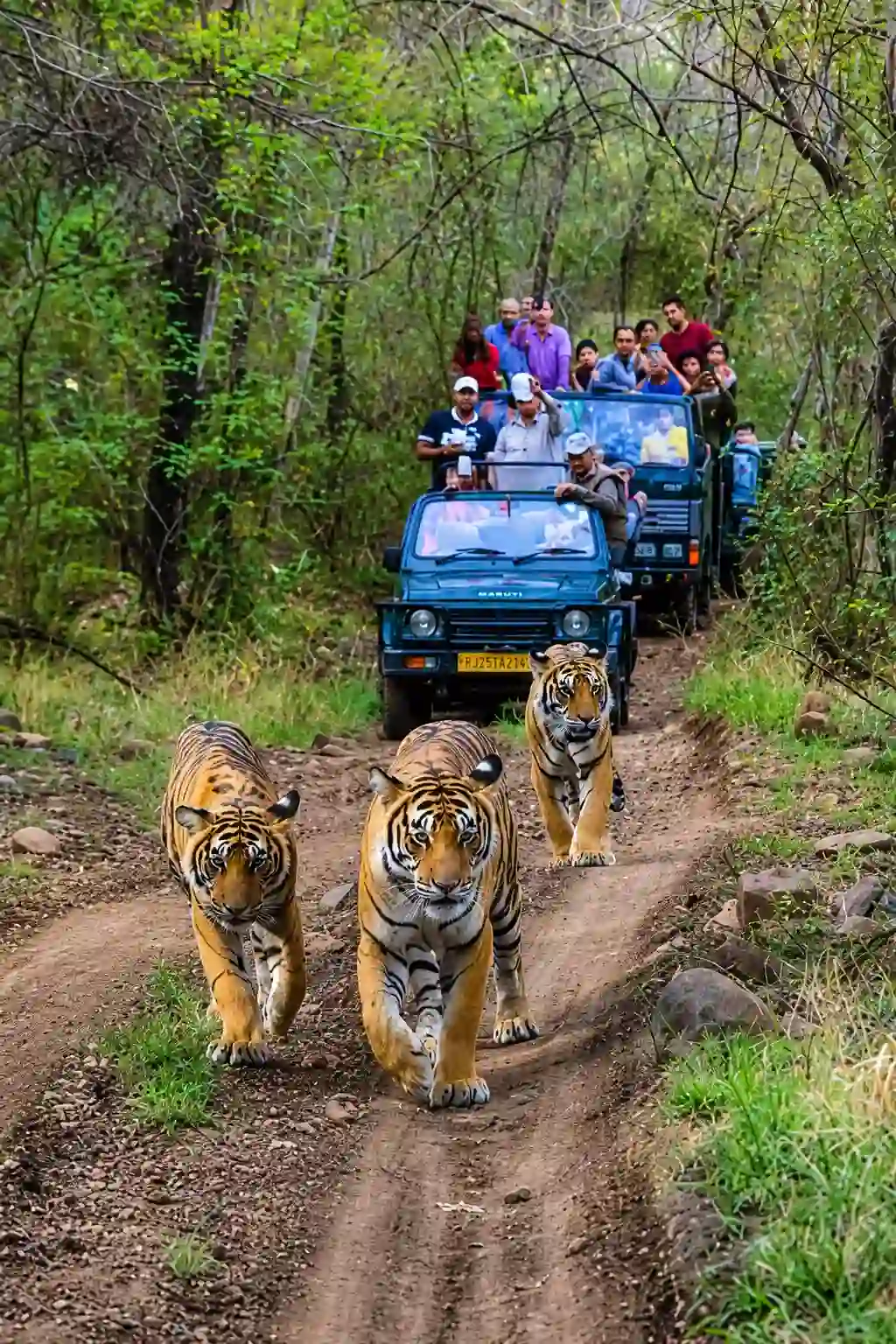
Jeep Safari Ranthambore Price
Jeep Safari Ranthambore Price, Cost & Ticket Price
Let’s talk numbers, because this is where a lot of confusion happens.
Shared jeep seat: approximately ₹2,000–2,500 for Indian nationals, ₹4,000–4,800 for foreign nationals
Canter seat: approximately ₹1,400–1,700 for Indians, ₹3,500–4,000 for foreign nationals
Private full jeep: the Indian per-seat rate multiplied by six, since all six seats must be paid for regardless of group size
These figures usually include the park entry permit, vehicle hire, driver, guide fee, and taxes. Hotel pickup and drop is almost always billed separately — don’t assume it’s bundled in.
Here’s the part worth knowing before you book: prices listed on individual tour-operator websites are frequently 20–40% higher than the forest department’s official base rate. That’s not automatically a red flag — operators are doing real work securing a permit during a competitive booking window, especially in peak season, when solo booking attempts often fail outright. But it’s worth comparing two or three sources before you commit, rather than booking the very first jeep safari Ranthambore price you come across.
If getting the absolute lowest cost matters more than convenience, the official Rajasthan Forest Department portal is the direct route — expect a clunkier interface, but no markup.
Jeep Safari Ranthambore Contact Number & Booking Assistance
Booking a jeep safari through Ranthambore’s official forest department portal can feel like a bit of a maze, especially if you’re doing it for the first time or trying to lock in a specific zone during peak season. The website has its quirks — slots vanish quickly, payment gateways sometimes lag, and if you’re not familiar with the zone numbers or timing slabs, it’s easy to end up with a booking that doesn’t quite match what you wanted. That’s exactly where phone-based booking assistance becomes genuinely useful rather than just a convenience. A good local operator who deals with these bookings daily can tell you within minutes which zones are actually open for your travel dates, which ones tend to have better tiger sighting odds that time of year, and whether a canter or a private gypsy makes more sense for your group size and budget.
If you’d rather not navigate the booking portal yourself, most established operators offer phone-based booking assistance and can check real-time zone availability faster than the self-serve site. When you reach out, have your travel dates, group size, and ID documents ready — it speeds up confirmation considerably. Insert your jeep safari Ranthambore contact number. Jeep Safari Booking Online
Jeep Safari Ranthambore Booking
Booking a jeep safari at Ranthambore isn’t quite as simple as picking a date and paying — the whole system runs through the Rajasthan forest department’s online portal, and seats open up exactly 90 days before the safari date. That’s the number to remember if you’re planning a trip: mark your calendar, because popular zones (especially Zone 3, known for regular tiger sightings) can sell out within hours of the window opening, particularly during winter months when weather makes for easier, more comfortable safaris.
Once you’re through the official booking, you’ll need to carry a valid photo ID that matches the name on your permit — the forest department checks this at the gate, and mismatches can genuinely get you turned away. It also helps to know that morning and evening shifts are booked separately, each roughly 3 to 3.5 hours long, so if you want both, that’s two separate bookings, potentially in two different zones since allocation isn’t guaranteed to be consistent. A lot of frustration around Ranthambore bookings comes from not knowing these small rules upfront, so reading the fine print before you book saves a lot of last-minute stress.
Lorem ipsum dolor sit amet, consectetur adipiscing elit. Ut elit tellus, luctus nec ullamcorper mattis, pulvinar dapibus leo.
How to Book a Jeep Safari in Ranthambore (Step-by-Step)
Ranthambore jeep safari booking online is straightforward in theory, but a few real-world snags trip people up:
Book up to 90 days in advance through the official forest department portal.
Choose your date, shift (morning/evening), and vehicle type (jeep/canter).
Submit ID proof for every passenger — Aadhaar, PAN, voter ID, driving license for Indians; passport for foreign nationals.
Pay the full fee upfront. There is no refund on confirmed bookings except for official park closures.
Carry the original ID document to the gate — photocopies and phone photos are often rejected.
Here’s what that process actually looks like in practice, which is where most guides stop short:
Jeep seats sell out fast. With only six seats per vehicle and twenty jeeps per shift, popular dates during peak season (November to February, and the tiger-friendly summer months of April–June) can sell out weeks or even months ahead. If you’re planning a trip during Diwali, Christmas, or any long weekend, book the moment your dates are locked in — not “next week.”
If the portal shows no availability, you have two realistic options: the Tatkal/last-minute quota at a steep premium, or going through a registered local operator who already holds blocks of permits. Be cautious here — only use operators registered with Rajasthan Tourism, and never pay a large advance to someone who can’t show you a real booking confirmation.
The portal itself can be glitchy during high-traffic booking windows (especially right when a new 90-day window opens). If a payment fails but money leaves your account, don’t panic — it usually resolves with a refund within a few days, but keep your transaction ID handy regardless.
Whichever route you take, completing your Ranthambore jeep safari booking online well ahead of peak season is the single biggest thing you control. When you’re ready, you can book your Ranthambore safari directly and check live seat availability for your dates.
Best Time to Visit for a Jeep Safari in Ranthambore
November to February is peak season — pleasant weather, scenic conditions, and heavy booking demand. Book well ahead if these months work for your schedule.
March to June tends to reward serious sighting-chasers. As vegetation thins and water sources shrink to a few visible points, tiger movement becomes more predictable. The trade-off is heat — temperatures can cross 40°C by May, which is tough for kids or older travellers.
July to September (monsoon) only opens Zones 6–10, and rain can suspend a shift entirely (usually with a refund). It’s the quietest, least crowded window, worth considering if solitude matters more to you than guaranteed sightings.
Quick guidance by traveller type: photographers and dedicated sighting-seekers → April–May. Families and comfort-focused travellers → December–February. Budget and solitude-focused travellers → June or September.
Jeep Safari Ranthambore Cost
Figuring out what you’ll actually spend on a gypsy ride through Ranthambore isn’t a one-line answer — it depends on where you’re from, which zone you get assigned, and whether you’re sharing the vehicle or renting it outright. Right now, Indian travellers pay somewhere close to ₹2,200 for a seat in the 6-seater open 4×4, while visitors coming from abroad are billed around $55 a head, and that figure is before the guide fee and taxes get stacked on. Going with the bigger canter instead works out lighter on the wallet since it carries up to twenty people, so anyone watching their budget closely might lean that way.
A lot of first-time visitors don’t realize the ticket price from the forest office is only part of the bill — there’s usually a naturalist’s fee, and if you’re booking through a local agent instead of the government portal directly, a small convenience charge too. Things get pricier around long weekends and the October-to-March stretch, when demand for last-minute permits pushes what middlemen charge. Honestly, the smartest move is booking well ahead, cross-checking the current rate card on the official Rajasthan forest site before paying anything, and keeping a little extra aside for things like seat padding or the ride to the entry gate.
Will You Actually See a Tiger?
Here’s the honest answer most booking pages avoid: there’s no guarantee. Ranthambore has one of India’s strongest sighting track records, but a single safari is still down to chance — expect somewhere between a coin-flip and a decent likelihood, depending heavily on season and zone.
If seeing a tiger genuinely matters to you, book two or three safaris across different zones and shifts rather than relying on one attempt. Multiple tries meaningfully shift the odds in your favor.
And if the tiger doesn’t show up, the trip still delivers. Ranthambore offers strong consolation sightings — leopards, sloth bears, marsh crocodiles, and over 300 recorded bird species. Several zones also pass close to Ranthambore Fort, a centuries-old hilltop fortress housing the revered Trinetra Ganesh Temple, worth the visit regardless of what wildlife you spot that day.
Safari Rules, Safety & Packing Tips
Mobile phones are banned during the safari, under a Supreme Court order — this is actively enforced, not just a suggestion.
Physical ID is checked at the gate, not just at the time of booking.
Plastic is prohibited inside the park — carry a reusable bottle instead.
Dress in layers for winter mornings, which get genuinely cold before sunrise.
Wear a hat and sunglasses for summer shifts, and closed shoes for the bumpy, dusty tracks.
Travelers with limited mobility should check directly with their operator about accommodations, since the open jeep and uneven terrain make accessibility genuinely challenging. Most operators welcome children under five, often at reduced rates, but the early wake-up and cold morning shift are worth weighing against a young child’s tolerance.
Jeep Safari Ranthambore for Different Kinds of Travelers
Photographers & birders: Aim for Zones 2, 3, or 5, and request the earliest shift for the best light.
Families: Pair your safari with a visit to Ranthambore Fort to round out the day.
Couples & honeymooners: A private jeep in Zone 1 or 3 during winter offers a quieter, more scenic ride.
Luxury travellers: Ask your resort (properties like Sher Bagh or Aman-i-Khas often arrange this) about private safaris with in-house naturalists.
Students & groups: Canters are the most economical option, but start ID verification for the whole group early — group logistics take longer.
History & culture enthusiasts: Request a Zone 1 route for proximity to the fort and temple.
Frequently Asked Questions
What is the current jeep safari Ranthambore price? Expect roughly ₹2,000–2,500 per seat for Indian nationals and ₹4,000–4,800 for foreign nationals on a shared jeep, with private jeeps costing six times the per-seat Indian rate. Confirm current rates before booking, since they’re periodically revised.
How do I book a jeep safari in Ranthambore National Park? Book online through the official forest department portal or a verified operator, up to 90 days in advance. You’ll select a date, shift, and zone range, upload ID proof for each traveller, and pay in full to confirm.
What are the jeep safari Ranthambore timings? Two shifts daily — roughly 7:00–10:30 AM and 2:00–5:30 PM in winter, shifting slightly earlier and later across summer months.
Can I choose my exact safari zone? No. You can select a range (Zone 1–6 or 7–10), but the specific zone is allotted by the forest department, largely at random.
Is a private jeep safari in Ranthambore worth the extra cost? For photographers, couples, and families wanting flexibility and privacy, yes. For solo or budget travellers, a shared jeep or canter offers a similar experience for less.
What’s the best time to visit for a jeep safari in Ranthambore? November to February for comfort, March to June for stronger sighting odds despite the heat, and July to September for a quieter, less crowded (though rain-affected) experience.
Is there a jeep safari Ranthambore contact number for booking help? Yes — most operators offer phone support for real-time availability and booking assistance, which can be faster than the online portal during peak season.
A jeep safari in Ranthambore isn’t just about ticking off a tiger sighting — it’s a genuinely well-run wildlife experience shaped by decades of conservation work, from Project Tiger’s early days to the zone-and-permit system you’ll navigate today. Book early, understand your zone odds honestly, compare prices before you commit, and go in expecting a memorable few hours in the forest, tiger or no tiger.
Ready to lock in your dates? Check live availability for your preferred zone and shift, compare current pricing, and complete your booking directly through our official portal — or call our team for real-time help securing your jeep safari Ranthambore national park experience before your dates fill up.