
Canter Safari Ranthambore
- Home
- Canter Safari Ranthambore
Canter Safari Ranthambore
Canter Safari Ranthambore: The Complete 2026 Guide (Price, Timings & Booking)
Somewhere between researching hotels and figuring out how to reach Sawai Madhopur, you’ll hit a decision that trips up almost every first-time visitor: canter or gypsy? Both vehicles take you into the same forest, chasing the same tigers, but they’re not interchangeable — and picking the wrong one for your group can quietly turn a dream trip into an average one.
This guide covers canter safari Ranthambore from every angle that actually matters: what it costs, when it runs, how to book it without getting overcharged, and what nobody tells you about what it’s actually like to sit in one for three and a half hours. If you’ve got a big family group, a school trip, or you’re just trying to understand why prices online range from ₹1,500 to ₹9,000 for what looks like the same ticket, you’re in the right place.
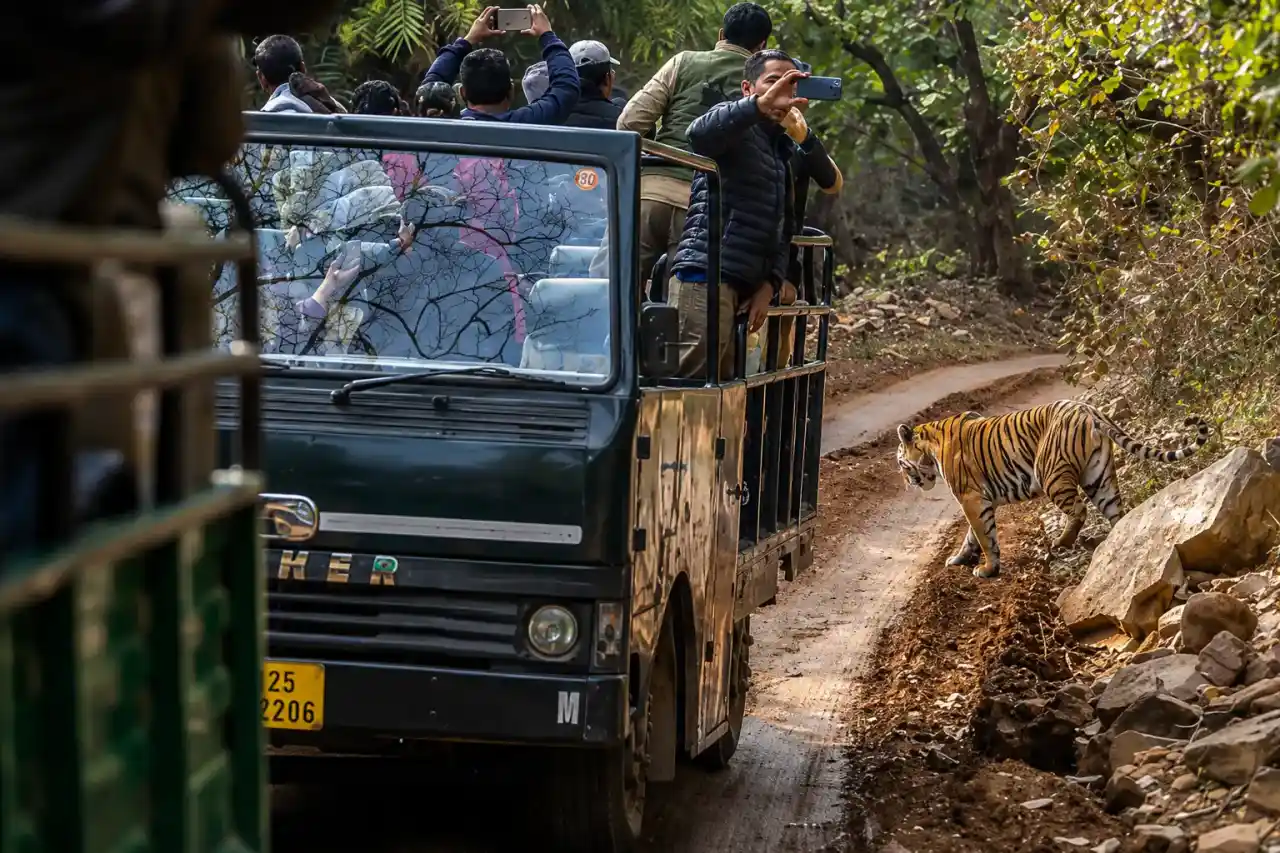
Canter Safari Ranthambore Online Safari Booking
What Is a Canter Safari in Ranthambore?
A canter is a 20-seater, open-top vehicle — larger than a bus but built for rough forest tracks rather than roads. It’s owned and allocated by the Rajasthan Forest Department, not by private operators, which is a detail worth knowing because it explains a lot about how booking and pricing actually work later on.
Canter safari in Ranthambore runs on the same routes as the smaller 6-seat gypsies, inside the same safari zones, for the same roughly 3.5-hour shift. The difference isn’t where you go — it’s who you’re sharing the ride with and how the experience feels once you’re out there.
In practice, canters tend to attract:
Families traveling with grandparents, kids, or both
School and college groups on an educational trip
Larger tour groups who’d rather stay together than split into three separate jeeps
Budget-conscious travellers who want the safari experience without the private-jeep price tag
If you’re picturing a cramped minibus, that’s not quite right either — it’s fully open on the sides and top, so the wildlife-viewing experience is genuinely good. You’re just sharing that view with 19 other people instead of five.
A Quick History of Ranthambore Canter Safari
Ranthambore National Park has run limited safari vehicle quotas for decades, largely to protect the tiger population from excessive vehicle traffic and disturbance. As tourist numbers grew through the 2000s and 2010s — Ranthambore is one of India’s most reliable parks for tiger sightings — the Forest Department needed a way to accommodate larger groups without simply issuing more permits for small jeeps, which would have meant even more vehicles crowding the same tracks.
The canter safari was the answer: fewer, larger vehicles carrying more people per trip, which keeps the total number of vehicles inside the park lower while still letting bigger groups and budget travellers experience the reserve. That’s still the core logic behind how canter safari Ranthambore National Park operates today — a limited number of canters run per shift, alongside a larger number of gypsies, with canters excluded from a couple of zones to manage terrain and traffic.
| Canter Safari vs Gypsy Safari — Which One Fits Your Trip? | ||
|---|---|---|
| This is the comparison that many travel websites overlook, yet it is the crucial factor that determines whether you will relish your safari or regret not making a different booking. | ||
| Factor | Canter (20-seater) | Gypsy/Jeep (6-seater) |
| Cost per person | Lower | Higher |
| Ride comfort | Bumpier, less legroom | Smoother, more space to move |
| Photography | Harder to angle a clean shot | Easier positioning, better results |
| Tiger-sighting odds | Same as gypsy — depends on zone, not vehicle | Same as canter |
| Group experience | Everyone sees the same moment together | Groups over 6 get split, sightings vary by vehicle |
| Seat availability | Fewer canters run per shift | More gypsies run per shift |
| Best suited for | Families, school groups, large parties, budget travellers | Photographers, couples, small groups |
A few honest takeaways from that table:
Chasing a great photo? Take the gypsy. On a canter, by the time you’ve spotted the tiger and reached for your camera, 19 other people are doing the exact same thing, and the vehicle can’t reposition as easily as a jeep can.
Traveling with 10+ people? The canter usually wins. Splitting a big family or group across three gypsies almost always means an uneven experience — one vehicle gets the tiger, the other two get deer and birdsong. Everyone remembers the vehicle that “got lucky,” and it’s not a great feeling to be on the one that didn’t. A canter avoids that entirely.
On a honeymoon or anniversary trip? Skip the canter. It’s simply not built for an intimate experience, and a shared or private gypsy will feel far more special for a similar price.
One myth worth clearing up: choosing a canter does not lower your chances of seeing a tiger. Sighting odds come down to zone, season, and timing — not vehicle type. What changes is how well you’ll actually see and photograph it once it shows up.
Canter Safari Ranthambore Price (2026)
Canter safari Ranthambore price is genuinely confusing when you start comparing sources, so here’s where the numbers actually come from.
Official Forest Department ticket price:
Indian nationals: approximately ₹1,500–1,800 per person
Foreign nationals: approximately ₹3,000–3,500 per person
This canter safari Ranthambore ticket price covers your seat, the park entry fee, and the guide fee, all bundled into one government-set rate.
Agent and third-party booking cost: Canter safari Ranthambore cost through local operators or travel platforms often runs from ₹4,500 up to ₹8,000–9,000 for “all-inclusive” packages. That’s not automatically overpriced — it typically bundles in hotel pickup and drop, and someone else navigating the booking portal on your behalf, which is worth something if your dates are tight or the official system is unfamiliar.
ID requirements: Every traveller needs valid ID at the time of entry — any government photo ID for Indian nationals, and a passport for foreign nationals. Bring the original, not a photocopy; this catches out more travellers than you’d expect.
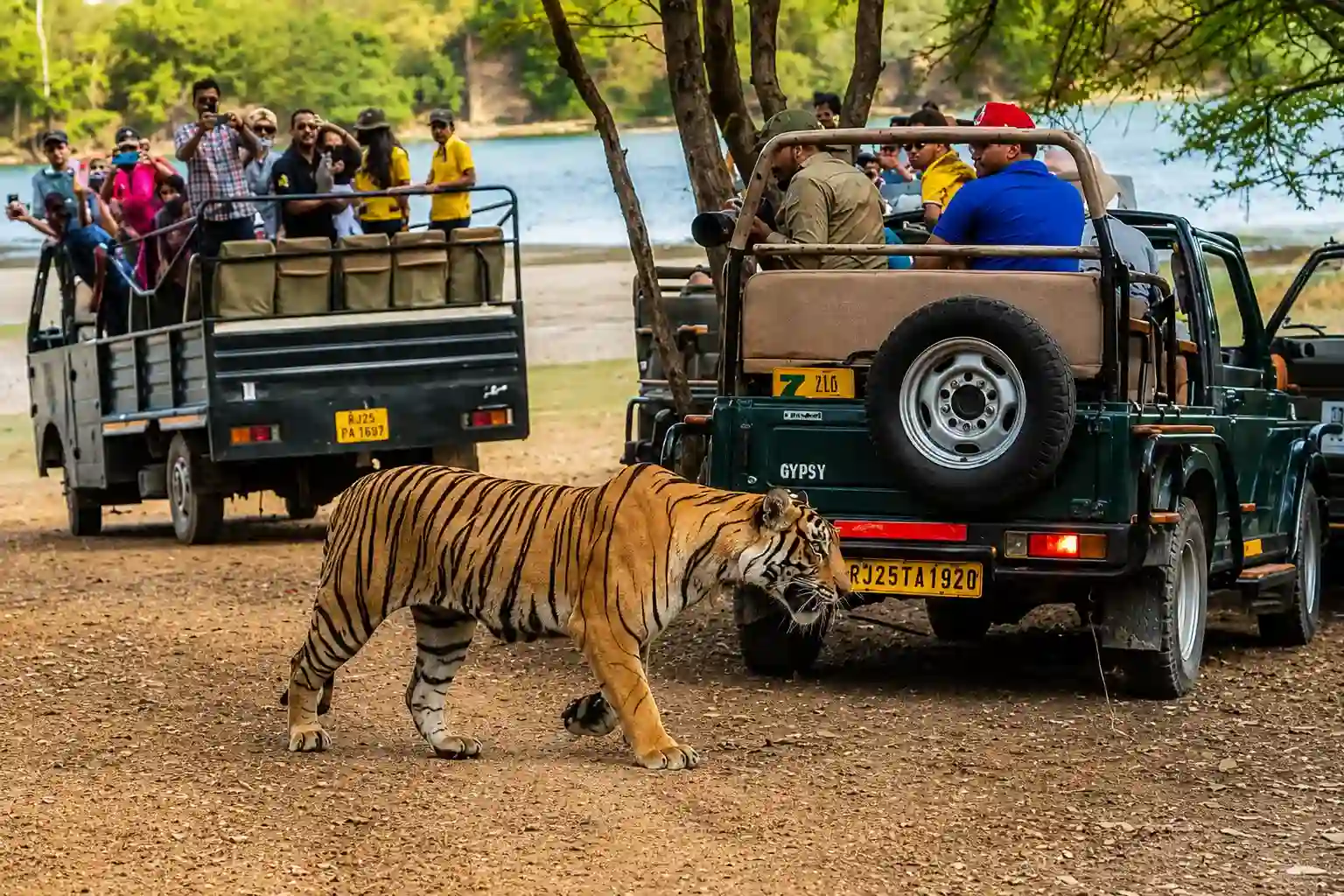
Canter Safari Ranthambore Price 2026
| Canter Safari Ranthambore Timings | ||
|---|---|---|
| Timings shift through the year based on sunrise and sunset, so check the month you're travelling in against this table: | ||
| Period | Morning Shift | Evening Shift |
| 1 Oct – 31 Oct | 6:30 AM – 10:00 AM | 2:30 PM – 6:00 PM |
| 1 Nov – 31 Jan | 7:00 AM – 10:30 AM | 2:00 PM – 5:30 PM |
| 1 Feb – 31 Mar | 6:30 AM – 10:00 AM | 2:30 PM – 6:00 PM |
| 1 Apr – 15 May | 6:00 AM – 9:30 AM | 3:00 PM – 6:30 PM |
| 16 May – 30 Jun | 6:00 AM – 9:30 AM | 3:30 PM – 7:00 PM |
Canters don’t run from July to September. Several zones close entirely for the monsoon, and the ones that stay open don’t operate canter safaris during this period — so if you’re planning a monsoon trip, budget for a gypsy safari instead.
Best Time to Visit Canter Safari Ranthambore
For the strongest odds of a tiger sighting, aim for April to June. Rising heat pushes tigers toward waterholes, where they’re far easier to spot from an open vehicle. The trade-off is genuine heat — often past 40°C — which matters if you’re traveling with young children or older relatives.
For comfort over probability, November to February is milder during the day, though mornings are sharply cold in an open-top vehicle moving at speed. If comfort matters more than maximizing your sighting odds, this window works well — just dress properly (more on that below).
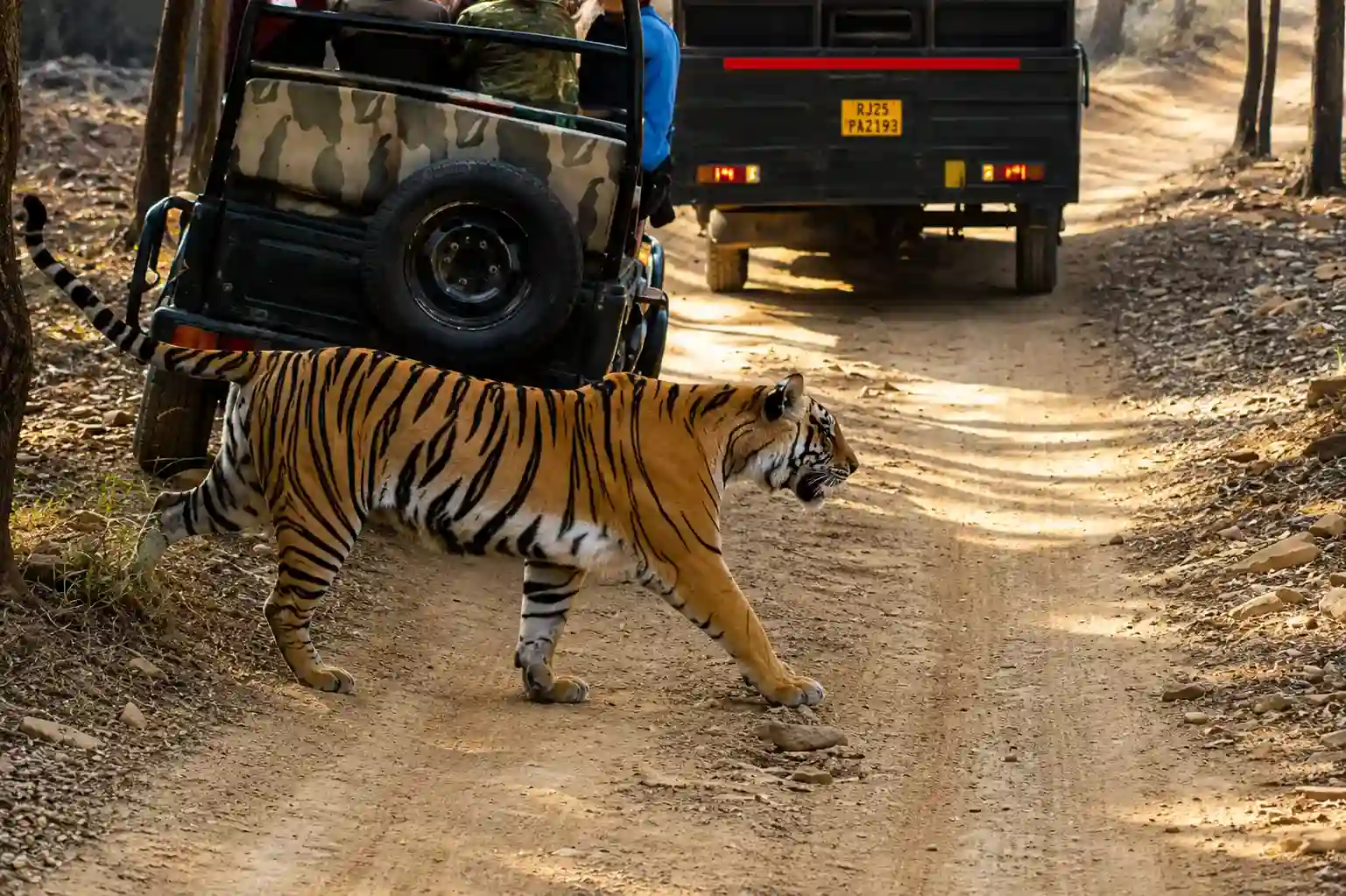
How to Book Canter Safari Ranthambore
How to Book Canter Safari Ranthambore — Step by Step
Here’s exactly how Ranthambore canter safari booking works, start to finish.
Book in advance. Online booking canter safari Ranthambore opens up to 90 days before your travel date. Canter seats are fewer than gypsy seats per shift, so they sell out faster than people expect — especially April through June.
Choose your booking route. You can go through the official government portal directly, or use a registered local operator for canter safari Ranthambore online booking if you’d rather have someone else handle zone requests and paperwork.
Submit accurate traveller details. Name, age, and gender must match ID exactly for every person in your group.
Pay in full. Ranthambore canter safari booking online is confirmed only once payment clears — the operator has to pay the Forest Department upfront to hold your seats.
Check the cancellation policy before paying. Most confirmed bookings are non-refundable and non-transferable. There’s no changing plans two days out.
Carry original ID on safari day. No exceptions — this is checked at the gate.
If the official process feels like a lot to manage — and for first-time visitors, it often is — a registered local operator can handle canter safari Ranthambore booking on your behalf, including pickup coordination and zone requests, for a service fee.
Last-minute bookings do exist if seats go unsold, but treat them as a backup plan rather than a strategy. A 20-seat canter has far less unsold inventory to rely on than a 6-seat gypsy.
Which Zones Run Canter Safaris?
Ranthambore has 10 numbered safari zones. Canters operate across most of them but are excluded from Zones 7 and 8, which run gypsy safaris only.
Two things worth knowing before you book:
You typically can’t request a specific zone the way you sometimes can with a private gypsy — allocation depends on availability when your booking is confirmed.
Zone quality varies. Zones 1–6 and 10 are generally considered stronger for tiger activity than some of the outer zones. If this matters to you, ask your operator which zone you’ve actually been allotted before your safari day, not after.
What to Actually Expect on Your Safari
This is the part most booking pages leave out entirely.
The ride is bumpier than you’d think. Forest tracks are uneven and dusty, and a canter’s height makes every bump more noticeable than it would be in a smaller jeep. If anyone in your group has back or joint issues, avoid the very back rows — that’s where the bouncing is worst.
Mornings are properly cold, even in months that feel warm by afternoon. A 6:30 AM start in December, moving through open air, can feel close to freezing. Pack real layers — a base layer, a jacket you can shed later, and gloves if you run cold. This catches foreign travellers off guard more than anything else on the trip.
When a tiger appears, it gets loud fast. Twenty people reaching for phones and cameras at once, guides angling for the best group view, other vehicles converging nearby. It’s thrilling, but it’s not the quiet, private moment some travellers picture beforehand — go in expecting energy, not silence.
Pack smart: water, a hat, sunscreen, mosquito repellent, and binoculars if you own a pair — sharing one set among 20 people means a lot of waiting your turn. A zoom lens helps if photography is a priority, since you won’t always get close.
Tiger Sighting Odds — The Honest Answer
No guide, operator, or vehicle type can guarantee a tiger sighting, and anyone who tells you otherwise is selling you something. Some travellers see four tigers across two safaris. Others do three safaris and see none. Zone, season, and a bit of luck all play a bigger role than which vehicle you’re sitting in.
What genuinely improves your odds:
Booking more than one safari if your schedule allows
Traveling in peak season (April–June) when tigers gather near waterholes
Going with an experienced guide who tracks recent activity in your zone
Vehicle choice affects how well you’ll see and photograph a tiger — not whether one shows up.
Who Should Choose a Canter Safari?
Families & leisure travellers — the natural fit. Everyone stays together, cost stays reasonable, and kids get the same experience as the adults.
Photographers & birdwatchers — better off in a gypsy, where positioning and quiet actually matter.
Students & educational groups — canters make financial and logistical sense for larger school or college trips.
Foreign & international tourists — bring your passport, book early, and pack for genuinely cold mornings.
Luxury travellers — look at a private gypsy or a resort-arranged exclusive safari instead; canters aren’t built for that experience.
Couples & honeymooners — a shared or private gypsy will feel far more personal for a similar cost.
Canter Safari Ranthambore Contact Number
Have questions about availability, zone allocation, or group bookings before you commit? Reach out directly rather than guessing:
Phone / WhatsApp: [+91-9772018780] Email: [Info@wildlifesafaritrip.com] Booking hours: [Insert hours, e.g., 8 AM – 11 PM IST]
Whether you’re booking a shared canter or a private canter safari Ranthambore for a large group, a quick call before you pay online often saves you from booking the wrong zone or date.
FAQs
What is a canter safari in Ranthambore? It’s a shared, 20-seater, open-top safari vehicle used to explore Ranthambore National Park, run by the Forest Department alongside the smaller 6-seat gypsy safaris.
What is the canter safari Ranthambore price for 2026? Official Forest Department rates run roughly ₹1,500–1,800 per person for Indian nationals and ₹3,000–3,500 for foreign nationals. Agent-booked packages, which often include pickup and drop, typically cost more.
How do I book a canter safari in Ranthambore? Book online through the official government portal up to 90 days in advance, or through a registered local operator who can handle the process, zone requests, and pickup logistics for you.
Is a canter safari good for seeing tigers? Sighting odds are identical to a gypsy safari — they depend on zone, season, and luck, not vehicle type. What differs is how well you’ll see or photograph a tiger once one appears.
What is the difference between a canter and a gypsy safari? A canter seats 20 and suits larger groups on a budget; a gypsy seats 6 and suits smaller groups, couples, or photographers who want more control and comfort.
Can foreign tourists book a canter safari online? Yes. Ranthambore canter safari booking online is open to international travellers through the official portal or a registered operator, using a valid passport as ID.
Is a private canter safari available? Yes, in some cases a private canter safari Ranthambore can be arranged for larger exclusive groups rather than shared seating, though it costs more than standard shared booking — check availability directly with an operator.
What should I wear on a canter safari? Layers, always. Even in warmer months, early mornings in an open vehicle are cold. Add a hat, sunscreen, and closed shoes.
When is the best time to visit for a canter safari? April to June offers the strongest tiger-sighting odds due to heat driving animals toward waterholes. November to February is cooler and more comfortable overall, though mornings are cold.
A canter safari in Ranthambore isn’t better or worse than a gypsy safari — it’s simply built for a different kind of trip. If you’re traveling as a family, a school group, or a larger budget-conscious party, it’s genuinely one of the best ways to experience the park together, at a fair price, without splitting your group’s luck across separate vehicles. If your priority is a clean tiger photograph or a quiet, private moment in the forest, a gypsy will serve you better.
Either way, the details covered here — real pricing, accurate timings, honest booking steps, and what the experience actually feels like — should leave you booking with confidence instead of guesswork.
Ready to Book Your Canter Safari?
Seats fill up fast, especially between April and June. Don’t leave your Ranthambore trip to a last-minute scramble.
[Book Canter Safari Ranthambore National Park →]
Or call/WhatsApp us at [+91-9772018780] and we’ll help you lock in the right date, zone, and vehicle for your group.