
Flora in Ranthambore
- Home
- Flora in Ranthambore
Flora in Ranthambore
Flora in Ranthambore: A Complete Guide to Trees, Plants and Vegetation
Most people plan a Ranthambore trip around one thing: seeing a tiger. Fair enough. But if you’ve ever been on a safari where the jeep slows down, the guide points at a gnarled tree instead of an animal, and says As you begin to understand, you realize that the forest is contributing more than you initially acknowledged, which explains the presence of the tigers. The flora in Ranthambore isn’t background scenery for your tiger photos. It’s the reason the tigers, deer, and hundreds of bird species live there at all.
Ranthambore sits in a northern tropical dry deciduous forest belt, one of the driest habitats any Indian tiger reserve has to work with. According to Rajasthan Forest Department surveys, the park’s flowering plant diversity falls somewhere between 300 and 500+ species, depending on the survey year and which buffer zones get counted. That range matters more than any single number, because it tells you how flora in Ranthambore has actually been studied over time, and it’s more honest than picking one figure and presenting it as gospel.
This guide walks through what’s actually growing in the park, when it changes through the year, which safari zones show it best, and why any of this should matter to someone who came for a tiger.
Key Takeaways
Dhok (Anogeissus pendula) makes up roughly 80% of Ranthambore’s forest cover and is the single most important species shaping the park’s ecosystem.
Vegetation density directly affects tiger sightings — sparser summer foliage often makes tigers easier to spot, even though their numbers haven’t changed.
The park’s 10 safari zones have genuinely different vegetation: lake-zones (1–5) support aquatic plants, zones 6–9 are classic dry Dhok forest, and Zone 10 (Kachida Valley) is rockier scrubland.
February–March is peak bloom season for Dhak (Flame of the Forest), when hillsides turn flame-orange.
Invasive vilayati babool (Prosopis juliflora) is an active conservation concern, crowding out native grassland that herbivores depend on.
Dominant Tree Species of Ranthambore
If one tree defines Ranthambore, it’s the Dhok. This drought-tolerant species covers around 80% of the park, which is an extraordinary level of dominance for any single tree in a forest this size. Dhok sheds its leaves in summer to conserve water, and that survival trick happens to be great news for visitors, since it opens up the forest floor and makes wildlife easier to spot in April and May.
A handful of other species show up again and again once you know what to look for:
| Species | Local Name | Identifying Feature | Best Season to Spot |
|---|---|---|---|
| Anogeissus pendula | Dhok | Small oval leaves, pale flaking bark | Year-round, sparsest in summer |
| Ficus benghalensis | Banyan | Aerial roots forming secondary trunks | Year-round |
| Ficus religiosa | Peepal | Heart-shaped leaves with a long tip | Year-round |
| Butea monosperma | Dhak / Flame of the Forest | Bright orange-red flower clusters | February–March |
| Senegalia catechu | Khair | Feathery, fern-like leaves, thorny branches | Year-round |
| Boswellia serrata | Salar | Bark peels in thin, papery strips | Year-round |
| Azadirachta indica | Neem | Serrated, dark green leaflets | Year-round |
Near the Ganesh Temple, there exists a banyan tree that is among the oldest in the park, located close to Ranthambore Fort. Its aerial roots have thickened into what looks like a small grove of trunks rather than one tree. If your route passes near the fort, it’s worth the five-minute stop — it puts the sheer age of this landscape into perspective in a way a species list never quite manages.
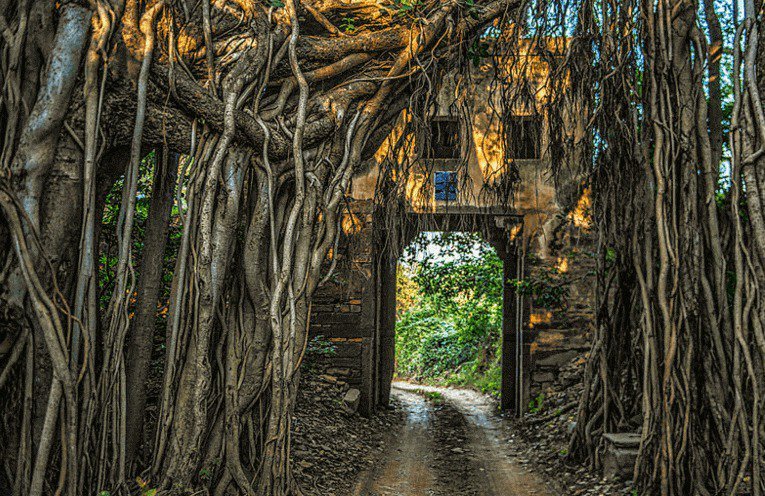
BANYAN TREE RANTHAMBORE TIGER RESERVE
Seasonal Changes: What Blooms When
Ranthambore in November looks nothing like Ranthambore in April, and that difference should actually shape when you book your trip.
Winter (October–February): The forest is at its greenest, still holding onto post-monsoon growth. Visibility into the undergrowth is lower, but the park feels lush and comfortable to explore.
Spring (February–March): Photographers eagerly anticipate this moment throughout the year. The Dhak trees explode into a vibrant flame-orange bloom, adorning the hillsides with colors that appear almost too bright against the arid terrain.
Summer (April–June): Dhok and other deciduous trees drop their leaves to survive the heat. Counterintuitively, this often makes it the best window for tiger sightings — thinner canopy means better sightlines, and animals cluster tightly around the remaining waterholes.
Monsoon (July–September): Most zones close to safari traffic during peak monsoon. When the park reopens in October, the transformation is dramatic: everything greens up within weeks.
If someone asks when to visit “for the flora,” the honest answer depends on what they want. Bloom color points to February–March. Better sightlines point to April–June. Lush, photogenic greenery points to October–December. These are three different trips, not one.
Flora in Ranthambore by Safari Zone
Ranthambore’s 10 safari zones don’t all look the same, and almost no guide to the park’s flora actually breaks this down, even though it directly affects which zone you should book.
Zones 1–5 (around Padam Talao and Rajbagh): Home to the park’s aquatic and wetland flora — lotus beds, water lilies, reed-lined banks. This is also where you’re most likely to see mugger crocodiles and a wide range of waterbirds.
Zones 6–9: Classic dry-deciduous Ranthambore — dense Dhok forest, rocky outcrops, the landscape most people picture when they imagine the park.
Zone 10 (Kachida Valley): Rockier and scrubbier, with sparser tree cover and more low, thorny vegetation. Less visited, but worth knowing if you’re hoping to spot species like leopard or sloth bear that favor this terrain.
If your priority is tiger sightings, zones 2 through 6 tend to top the statistics. If wetland birdlife or aquatic plants interest you more, don’t overlook the lake zones just because they’re not the “prime tiger” ones — they’re the best place in the park for that specific experience.
How Flora Supports Ranthambore's Wildlife
Here’s the part most flora guides skip, and it’s arguably the most useful thing to understand if you’re hoping to see a tiger: the vegetation is directly responsible for where the tigers actually are.
Dhok forest, despite looking sparse and thorny, supports a large population of chital, sambar, and nilgai, who feed on its leaves and the grasses growing beneath its open canopy. Where herbivore density is high, tiger territories tend to cluster, since a tiger’s home range size is driven largely by prey availability. This is part of why zones like 2, 3, and 4 around Padam Talao have historically delivered more consistent sightings — the mix of water, grassland, and Dhok cover supports a higher concentration of prey in a smaller area.
So when your guide points at a stand of Dhok and mentions deer, they’re not filling silence. They’re explaining the actual mechanism behind whether you’ll see a tiger in the next twenty minutes.
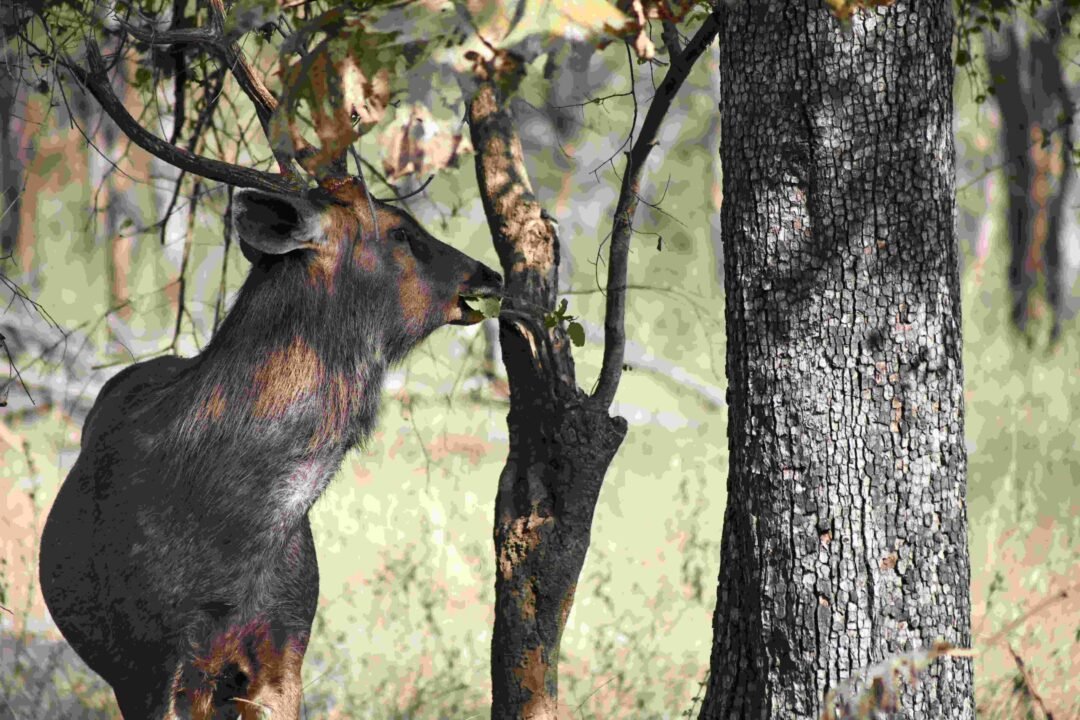
DHOK TREE RANTHAMBORE TIGER RESERVE
Aquatic and Wetland Plants
Padam Talao, Rajbagh, and Malik Talao — the park’s three major lakes — look completely different from the dry forest surrounding them. Lotus flowers and water lilies cover large sections of the water’s surface, especially after monsoon, and the reeds along the banks support a dense population of waterbirds.
This isn’t a footnote. It’s a big part of why Ranthambore has such strong birdwatching credentials alongside its tiger reputation. Species like the painted stork, sarus crane, and several kingfisher varieties depend directly on this aquatic vegetation for feeding and nesting.
Ethnobotany: Traditional Uses of Local Plants
Long before Ranthambore became a protected tiger reserve, its plants were part of daily life for the communities living around the forest. Some of those uses still matter today.
Khair: Bark and heartwood are boiled down to produce katha, the reddish paste used in paan across India, a use that predates the park’s protected status by centuries.
Khus (vetiver): Grows in patches through drier zones and has long been woven into cooling mats, with its roots distilled for fragrant oil prized in traditional perfumery.
Neem: Well documented in Ayurvedic medicine, its leaves and oil used for everything from skin conditions to natural pest control.
This isn’t folklore dressed up as fact. It’s part of why local communities valued and protected these species long before formal conservation efforts existed, and it adds real depth to a Ranthambore visit beyond a list of tree names.
A Simple Field Guide to Common Trees
You don’t need a botany degree to start recognizing what’s around you on a game drive.
Dhok: Small, pale green oval leaves and flaking, light-colored bark. If a tree looks a little dusty and unremarkable but is everywhere, it’s almost certainly this one.
Banyan: Aerial roots hanging down and thickening into extra trunks over time, which is what makes old banyans look like a cluster of trees rather than one.
Peepal: Heart-shaped leaves with a long, drawn-out tip, often confused with banyan until you notice the leaf shape.
Dhak: Unmistakable in bloom, but even out of season, its compound leaves in groups of three give it away.
Khair: Fine, fern-like leaves and thorny branches, with a texture noticeably different from the broader-leafed trees around it.
Salar: Bark that peels in thin, papery strips, similar to eucalyptus.
Photographers and students on educational trips tend to get the most out of this. Once you can name three or four species on sight, the forest stops looking like undifferentiated “jungle” and starts looking like a specific, readable landscape.
Conservation Concerns: Invasive Species
Not everything growing in Ranthambore belongs there. The park’s most persistent vegetation problem is Prosopis juliflora, locally known as vilayati babool. This fast-growing, thorny shrub was introduced decades ago for its drought resistance, but it has spread aggressively through parts of the park, outcompeting native grasses and shrinking the open grassland herbivores depend on for grazing.
Forest management authorities have run periodic clearance drives to remove vilayati babool and restore native grassland. The loss of open grazing areas has a knock-on effect on herbivore populations, and by extension, on the tigers that depend on them. It’s not a dramatic headline, but it’s a real, ongoing part of managing the park, and it shows that Ranthambore’s flora is actively managed rather than a static backdrop.
Ranthambore vs. Other Indian Tiger Reserves: A Quick Comparison
| Reserve | Forest Type | Dominant Vegetation | Best Season for Flora |
|---|---|---|---|
| Ranthambore | Dry deciduous | Dhok forest | Feb–March (Dhak bloom) |
| Bandhavgarh | Mixed deciduous/Sal | Sal forest | March–April (Sal flowering) |
| Ranthambore vs. Kanha | Sal and bamboo mixed forest | Sal, bamboo | November–February |
| Jim Corbett | Sub-Himalayan, riverine | Sal, Sheesham | March–May |
Ranthambore’s dry, open Dhok forest is part of what makes tiger sightings comparatively easier here than in denser sal forests like Kanha or Bandhavgarh, where thicker canopy cover gives tigers more places to stay hidden.
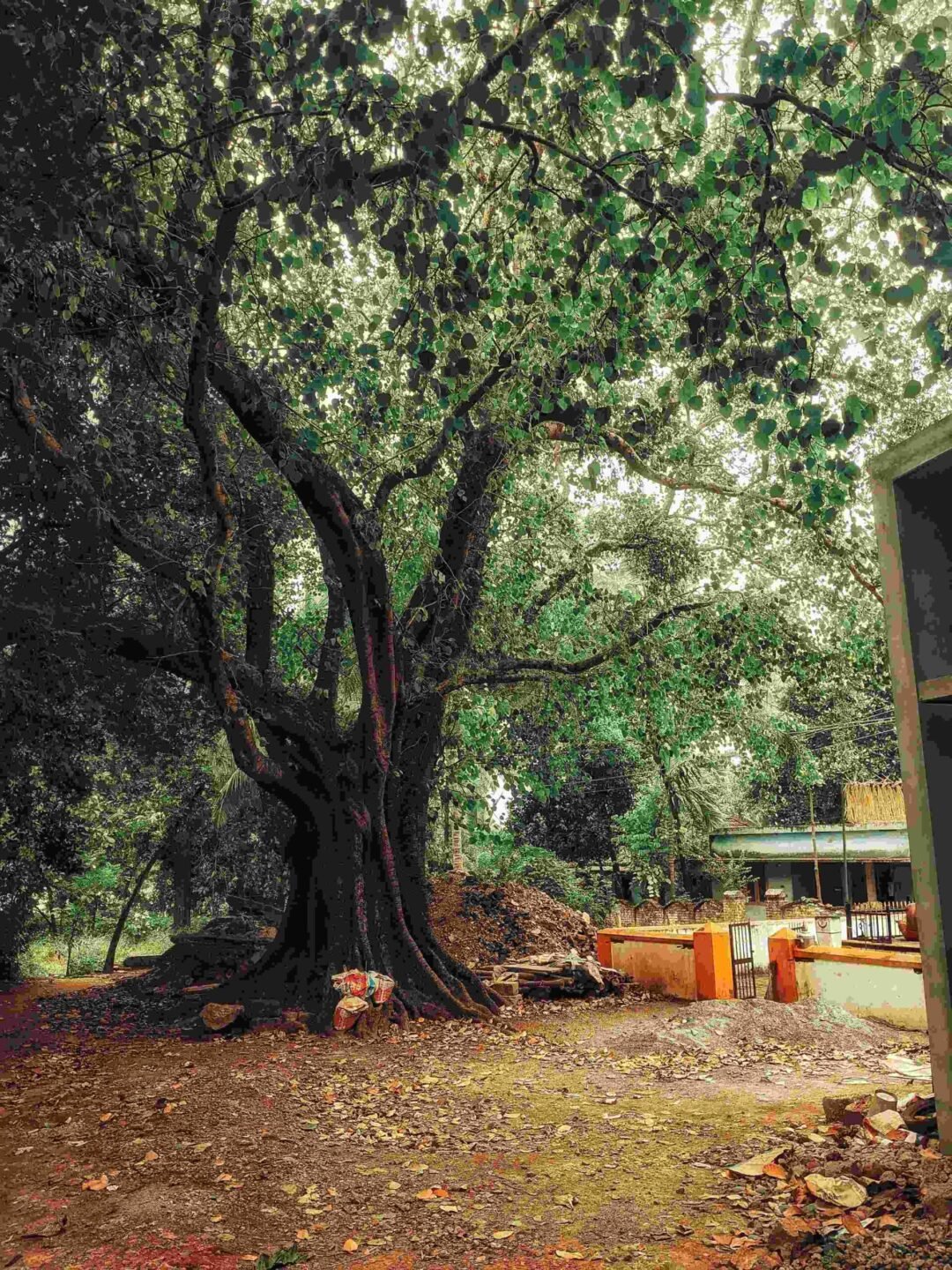
PEEPAL TREE RANTHAMBORE NATIONAL PARK
FAQs
How many flora species are in Ranthambore? Forest Department surveys generally place the count between 300 and 500+ flowering plant species, depending on the survey year and which buffer areas are included. There isn’t one universally agreed figure, so treat this as a range rather than a fixed number.
What is the best time to see flowering trees in Ranthambore? February to March, when Dhak (Flame of the Forest) blooms in bright orange-red across the park’s hillsides.
Which trees are most common in Ranthambore? Dhok (Anogeissus pendula) dominates, making up roughly 80% of the park’s tree cover. Banyan, Peepal, Khair, Salar, and Neem are also widespread.
Does the flora in Ranthambore affect tiger sightings? Yes, directly. Denser Dhok forest supports more herbivores like chital and sambar, which draws tiger territories to those areas. Vegetation density also affects visibility, so sparser summer foliage often makes sightings easier even though the tiger population itself hasn’t changed.
Is there a map showing flora in Ranthambore by zone? The park doesn’t publish an official flora-specific map, but the general pattern holds: lake zones (1–5) favor aquatic plants, zones 6–9 are dominated by dry Dhok forest, and Zone 10 (Kachida Valley) has rockier, scrubbier vegetation.
The flora in Ranthambore rewards a closer look. Once you understand that the Dhok forest subtly influences the grazing patterns of the deer, and that the deer, in turn, subtly influence the roaming patterns of the tigers, the entire park transforms from merely a backdrop into a functioning system.
That’s true whether you’re there with a camera, a family, or a notebook for a school project.
Next time you’re on safari and the jeep slows for a tree instead of an animal, you’ll know exactly why.
Ready to see this landscape for yourself? Book your Ranthambore safari and choose a zone based on what you actually want to experience — dense Dhok forest, lakeside birdlife, or the best tiger-sighting odds.