
Sunderbans National Park
- Home
- Sunderbans National Park
Sunderbans National Park
Sundarbans National Park: The Complete Safari, Booking & Travel Guide
Ask anyone who’s actually been to Sundarbans National Park what surprised them most, and they rarely say “the tiger.” They say the silence. The way a boat engine cutting off mid-creek leaves you with nothing but water lapping against mangrove roots and the occasional splash you can’t quite place. That’s the real pitch for this place — not a guaranteed wildlife encounter, but three or four days inside a landscape that genuinely doesn’t exist anywhere else on earth.
This guide covers everything you’ll actually need before booking: what a Sundarbans safari costs, how the boat-only safari system works, when to go, where to stay, and how to separate a real booking channel from the dozen copycat sites that show up when you search for one. Numbers here are gathered from forest department sources and current operators, but always confirm final rates before you pay — they shift with season and fuel prices.
What Is Sundarbans National Park?
Sundarbans National Park sits in South 24 Parganas district, West Bengal, about 110 km south of Kolkata. It’s the Indian portion of a much larger mangrove delta shared with Bangladesh, formed where the Ganges, Brahmaputra, and Meghna rivers empty into the Bay of Bengal. The Indian park covers roughly 1,330 sq km, sitting inside a much bigger 2,585 sq km tiger reserve.
Three labels apply to it simultaneously: national park (since 1984), UNESCO World Heritage Site (since 1987), and Ramsar wetland of international importance (since 2019). That triple protection status exists because this is the only mangrove forest on the planet with a resident tiger population, and one of the last places where the ecosystem still runs largely on its own terms — tides in, tides out, twice a day, reshaping the land as they go.
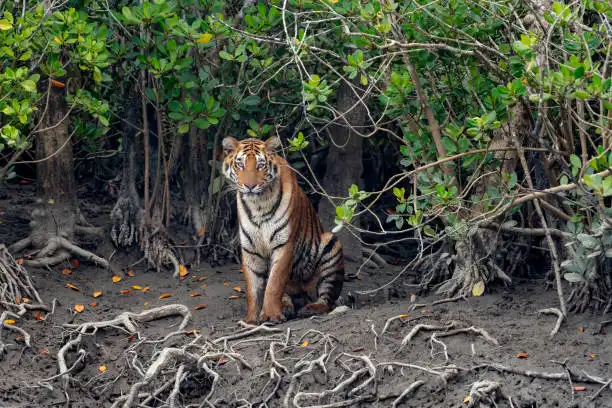
Sundarbans National Park Safari Charges
Sundarbans National Park Safari Charges
Costs here vary by boat type, group size, and season, so treat these as planning ranges rather than fixed quotes:
Forest entry/permit fee: Roughly ₹20–180 per day for Indian nationals; ₹850–2,000 per day for foreign nationals
Shared boat safari: Approximately ₹1,000–3,000 per day, often split across a group
Private boat charter: ₹3,000–7,000+ per day, depending on boat size and AC/non-AC seating
Guide charge: Usually a small fixed daily fee, sometimes bundled into package pricing
Extras: Video camera permission fees and overnight stay charges are billed separately in most cases
Most all-inclusive private day safaris (boat, guide, entry fee, and a meal) land somewhere around ₹950–1,500 per person, with overnight cruise packages ranging from roughly ₹2,000 per person on the budget end to well over ₹15,000 per person for multi-night luxury cruises.
History of Sundarbans National Park
The forest’s documented history starts long before “national park” was ever a phrase. Ruins at Netidhopani point to settlements dating back to around 200–300 AD, and later, during the Mughal era, local rulers leased parts of the forest to nearby residents who built villages inside it. Those settlements didn’t last — Portuguese pirates and salt smugglers raided the area through the 17th century, and what’s left today are crumbling temple ruins swallowed back into the mangrove.
Formal protection began in 1875, when a large section was declared “reserved forest” under the Forest Act of 1865. From there, the timeline moves in clear steps:
1973 — Brought under Project Tiger as a designated tiger reserve
1977 — Declared a wildlife sanctuary
1984 — Officially declared Sundarbans National Park
1987 — Inscribed as a UNESCO World Heritage Site
2019 — Designated a Ramsar wetland site
If you want the short version — the biography of Sundarbans National Park, in a sense — it’s this: a forest that survived pirates, salt smugglers, and two centuries of shifting river courses, and ended up as one of the most protected ecosystems in South Asia almost by necessity, not just policy.
Birding in Sundarbans National Park
If you only take one specialist detour on this trip, make it birding. The Sundarbans is home to more than 300 documented bird species, with Sajnekhali’s bird sanctuary zone being the most thoroughly recorded location for these species. Winter brings migratory waders — sandpipers, curlews, godwits — down to the exposed mudflats in numbers that turn a single early morning into a serious checklist. Locals sometimes call it a kingfisher’s paradise, and it’s not an exaggeration: ten of India’s twelve kingfisher species live here, more concentrated in one place than almost anywhere else in the country.
Sundarbans National Park Booking: How to Book Your Safari
There are two real ways to book a Sundarbans safari, and knowing the difference will save you money and hassle.
Direct forest department booking — Boat permits are issued by the West Bengal Forest Department, usually processed through the Sajnekhali Range Office. There’s no single centralized government booking website, so most “official Sundarbans National Park online booking” claims you’ll find belong to private operators, not the department itself.
Registered tour operators — The far more common route. A reliable operator bundles the permit, boat, guide, and often accommodation into one package, which removes the guesswork of dealing with forest department paperwork yourself.
Sundarbans National Park Online Booking — What to Watch For
Confirm the operator is registered with West Bengal Tourism or has verifiable reviews from recent travellers, not just a polished website.
Ask specifically whether the forest entry permit and guide fee are included, or billed separately on arrival.
For foreign nationals, permits typically need 24–48 hours of processing — book at least a few days ahead, and up to two weeks ahead during peak season (January–March).
Avoid last-minute walk-up bookings during winter weekends; boats do sell out.
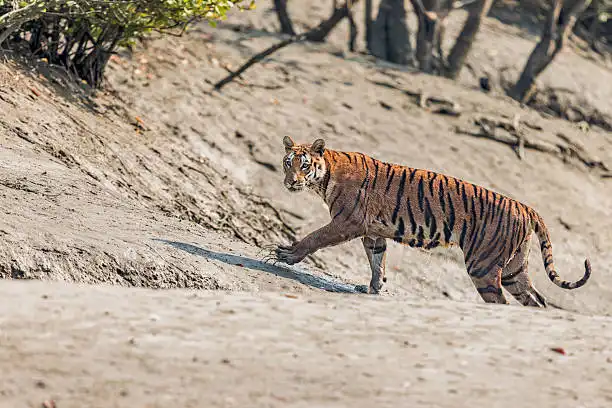
Sundarbans National Park Booking How to Book Your Safari
Flora and Fauna of Sundarbans National Park
This is where the “world’s largest mangrove forest” tagline actually earns itself. Around 78 species of mangrove grow across the delta — more variety in one place than anywhere else on the planet.
Flora worth knowing:
Sundari tree (Heritiera fomes) — the species that gave the region its name, known for root spikes called pneumatophores that poke straight up out of the mud so the tree can breathe in waterlogged soil
Golpata — a palm species used locally for thatched roofing
Genwa and Hental — common understory mangrove species you’ll spot from almost any boat route
Fauna you’re likely to encounter:
Royal Bengal Tiger — the headline species, though sightings are genuinely rare (more on that below)
Spotted deer and wild boar — the tiger’s main prey, often visible grazing near watchtowers at low tide
Saltwater crocodiles — frequently seen basking motionless on mudflats
Gangetic and Irrawaddy dolphins — are occasionally sighted, albeit infrequently, in broader sections of the river.
Fishing cats and rhesus macaques — smaller, less publicized residents that show up more often than tigers do
Will You Actually See a Tiger?
Here’s the honest answer most tour pages skip: probably not, and that’s fine. Tiger density in Sundarbans is genuinely high, but density doesn’t equal visibility when the habitat is a wall of mangrove roots and undergrowth. Boat safaris keep you on the water looking in, not walking through the forest.
What you’ll almost certainly see instead — deer at the waterline, crocodiles sunning themselves, kingfishers diving, and fresh pugmarks in the mud near a watchtower — is worth the trip on its own. Treat a tiger sighting as a bonus, and the experience stops feeling like a gamble.
| Best Time to Visit Sundarbans National Park | |||
|---|---|---|---|
| Months | Conditions | Sighting Odds | Crowd Level |
| November – February | Cool, dry, comfortable | Best — animals gather near water at low tide | High |
| March – April | Warming steadily | Good | Moderate |
| May – July | Very hot (up to 43°C) | Lower — wildlife retreats into shade | Low |
| June – September | Monsoon, heavy flooding | Poor — many areas inaccessible | Very low |
| October | Cooling post-monsoon | Improving | Moderate |
Winter wins for a simple reason: cooler weather pushes animals toward open water and exposed mudflats, which is exactly where a boat can actually see them. Monsoon travel, on the other hand, isn’t just uncomfortable — it can genuinely be unsafe, since flooded channels and unpredictable currents make several routes unfeasible.
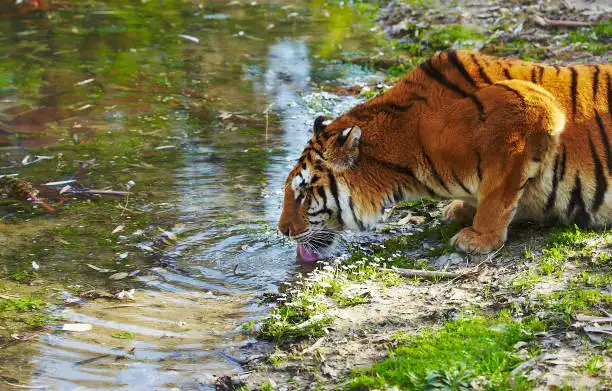
Sundarbans National Park Tour Packages
Sundarbans National Park Tour Packages
Packages generally fall into three tiers:
Budget (day trip or 1 night): Shared boat, basic guesthouse or launch stay, covers Sajnekhali and one or two watchtowers. Good for a quick visit if time is tight.
Mid-range (2 nights / 3 days): The most common and most sensible option for first-time visitors. Covers Sajnekhali, Sudhanyakhali, and Dobanki watchtowers, the crocodile and turtle breeding projects, and usually includes decent riverside resort accommodation.
Luxury (3+ nights): Private cruise boats with cabins, better food, flexible timing, and often a dedicated naturalist guide. Ideal for photographers, honeymooners, or anyone who wants a slower, less group-driven pace.
Resorts Near Sundarbans National Park
Accommodation clusters mainly around Sajnekhali, Pakhiralay, Dayapur, and Gosaba — the villages closest to the main safari entry points.
Budget: Government-run tourist lodges and basic guesthouses, functional and clean, ideal for families watching costs
Mid-range: Eco-resorts and riverside camps with attached bathrooms, local Bengali cuisine, and cottage-style rooms — the sweet spot for most travellers
Luxury: A handful of forest-facing resorts and houseboats offering private cottages, better food, and quieter settings — worth the extra spend for couples or luxury travellers
Whichever tier you pick, confirm whether meals and safari transfers are included in the room rate — many resorts price these separately, and it changes the real cost significantly.
Sundarbans National Park Safari Timings
Boat safaris run within a fixed daily window: typically 8:30 AM to 4:00 PM, though a few private operators start as early as 7:00 AM to catch better light and calmer water. Boats aren’t permitted to remain inside the reserve after dusk — this isn’t a formality, it’s enforced, since after-dark movement disrupts both patrol operations and the animals themselves.
If photography is your priority, book the earliest available slot. Light is softer, water is calmer, and animals are more active before the afternoon heat sets in.
A Note on Jeep Safari Booking in Sundarbans National Park
If you’ve been searching for “jeep safari booking Sundarbans National Park,” here’s the honest answer: it doesn’t exist. Sundarbans is a boat-only reserve — the terrain is entirely water, mudflats, and mangrove, with no roads or tracks for vehicles inside the protected zone. Every safari here, budget or luxury, happens on the water. If a jeep safari experience matters to you, that’s something you’d need to plan separately at a different reserve like Jim Corbett or Ranthambore — but don’t let that stop you from coming here for what boat safaris in Sundarbans do offer, which no jeep-based park can replicate: gliding silently past a crocodile on a mudbank, close enough to hear it shift.
| Comparison: Sundarbans National Park Safari Options | |||
|---|---|---|---|
| Safari Type | Duration | Approx. Cost (per person) | Best For |
| Shared day safari | 1 day | ₹950–1,500 | Budget travellers, short trips |
| Private day charter | 1 day | ₹3,000–7,000 | Small groups, photographers |
| 1-night cruise | 2 days | ₹2,000–8,000 | First-timers wanting more coverage |
| 2-night cruise | 3 days | ₹4,000–15,000 | Families, thorough sightseeing |
| Luxury multi-night cruise | 4+ days | ₹15,000+ | Honeymooners, luxury travellers |
How to Reach Sundarbans National Park
By Air: Fly into Netaji Subhash Chandra Bose International Airport, Kolkata — around 100–140 km from the reserve depending on your entry route.
By Rail: Take a local train from Sealdah Railway Station to Canning (about 2 hours), then a shared van to Godhkhali Jetty.
By Road: Drive from Kolkata to Godhkhali or Sonakhali (roughly 3–3.5 hours), then switch to a ferry or hired boat — there’s no road network once you’re inside the reserve itself.
By Waterway: From Godhkhali, Sonakhali, or Canning, every further step happens by boat. This is non-negotiable — it’s the only way in.
Frequently Asked Questions
Is Sundarbans National Park safe for tourists? Yes, for visitors staying on designated safari routes with a licensed guide. The real risk historically involves locals working inside the forest for fishing or honey collection, not boat-bound tourists on marked channels.
What are the Sundarbans National Park safari timings? Boats typically operate between 8:30 AM and 4:00 PM, with some private operators starting earlier for better light. Entry after dusk isn’t permitted.
How much does a Sundarbans National Park safari cost? Expect roughly ₹950–1,500 per person for a basic all-inclusive day safari, rising to ₹15,000+ per person for multi-night luxury cruises. Forest entry fees and guide charges may be billed separately depending on the operator.
Can I do a jeep safari in Sundarbans National Park? No. Sundarbans is accessible only by boat — there are no roads or jeep tracks inside the reserve.
How do I book a Sundarbans National Park safari online? Book through a registered tour operator with verifiable reviews, or apply directly through the West Bengal Forest Department’s Sajnekhali Range Office. There’s no single official government booking portal, so verify any site claiming to be one.
How many days do I need for Sundarbans National Park? Two nights and three days covers the reserve properly without rushing — enough time for two to three watchtower visits and a relaxed pace.
What is the best time to visit Sundarbans National Park? November through February, when cooler weather brings animals closer to open water and boat travel is at its safest and most comfortable.
Sundarbans rewards the traveller who shows up without a checklist mentality. Book smart — through a verified operator, during the right season, with realistic expectations about what you’ll see — and what you get back is genuinely rare: a few days inside a landscape that’s still rewriting its own map every single tide.
Ready to Plan Your Trip?
Compare current Sundarbans National Park tour packages, check real-time safari availability, and lock in your dates before the winter season fills up — [browse packages and book your Sundarbans safari today].
Rates and timings mentioned above are indicative and change seasonally. Confirm final pricing and permit requirements with your operator or the West Bengal Forest Department before booking.