Ranthambore National Park
- Home
- Ranthambore National Park
Ranthambore National Park
Welcome to Ranthambore National Park: Sawai Madhopur Rajasthan India
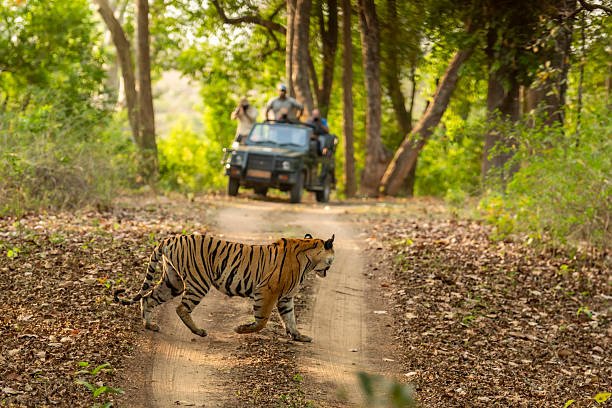
If you’ve spent any time scrolling wildlife photography on Instagram, you’ve probably seen a tiger walking past a crumbling stone archway with golden afternoon light behind it. That’s almost always Ranthambore National Park Sawai Madhopur Rajasthan India. It’s one of the only places on earth where wild tigers are regularly active in broad daylight, which is exactly why it produces so many of the tiger photos you’ve seen shared online.
But here’s something most guides skip over: two people can visit the same week and come home with completely different stories. One sees three tigers in a single afternoon. Another does four safaris and mostly sees deer. Neither is unlucky or doing something wrong — that’s just how a real, wild forest works. This guide walks you through everything practical: where the park is, how much it costs, how booking actually works, and how to stack the odds in your favor.
Ranthambore National Park Reviews
A Brief History Worth Knowing
Ranthambore takes its name from the Ranthambore Fort, a 10th-century hill fort that still stands inside the park boundary and is recognized as a UNESCO World Heritage Site. Before independence, this land served as a private hunting ground for the Maharajas of Jaipur. Tigers were shot here for sport, not photographed.
Unchecked hunting and post-independence industrial growth pushed the tiger population toward collapse. That crisis is what eventually forced official protection: the Rajasthan Forest Act came in 1953, the Sawai Madhopur Sanctuary followed in 1955, and Project Tiger brought federal conservation status in 1973.
What makes this park genuinely unusual is that its tigers are diurnal — active during the day rather than strictly nocturnal. That single fact explains why Ranthambore has produced more iconic daylight tiger photographs than almost any other reserve in the world. You’re not hoping for a lucky dusk glimpse. You’re watching a tiger hunt, patrol, or rest in full daylight.
Ranthambore National Park: Quick Overview
Ranthambore National Park is a 1,334 sq km tiger reserve in the Sawai Madhopur district of southeastern Rajasthan, roughly 130 km from Jaipur. It became a wildlife sanctuary in 1955, joined the government’s Project Tiger initiative in 1973, and was officially declared a national park in 1980.
Today, it’s home to close to 80 tigers, split across 10 numbered safari zones, and it welcomes visitors from October through June each year. July to September is monsoon season, when most zones close.
| Quick Facts | Details |
|---|---|
| Location | Sawai Madhopur, Rajasthan, India |
| Nearest railway station | Sawai Madhopur Junction (~14 km) |
| Nearest airport | Jaipur (~180 km) |
| Total area | 1,334 sq km |
| Safari zones | 10 |
| Best time to visit | October to June |
| Safari duration | 3 to 3.5 hours, twice daily |
| Weekly closure | Every Wednesday |
Where Is Ranthambore National Park Located?
This is one of the most common questions people search before booking, so let’s settle it clearly.
Ranthambore National Park is located in Rajasthan, in northern India. Specifically, it sits in the Sawai Madhopur district, about 130 km from Jaipur, 400 km from Delhi, and 180 km from Agra. If someone asks “Ranthambore National Park is located in which state,” the answer is simple: Rajasthan. It’s one of Rajasthan’s flagship wildlife destinations, alongside forts and palaces the state is already famous for, which is why it fits so naturally into a Golden Triangle or Rajasthan heritage circuit.
Ranthambore National Park Safari Booking: How It Actually Works
All Ranthambore safari bookings run through the Rajasthan Forest Department’s official online portal, using a Single Sign-On (SSO) ID. Individual visitors are currently capped at six safari bookings per month through this system — a rule that catches a lot of first-time bookers off guard.
You have two realistic paths:
Book directly through the official portal. This is the cheapest route, but you’ll need to register for an SSO ID and navigate limited last-minute availability yourself.
Book through a hotel or tour operator. Most hotels hold allocated safari slots and can secure a booking faster, usually for a service markup.
If you’re traveling during peak season (November through February, especially around weekends and Indian holidays), book at least a month ahead regardless of which route you choose. Safaris routinely sell out, and walk-up availability is close to zero.
Ranthambore National Park Safari Booking
Ranthambore National Park Safari: Zones Explained
This is the section that actually shapes how your trip goes, and it’s the one most travel articles skim past.
The park is divided into 10 numbered safari zones. When you book, you’re assigned one zone per safari — you don’t roam freely across the whole reserve. The zones aren’t equal, and real visitor patterns make this clear.
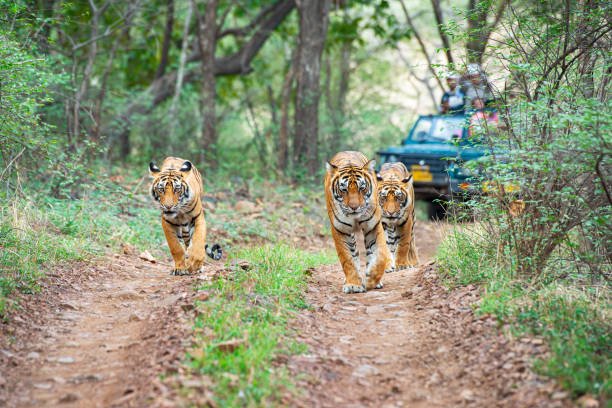
Zones 1 through 5 are flatter and more open, with lakes and water holes that pull animals into view, especially during hot months. Zones 3, 4, and 5 get named again and again by visitors as the highest-probability zones for a tiger sighting. The tradeoff: these are also the busiest zones. A single sighting can pull in a dozen jeeps and canters converging on one spot.
Zones 6 through 10 are hillier, with denser cover for tigers to hide in. Sighting odds drop, but so does the crowd. If your priority is a quieter, more scenic wilderness experience over a guaranteed photo, these zones aren’t a downgrade — they’re just a different kind of trip.
Here’s the part worth knowing before you get your hopes up: zone allocation runs through the government’s online booking system and is largely randomized. Despite making an early reservation, it is not possible to ensure which zone will be assigned to you. Some tour operators and hotels have better track records securing preferred zones through their booking relationships, but there’s no foolproof way to lock in zone 3 or 4 as an independent traveller.
Practical tip: if a tiger sighting matters more to you than anything else, don’t rely on a single safari. Book three or four across your trip. The same zone can be dead quiet one morning and produce three sightings the next — persistence genuinely moves the odds in your favour.
| Jeep Safari vs. Canter Safari: Which Should You Book? | ||
|---|---|---|
| You'll choose between two vehicle types, and the right pick depends heavily on who you're traveling with. | ||
| Feature | Jeep (Gypsy) Safari | Canter Safari |
| Capacity | Up to 6 people | Up to 20 people |
| Cost | Higher | Lower per person |
| Flexibility | High — can reposition quickly for sightings | Lower — fixed route, less manoeuvrable |
| Best for | Photographers, couples, honeymooners | Families, student groups, budget travellers |
| Experience | Personal, quieter | Shared, louder |
If you’re a serious photographer or a couple wanting an intimate experience, the extra cost of a private or shared jeep is worth it. If you’re traveling with a larger family or a student group and the goal is a general wildlife experience rather than the perfect photograph, a canter is a genuinely reasonable and far cheaper way to do it.
Best Time to Visit Ranthambore National Park
What to Actually Expect on Safari
This is the part almost nobody tells you honestly.
Some visitors get extraordinary luck: a resting male, a mother with cubs, and a third solo tiger, all in one afternoon. Others do three or four safaris across different zones and see mostly deer, monkeys, and a few crocodiles. Both outcomes are completely normal. This is a wild forest, not a zoo — nothing is scripted or guaranteed.
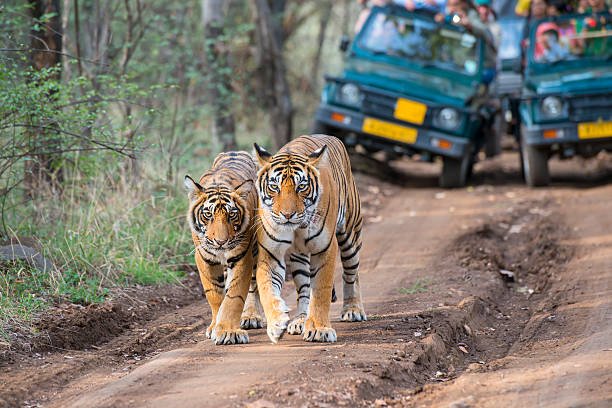
When a sighting does happen, be ready for the reality of it. In popular zones during peak season, one tiger near a track can draw a dozen or more vehicles jockeying for position, guides calling out to each other, and a fair amount of noise. It’s still thrilling, but if you’re picturing a quiet, solitary moment, adjust that expectation, especially in zones 3 and 4.
A few things that make the actual experience smoother:
Dress in layers. Winter mornings are cold enough for a jacket and gloves, but temperatures climb fast once the sun is up.
There are no mid-safari bathroom breaks. Basic facilities exist at the park gates only.
Bring binoculars, and a zoom lens if you have one. Animals are often at a real distance, and a phone camera rarely captures much detail.
Book more than one safari if you can. Two safaris roughly double your odds compared to one.
Flora and Fauna: What You'll Actually See
Ranthambore sits at the edge of the Thar Desert, so don’t expect dense rainforest. It’s dry deciduous forest — dhok trees dominate, mixed with banyan, mango, tamarind, and neem, with lotus and water lily crowding the lake edges. The landscape itself is striking: golden grass, exposed rock, and water bodies that pull all the wildlife activity toward them, especially in summer.
Tigers get the headline, but they’re far from the only draw:
Big cats and predators: leopards, sloth bears, striped hyenas, jungle cats, and the elusive caracal
Reptiles: marsh crocodiles that sun themselves at Padam Talao and Rajbagh lake
Herbivores: chital, sambar, nilgai, and chinkara, often grazing right beside the safari track
Primates: Hanuman langurs and rhesus macaques, a constant presence in the tree canopy
If you’re a birder, this park is worth visiting on its own merit. Over 270 bird species have been recorded here, including the crested serpent eagle, painted francolin, and Indian paradise flycatcher, plus a strong winter population of migratory waterfowl. Here’s the honest truth: even on a safari where the tiger never shows up, a sharp guide can turn a morning of birding and crocodile-watching into something genuinely satisfying. Go in expecting that as your baseline, and any tiger sighting becomes a bonus instead of the only measure of a good trip.
| Ranthambore National Park Timings | ||
|---|---|---|
| Safari timings shift throughout the year based on sunrise and sunset, since the park opens roughly half an hour after sunrise and closes half an hour before sunset. | ||
| Season | Morning Safari | Afternoon Safari |
| 1 Oct – 31 Oct | 6:30 AM – 10:00 AM | 2:30 PM – 6:00 PM |
| 1 Nov – 31 Jan | 7:00 AM – 10:30 AM | 2:00 PM – 5:30 PM |
| 1 Feb – 31 Mar | 6:30 AM – 10:00 AM | 2:30 PM – 6:00 PM |
| 1 Apr – 15 May | 6:00 AM – 9:30 AM | 3:00 PM – 6:30 PM |
| 16 May – 30 Jun | 6:00 AM – 9:30 AM | 3:30 PM – 7:00 PM |
Each safari runs about three to three-and-a-half hours. The park closes entirely every Wednesday, a relatively recent change made to reduce pressure on staff and wildlife. It also closes fully from 1 July to 30 September for monsoon, though some years see a partial reopening of zones 6–10 for travellers willing to risk weather-dependent cancellations.
If sighting odds matter most to you, aim for April through June. It’s brutally hot, sometimes touching 45–48°C, but that heat drives tigers to water holes in the open zones, producing some of the most dramatic sightings of the year. If comfort matters more, November through February offers cool, pleasant weather, though early mornings can dip below 10°C, so pack a proper jacket.
Ranthambore National Park Photos: Getting the Shot
If your main goal is great photography, timing and positioning matter more than luck. The best Ranthambore National Park photos tend to come from:
Morning safaris in zones 3, 4, or 5, where lake-edge light and tiger movement toward water create strong, clean compositions
April to June, when heat drives animals to open water sources during daylight hours
A private jeep, since you can reposition quickly instead of waiting for a canter to catch up
If you’re serious about wildlife photography, bring a zoom lens of at least 300mm, since safari vehicles can’t always get close, and a lot of the best shots happen at real distance.
Ranthambore National Park Resort Options
Accommodation near the park spans the full range:
Budget and standard hotels cluster closer to Sawai Madhopur town — a sensible choice for backpackers, student groups, and cost-conscious families.
Deluxe and luxury resorts, including heritage properties and luxury tented camps, sit closer to the park boundary and suit honeymooners and travelers wanting a more indulgent base.
If a wildlife-view room or a private pool matters to your trip, book your resort well before your safari slots. The best luxury properties near Ranthambore National Park fill up just as fast as the safaris do during peak season.
Ranthambore National Park Tickets and Ticket Price
Tickets for Ranthambore National Park do not come at a uniform price; rather, they consist of various charges:
Safari entry fee (varies by Indian vs. foreign nationals)
Vehicle charge (jeep vs. canter, shared vs. private)
Guide fee
Camera fee, if you’re carrying a professional camera setup
As a rough guide, jeep safaris cost noticeably more per person than canter safaris, and private jeeps cost more than shared ones. Foreign nationals typically pay a higher entry fee than Indian nationals, which is standard practice across most Indian national parks. Because Ranthambore National Park ticket prices are revised periodically by the forest department, always check the official booking portal for current rates before you finalize your budget — don’t rely on numbers you find in old blog posts or forum threads.
How to Reach Ranthambore
By train: Sawai Madhopur Junction, about 14 km from the park, is well connected to Delhi, Mumbai, and Jaipur.
By air: The nearest airport is Jaipur, roughly 180–200 km away, about a 3 to 3.5 hour drive. This is the practical option for international travellers prioritizing speed.
By road: Ranthambore connects well by highway to Jaipur, Delhi, Agra, and Bharatpur, making it an easy add-on to a Golden Triangle itinerary.
Ranthambore National Park Places to Visit Beyond the Safari
Don’t build your entire trip around back-to-back safaris. A few spots worth your time:
Ranthambore Fort — a 10th-century structure visible from several safari zones, home to the Trinetra Ganesh Temple, the only temple in the world where Ganesha is depicted with three eyes.
Padam Talao — the park’s largest lake, and one of the most photogenic non-safari spots in the area.
Raj Bagh Ruins — ancient stone remains you’ll pass on safari, worth a closer look if your itinerary allows.
National Chambal Gharial Sanctuary — about two hours away, offering a completely different wildlife encounter centered on the critically endangered gharial crocodile.
Frequently Asked Questions
Where is Ranthambore National Park located? Ranthambore National Park is located in Rajasthan, India, in the Sawai Madhopur district, about 130 km from Jaipur.
Ranthambore National Park is situated in which state? Rajasthan. It’s one of the state’s flagship wildlife reserves and a common add-on to Rajasthan or Golden Triangle itineraries.
What is the Ranthambore National Park ticket price? The cost of a ticket includes an entry fee, a vehicle charge, and a guide fee, with foreign nationals generally incurring higher expenses than Indian nationals. Since rates change periodically, check the official Rajasthan Forest Department portal for current pricing before booking.
How does Ranthambore National Park safari booking work? Bookings go through the official government portal using an SSO ID, with a cap of six bookings per person per month. You can also book through a hotel or tour operator for convenience, usually at a markup.
What are the Ranthambore National Park timings? Safari timings shift seasonally based on sunrise and sunset, generally falling between 6:00–7:00 AM for the morning safari and 2:00–7:00 PM for the afternoon safari, depending on the month.
Which Zone offers the highest likelihood of encountering a tiger? Zones 3, 4, and 5 are consistently named by visitors as having the highest sighting probability, thanks to open terrain and water bodies. Zone allocation is largely randomized, so it can’t be guaranteed.
Is Ranthambore National Park good for family trips? Yes. Safaris run with trained guides on fixed vehicle tracks, making it generally family-friendly, though very young children may find the 3+ hour duration long.
Ranthambore National Park earns its reputation honestly — it’s one of the few places where you can watch wild tigers move through daylight instead of hoping for a lucky glimpse at dusk. But the trip that photographers post online is only half the story. The other half is zone allocation, ticket logistics, and realistic expectations about what a safari actually feels like on the ground.
Get those basics right — book early, choose your vehicle type deliberately, plan for more than one safari, and treat a tiger sighting as a bonus rather than a guarantee — and you’ll walk away with a trip that matches what you came for, tiger or no tiger.
Ready to Plan Your Trip?
Check real-time safari availability and book your Ranthambore National Park tickets through the official portal, or browse trusted resorts and safari packages near the park if you’d rather have someone else handle the zone and vehicle logistics for you. Either way, book early — this park doesn’t wait for last-minute planners.