
Sanjay Dubri Tiger Reserve
- Home
- Sanjay Dubri Tiger Reserve
Sanjay Dubri Tiger Reserve
Welcome to Sanjay Dubri Tiger Reserve: The Complete Travel Guide
Ask ten Indian wildlife travelers about Sanjay Dubri Tiger Reserve, and eight of them will admit they’ve never been. That’s not a knock on the park — it’s the whole reason to go.
Sanjay Dubri Tiger Reserve sits in Sidhi district, Madhya Pradesh, and it’s still flying under the radar compared to Bandhavgarh or Kanha. Fewer gypsies on the tracks, a genuinely wild feel, and a founding story tied to one of the most famous animals in modern zoo history. This guide covers everything you need before you book: what the reserve actually is, current safari charges and timings, how booking works, when to go, and where to stay — plus the practical details most articles skip entirely.
What Is Sanjay Dubri Tiger Reserve?
Sanjay Dubri Tiger Reserve is a protected forest and core tiger habitat in the Sidhi district of northeastern Madhya Pradesh, close to the Uttar Pradesh border. Eleven perennial rivers run through it, cutting between steep hills and open grassland valleys. That mix of terrain matters for visitors: you’re not driving through one repetitive landscape for three hours, you’re moving through several distinct habitats in a single safari.
It’s also one of the youngest tiger reserves in the state, which explains why large parts of it still feel unmapped by tourism standards. There’s no single “famous zone” everyone crowds into. Guides describe entire stretches of buffer forest that see maybe one or two vehicles a week.
Sanjay Dubri Tiger Reserve is officially recognized as part of a tiger meta-population corridor, connecting to Bandhavgarh, Guru Ghasidas, and Palamau. In plain terms: tigers here aren’t stuck on an isolated island. They move between reserves, which keeps the gene pool healthier and the population more resilient long-term.
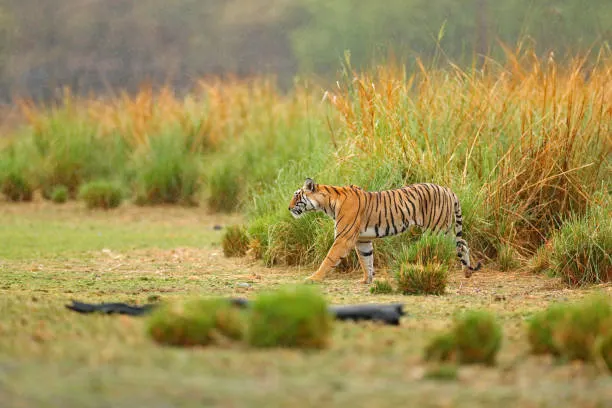
Sanjay Dubri Tiger Reserve Safari Charges
Sanjay Dubri Tiger Reserve Safari Charges
Safari charges at Sanjay Dubri Tiger Reserve typically cover three components: the entry permit, the gypsy (jeep) hire, and the guide fee. These are set and periodically revised by the Madhya Pradesh Forest Department, so treat any number you see online — including anywhere on this page — as a planning estimate, not a locked-in price.
Several factors influence the amount you will ultimately pay:
Zone matters. Core zone permits generally cost more than buffer zone permits.
Nationality matters. Indian and foreign nationals are usually charged on different fee slabs, which is standard across Indian tiger reserves.
Vehicle sharing matters. Splitting a gypsy hire across a group of 5-6 people brings the per-person cost down significantly compared to booking solo.
Always confirm current Sanjay Dubri Tiger Reserve ticket price figures on the official MP Forest booking portal before you travel. Rates get revised, sometimes seasonally, and outdated numbers floating around older blog posts are one of the most common sources of visitor frustration.
History of Sanjay Dubri Tiger Reserve
The history of Sanjay Dubri Tiger Reserve is inseparable from one specific event: the discovery of a white tiger cub in 1951.
The cub was found in a cave near the Bargadi drain, inside what is now the reserve, and rescued by Maharaja Martand Singh of Rewa. He was named Mohan. What happened next turned a local rescue into a global genetic story — Mohan is widely credited as the ancestor of nearly every captive white tiger alive today. Every white tiger you’ve ever seen at a zoo or in a wildlife documentary most likely carries his bloodline.
That’s really the biography of Sanjay Dubri Tiger Reserve in a sentence: a forest that quietly produced one of the most recognizable genetic lines in the animal kingdom, decades before anyone thought to build a tourism industry around it. The reserve gained formal tiger reserve status later, as conservation authorities recognized both its ecological value and its role in the broader tiger corridor network across central India.
Sanjay Dubri Tiger Reserve Booking: How It Actually Works
There are two ways to handle Sanjay Dubri Tiger Reserve booking, and knowing the difference in advance saves you a wasted trip to the gate.
Online safari booking (recommended) Online safari booking for Sanjay Dubri Tiger Reserve happens through the official MP Online forest portal. You select your date, zone, and safari slot in advance. This is the only reliable way to guarantee a spot during peak season — weekends especially fill up fast once winter tourist traffic picks up.
Walk-in booking A limited number of slots are held back for walk-in visitors at the tourist counter. This works fine in the off-season when demand is low, but it’s a genuine gamble on weekends and holidays. If your dates are fixed and you’re traveling any real distance to get here, don’t rely on this option.
Practical tip: book your jeep safari at Sanjay Dubri Tiger Reserve at least a few days ahead if you’re visiting between November and June. If you’re part of a larger group, coordinate one person to handle the booking rather than everyone booking separately — it’s easier to guarantee you all land in the same gypsy.
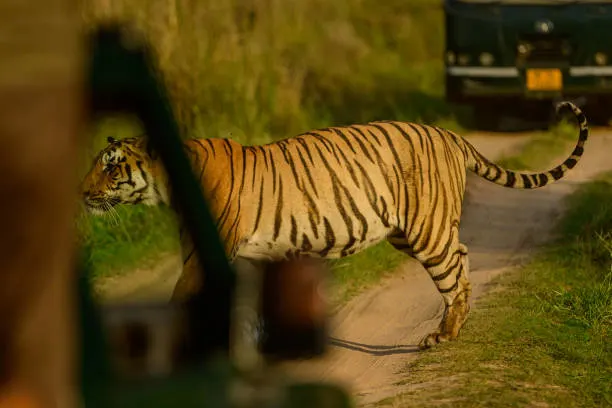
Sanjay Dubri Tiger Reserve Booking
Best Time to Visit Sanjay Dubri Tiger Reserve
October to February The most comfortable window, weather-wise. Cool mornings, mild days, and peak season for migratory birds. Best pick for families, first-time safari-goers, and anyone who wants to enjoy the forest without fighting the heat.
March to April Water sources start drying up, which pushes animals toward the rivers and remaining waterholes that stay full year-round. Sighting odds start climbing here as the forest cover thins out.
May to June Peak heat, and also peak tiger activity near water. One visitor group that spent three nights here in June came away having spotted ten different tigers across five safaris — including a tigress with her four grown sub-adults, tracked for over two hours in one sitting. That’s the trade-off: brutal daytime temperatures in exchange for some of the strongest sighting odds of the year.
July to September Standard monsoon closure across most Madhya Pradesh reserves. Confirm exact reopening dates before booking anything for early October.
If you’re chasing photography and sightings above all else, aim for late April through June. If comfort matters more than raw sighting odds, winter is your window.
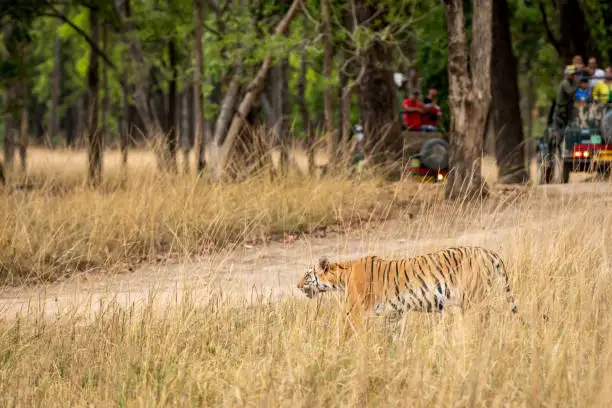
Online Safari Booking Sanjay Dubri Tiger Reserve
Online Safari Booking Sanjay Dubri Tiger Reserve
If you only remember one piece of advice from this section, make it this: don’t leave online safari booking for Sanjay Dubri Tiger Reserve until you’ve already arrived in Sidhi. Here’s the actual process:
Head to the MP Online forest booking portal and select Sanjay Dubri (often listed by its short code, STR) from the park list.
Choose your travel date, safari slot (morning or evening), and zone.
Pick your gypsy — some portals let you book a full vehicle, others assign seats individually within a shared gypsy.
Pay online and download or screenshot your confirmation. Cellular signal near the gate can be patchy, so don’t rely on pulling it up live.
Carry a printed copy or an offline screenshot along with a valid photo ID for every member of your group.
One thing worth knowing: the online system usually opens booking windows a set number of days in advance rather than allowing bookings months out. If a date you want isn’t showing up yet, check back closer to your travel window instead of assuming it’s sold out.
Jeep Safari Booking Sanjay Dubri Tiger Reserve: What to Know Before You Go
Jeep safari booking at Sanjay Dubri Tiger Reserve runs through registered gypsies only — private vehicles aren’t permitted inside core or buffer zones. Each gypsy typically seats around six visitors plus the driver and an assigned guide, so a full vehicle usually works out cheaper per person than booking a partial seat.
A few practical points that make a real difference on the day:
Book the whole gypsy if your group is 4 or more. You control the pace, the stops, and how long you linger on a sighting instead of sharing decisions with strangers.
Ask about the guide before you commit. Some operators let you request a specific naturalist by name at the time of jeep safari booking — worth doing, since guide experience shapes the entire safari.
Confirm whether the guide fee is bundled into the jeep hire or charged separately. This is one of the most common surprise costs at the gate.
Layer your clothing. Open gypsies get cold fast on winter morning safaris and dusty fast in summer — pack for both extremes even in a single day.
Sanjay Dubri Tiger Reserve Tour
A growing number of operators now offer Sanjay Dubri Tiger Reserve tour packages that bundle safaris, stays, and transport — often combined with a Bandhavgarh leg, since the two parks sit just two hours apart. For travelers who don’t want to coordinate permits, gypsy hire, and rest house bookings separately, a package can genuinely simplify the trip, especially for first-time visitors to this specific reserve.
If you go the package route, confirm exactly what’s included — some cover permits and gypsy hire but not the guide fee, which catches people off guard at the gate.
Sanjay Dubri Tiger Reserve Timings
Safaris run in two fixed daily windows — a morning slot and an evening slot — with exact start and end times shifting slightly by season (morning safaris start earlier in summer to beat the heat, later in winter once the fog clears). The park typically closes for the monsoon months, in line with the standard closure period observed across Madhya Pradesh’s tiger reserves.
Because these timings shift with sunrise and sunset patterns across the year, check the current schedule on the official website close to your travel date rather than locking in times from an old itinerary or a third-party travel blog.
Where to Stay: Resorts Near Sanjay Dubri Tiger Reserve
Official forest rest houses are available at Bastua, Bhuimand, Pondi, Kusmi, Dubri, Jogdaha, and Bagdara. These need to be booked in advance directly with the field director’s office — spot availability exists but is entirely at the discretion of park management, so don’t count on it as your primary plan.
Resorts near Sanjay Dubri Tiger Reserve are still limited compared to the resort corridors you’d find outside Bandhavgarh or Kanha, though private options have been slowly appearing near the buffer zone as more travellers discover the park. If a specific comfort level matters to you, book directly and early — this isn’t yet a market with dozens of last-minute options.
Quick guidance by traveller type:
Budget travellers and student groups: official forest rest houses, booked through the field director’s office
Couples and families wanting more comfort: private buffer-zone resorts, booked well in advance
Photography groups on tight schedules: stay as close to your preferred safari zone’s gate as possible to minimize pre-dawn travel time
What to actually check before booking a resort:
Distance to your safari gate. Morning safaris often start before sunrise — a resort 40 minutes from the gate eats into your sleep and your buffer time if the road is rough.
Meal arrangements. Options outside the immediate resort footprint are limited in this area, so confirm whether meals are included rather than assuming you’ll find alternatives nearby.
Direct booking vs. third-party listings. Given how few properties exist right now, calling or messaging a resort directly often gets you more accurate availability than a listing site that hasn’t been updated recently.
Backup power and water reliability. Worth asking about directly for stays during peak summer, when this region sees genuinely high temperatures.
As more travellers discover the reserve, expect the resort landscape near Sanjay Dubri Tiger Reserve to expand — but for now, book early rather than assuming you’ll find same-week availability, especially around winter weekends and the high-sighting window in May and June.
Birding in Sanjay Dubri Tiger Reserve
Birding in Sanjay Dubri Tiger Reserve is one of the most underrated reasons to visit. The first formal bird survey conducted here recorded 240 species in just four days — a number that holds up against far more established birding destinations in central India.
A few practical tips if birdlife is a priority for your trip, not an afterthought:
Request a birding-focused safari slot specifically. Tiger-focused guides and birding-focused guides often move at different paces — a guide chasing pug marks won’t stop for a raptor overhead, so say upfront that birding matters to you.
Target the water bodies and grassland edges. That’s consistently where species diversity peaks, according to guides working the reserve.
Go early. The first hour after gate-opening tends to be the most active window before safari traffic picks up.
Winter safaris add migratory species to the reserve’s resident bird population, so a November-to-February visit gives you the widest possible checklist.
If you’re building a trip specifically around birding in Sanjay Dubri Tiger Reserve, mention it when you book — some operators can pair you with a naturalist who specializes in birdlife rather than defaulting to a general wildlife guide.
| Sanjay Dubri vs. Bandhavgarh vs. Kanha: A Quick Comparison | |||
|---|---|---|---|
| Factor | Sanjay Dubri | Bandhavgarh | Kanha |
| Crowd levels | Low | High, especially peak season | Moderate to high |
| Sighting odds | Growing, strong recent reports | Highest in India | Strong, well established |
| Infrastructure | Basic, limited resorts | Extensive, every budget | Well developed |
| Best suited for | Repeat visitors, photographers, quiet-seekers | First-time safari-goers | Balanced experience |
| Distance from Sanjay Dubri | — | ~2 hours | ~5-6 hours |
The honest advice: if this is your very first tiger safari and you want the highest possible odds with easy infrastructure, Bandhavgarh remains the safer choice. If you want fewer people, more forest, and you’re open to a bit less predictability, Sanjay Dubri delivers an experience Bandhavgarh simply can’t anymore, precisely because it hasn’t been discovered yet. Since the two are only two hours apart, plenty of travellers just do both.
How to Reach Sanjay Dubri Tiger Reserve
Sanjay Dubri Tiger Reserve is roughly 640 km from Bhopal, but almost nobody actually routes through the state capital to get here. The practical gateways are the region’s railheads: Jabalpur, Satna, Rewa, Shahdol, Singrauli, Varanasi, Prayagraj (Allahabad), and Mirzapur.
Here’s a detail that surprises most first-time visitors: the Jabalpur–Singrauli–Howrah railway line runs directly through the sanctuary, and two railway stations — Dubri and Kanchanpur — sit physically inside the reserve. Two more, Joba and Marwasgram, are in the buffer zone. It’s one of the few tiger reserves in India you can genuinely reach by train without a long final road transfer.
From Bandhavgarh: about a 2-hour drive — the easiest possible add-on if you’re already in the area.
From Varanasi: a manageable road or rail connection, useful if you’re combining this with a broader UP/MP cultural trip.
From Delhi or Mumbai: fly or take a long-distance train into Jabalpur or Satna, then connect onward by road.
How to Book Sanjay Dubri Tiger Reserve Safaris: Step-by-Step
Pick your zone and dates based on the season guidance above.
Visit the official MP Forest safari booking portal and check real-time slot availability.
Complete online safari booking for Sanjay Dubri Tiger Reserve, selecting your preferred gypsy slot.
Save your booking confirmation — you’ll need it at the gate along with valid ID.
Arrive at least 30-45 minutes early, especially for morning safaris, to handle gate formalities without rushing.
Request an experienced naturalist guide when you book, if the option is available — this matters more here than at busier parks, where guide quality varies more between assignments.
Flora and Fauna of Sanjay Dubri Tiger Reserve
Tigers are the headline, but they’re not the whole story. The reserve’s mix of hill forest, grassland, and riverine terrain supports leopards, sloth bears, wild dogs, chital, and sambar, all moving through the same core and buffer zones.
Butterfly diversity is similarly strong, thanks to the variety of forest types across the reserve. That range makes it a genuinely useful destination for student and educational groups studying ecology rather than treating the trip as a photo op.
Frequently Asked Questions
How many tigers live in Sanjay Dubri Tiger Reserve? The population has grown steadily as conservation efforts have matured. For an exact current figure, check the latest official forest department census, since numbers are updated periodically through formal surveys.
What are the current Sanjay Dubri Tiger Reserve safari charges? Charges vary by zone, nationality, and season, and are revised periodically by the forest department. Confirm current rates on the official booking portal before you travel.
Is Sanjay Dubri Tiger Reserve better than Bandhavgarh? Not better, just different. Bandhavgarh offers higher sighting probability and stronger infrastructure. Sanjay Dubri offers a quieter, less commercial safari with genuinely strong recent sighting reports. Many travelers combine both in one trip.
What is the best time to visit Sanjay Dubri Tiger Reserve? October to February for comfort, late March to June for the strongest sighting odds as water sources shrink and animals concentrate near remaining rivers.
How do I book a jeep safari at Sanjay Dubri Tiger Reserve? Through the official MP Online forest booking portal for guaranteed slots, or through the walk-in tourist counter, which works only when demand is low.
How far is Sanjay Dubri Tiger Reserve from Bandhavgarh? Around two hours by road, making it an easy addition to an existing Bandhavgarh itinerary.
Are there resorts near Sanjay Dubri Tiger Reserve? A limited but growing number of private resorts sit near the buffer zone, alongside official forest rest houses at Bastua, Bhuimand, Pondi, Kusmi, Dubri, Jogdaha, and Bagdara.
Is Sanjay Dubri Tiger Reserve good for birdwatching? Yes. A formal survey recorded 240 bird species in just four days, making it a strong pick for dedicated birders, not just tiger-focused visitors.
Sanjay Dubri Tiger Reserve isn’t trying to be the next Bandhavgarh, and that’s exactly its appeal. It’s the birthplace of the world’s white tiger lineage, a genuine wildlife corridor connecting three other reserves, and — based on recent visitor reports — a park where quiet forests are translating into real sightings rather than crowded standoffs around a single sleeping tiger.
If you’re weighing where to spend your next safari days, this is a strong case for going somewhere fewer people have already been.
Ready to plan your trip? Check current safari availability, confirm this season’s charges, and lock in your Sanjay Dubri Tiger Reserve booking on the official MP Forest portal before your preferred dates fill up.