Madhav Tiger Reserve
- Home
- Madhav Tiger Reserve
Madhav Tiger Reserve
Welcome to Madhav Tiger Reserve: The Complete Guide
If you’ve searched “Madhav Tiger Reserve” recently, you’ve probably noticed something odd — half the results talk about a national park, the other half talk about a tiger reserve, and the numbers don’t quite match up. That’s not a mistake on your part. This place genuinely changed status in the last couple of years, and a lot of the content out there hasn’t caught up with it.
So let’s sort that out properly, and then get into everything you actually came here for: safari charges, booking steps, the best time to go, and what you’ll find once you’re inside.
Madhav Tiger Reserve Safari Booking
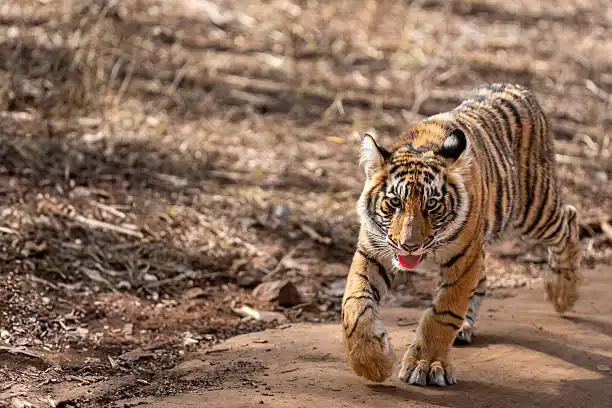
Madhav Tiger Reserve Safari Booking: How It Actually Works
Unlike some of the bigger reserves where private agents handle most bookings, Madhav Tiger Reserve safari booking runs almost entirely through the Madhya Pradesh Forest Department’s own online system. Here’s how to book Madhav Tiger Reserve without getting stuck:
Go to the official MP Forest safari booking portal, linked from the Madhav Tiger Reserve website.
Select Madhav from the park list, then pick your date and preferred slot — morning or afternoon.
Check the fee table before paying — Indian nationals and foreign nationals are charged differently, and vehicle type changes the total.
Pay online and save your confirmation. Print it or keep it accessible on your phone; you’ll need it plus a photo ID at the gate.
For Madhav Tiger Reserve online booking, book a few days ahead rather than same-day, especially around weekends and the winter holiday season. It’s a quieter reserve than Ranthambore, so slots aren’t brutally competitive — but fewer vehicles circulate here overall, so availability isn’t unlimited either.
Madhav Tiger Reserve: The Basics
Madhav Tiger Reserve sits in Shivpuri district, Madhya Pradesh, about 9 km from Shivpuri town and roughly two to two-and-a-half hours from Gwalior by road. It’s India’s 58th tiger reserve and the 9th in Madhya Pradesh, formally notified in 2025 after a technical committee approval in December 2024.
Here’s the part that trips people up: the reserve covers 1,751 sq km (375 sq km core, 1,276 sq km buffer), but the older national park it grew out of was only around 354–355 sq km. So if you’re reading an article quoting the smaller number, it’s describing the park before this expansion — not what exists today.
One more credential worth knowing: Sakhya Sagar, the main lake inside the reserve, was declared a Ramsar wetland of international importance in January 2022. That’s not a small thing — it puts Madhav on the map for wetland conservation, not just tiger tourism.
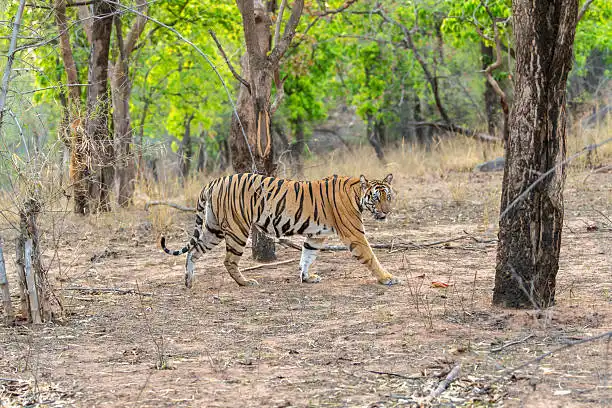
Madhav Tiger Reserve Safari Charges & Ticket Price
Exact fees change from season to season, so always confirm current numbers on the official booking portal before you travel. That said, here’s what to expect structurally when you’re checking the Madhav Tiger Reserve ticket price:
Entry fee — charged per person, with separate rates for Indian and foreign nationals
Vehicle fee — gypsy safaris are the standard option; shared canter safaris may be available at a lower per-person cost
Camera fee — still and video cameras are typically charged separately
Guide fee — a naturalist guide accompanies most safaris and is usually included in the vehicle booking
A practical tip: foreign tourists often pay a noticeably higher entry rate than Indian nationals, which is standard across Indian reserves but catches first-time international visitors off guard. Plan your budget in advance to avoid unexpected costs at the entrance.
Madhav Tiger Reserve Safari Charges & Ticket Price
Madhav Tiger Reserve Safari Timings
Safari slots follow sunrise and sunset, so they shift by season rather than staying fixed all year:
Morning safari: Begins around sunrise — typically 6:00–6:30 AM in winter months, a bit earlier during summer.
Afternoon/evening safari: Starts mid-afternoon and continues until just before sunset.
Since these times move with the seasons, it’s best to confirm the exact slot timings for your travel month directly on the official booking portal before you go — safari schedules are updated periodically and can change without much notice.
Want me to look up the current official timings for a specific month you’re planning to visit?
A Quick History of Madhav Tiger Reserve
Long before it was a tiger reserve, this land was a royal hunting ground. Mughal emperors used these forests from the 16th century onward, and later the Scindia rulers of Gwalior and British officials continued the tradition — which is part of why you’ll find a genuinely strange colonial-era building called George Castle sitting inside the forest, built in 1911 for a visit by King George V that never quite went as planned.
The park itself was established in 1956 as Shivpuri National Park, then renamed Madhav National Park in 1958 after Madho Rao Scindia. For a while, it actually had wild tigers — but by the late 1970s, they’d disappeared entirely, and the park spent the next several decades known mainly for its lakes, deer, and birdlife rather than big cats.
That’s really the biography of Madhav Tiger Reserve in one line: a royal hunting ground that lost its tigers, became a quiet national park, and is now, after almost fifty years, getting them back.
Best Time to Visit Madhav Tiger Reserve
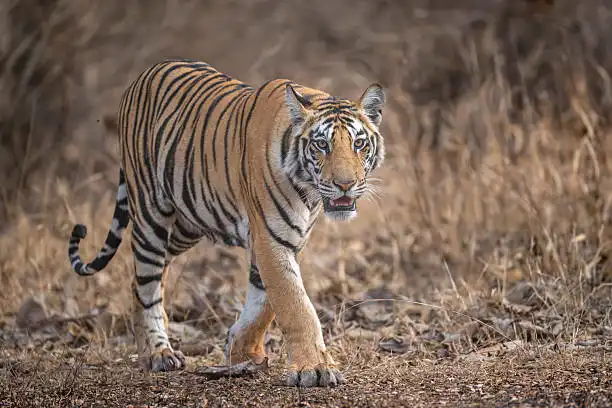
Best Time to Visit Madhav Tiger Reserve
October to February — the easiest, most comfortable window. Weather is mild, migratory birds are present around Sakhya Sagar, and this is the best stretch for families and first-time visitors.
March to June — hot, sometimes very hot by May. But water sources shrink, and wildlife concentrates around what’s left — which can mean better sighting odds if you can handle the heat. Serious photographers often choose this window on purpose.
July to September — monsoon season, and core zones typically close in line with standard practice across Indian tiger reserves. Don’t plan a safari trip in this window without checking current closure dates first.
If you’re unsure, winter is the safe default. If you’re chasing a photograph or a sighting specifically, late summer is the calculated gamble.
Tiger Reintroduction: The Story Everyone's Missing
This is the section most articles skip, and it’s genuinely the most interesting part of visiting right now.
When the reserve was declared in 2025, the plan included releasing a tiger and a tigress to rebuild a breeding population from scratch. Reports around the announcement put the count at five tigers. That means Madhav isn’t a place where sightings are close to guaranteed — it’s a place where a wild tiger population is being rebuilt in real time, and you’re visiting during that process.
Think of it less like Ranthambore, where a good safari almost always turns up a tiger, and more like Panna in its early rewilding years. If you go in expecting certainty, you’ll be disappointed. If you go in curious about watching conservation actually happen, it’s a genuinely compelling trip — and the leopards, birdlife, and lake scenery are strong enough to carry the visit even without a tiger sighting.
What to See: Flora and Fauna of Madhav Tiger Reserve
Even without a tiger sighting, there’s a lot going on here.
Wildlife you’re likely to see:
Leopards (more consistently spotted than tigers right now)
Nilgai and chinkara
Chausingha — the four-horned antelope, a species that’s genuinely uncommon elsewhere
Multiple deer species
A strong population of resident and migratory birds
Landscape highlights:
Sakhya Sagar Lake — the Ramsar-listed centerpiece, good for both wildlife viewing and boating
George Castle — the 1911 colonial-era building, a strange and photogenic contrast to the forest around it
Madhav Sagar (Madhav Lake) — a smaller reservoir built by damming the Manihar River under Madho Rao Scindia’s rule
How to Reach Madhav Tiger Reserve
This is genuinely one of Madhav’s biggest advantages — it’s close enough to the Golden Triangle circuit (Delhi–Agra–Jaipur) to work as a detour rather than requiring a separate trip.
By road — Sits along the Jhansi–Shivpuri highway, close to the old Gwalior–Bombay route. Gwalior is around 2–2.5 hours away by car; Agra and Jhansi are both within half a day’s drive.
By rail — Shivpuri has its own station on the Gwalior–Jhansi–Bhopal line. For long-distance travel, Gwalior Junction is the bigger, better-connected hub, with a short drive onward.
By air — Gwalior Airport is the nearest, with regular domestic flights and an easy road transfer from there.
If you’re already doing Delhi–Agra–Jaipur, this is realistically a one- or two-night add-on, not a whole separate leg of your trip.
Resorts Near Madhav Tiger Reserve
Most accommodation clusters around Shivpuri town, a few kilometers from the reserve gates, rather than inside the reserve itself.
Budget and family-friendly — simple hotels and guesthouses in Shivpuri, the practical choice for families and student groups
Mid-range — a step up in comfort within Shivpuri, suited to couples and leisure travelers
Luxury/resort-style — genuinely limited compared to Bandhavgarh or Kanha. This is one area where Madhav still lags the bigger-name reserves, so if a specific luxury property matters to you, book early and confirm availability directly
Staying in Shivpuri town keeps you close to both the gates and basic amenities like fuel and restaurants, which matters more than it sounds once you’re actually there at 5:30 AM trying to make a morning slot.
Madhav Tiger Reserve Tour Packages
If you’d rather not coordinate safari booking, transport, and stays separately, several Madhya Pradesh tour operators offer Madhav Tiger Reserve tour packages that bundle these together — often as part of a wider Gwalior–Shivpuri–Orchha circuit. This is worth considering if you’re short on time or visiting from abroad and want one point of contact rather than managing bookings across multiple portals yourself.
| Madhav Tiger Reserve vs. Other Reserves | ||||
|---|---|---|---|---|
| Madhav | Ranthambore | Kuno | Panna | |
| Distance from Delhi | ~5–6 hrs by road | ~6–7 hrs by road | ~7–8 hrs by road | ~9–10 hrs by road |
| Distance from Agra | ~3–4 hrs by road | ~5–6 hrs by road | ~6 hrs by road | ~8 hrs by road |
| Tiger population | Early reintroduction, very few | Large, well-established | No resident tigers (cheetah site) | Established, past reintroduction success |
| Crowd levels | Low | High in peak season | Low | Moderate |
| Best suited for | Quiet trip, birdlife, history | Highest tiger-sighting odds | Low | Good odds without Ranthambore's crowds |
(Travel times are approximate — always check current road conditions before finalizing your route.)
If tiger sightings are your only priority, Ranthambore or Panna will serve you better today. If you want fewer crowds, real history, strong birdlife, and the novelty of watching a tiger population get rebuilt from near zero, Madhav is worth the detour — especially if you’re already near Gwalior or Agra.
Jeep Safari Booking at Madhav Tiger Reserve
For jeep safari booking at Madhav Tiger Reserve, the gypsy is your standard vehicle — open-top, four-wheel drive, typically seating around six visitors plus a guide and driver. If you’re traveling as a couple or small family, you can often book a private gypsy rather than sharing, though it costs more per person than a canter.
One thing worth knowing: which zone you’re assigned can matter as much as which vehicle you book. If you have any flexibility, ask at booking time (or through your resort/tour operator) which zones have had recent activity — forest staff usually know, even if it’s not posted online.
Birding in Madhav Tiger Reserve
If birding is your main reason for visiting, don’t skip Sakhya Sagar. Its Ramsar status reflects real ecological value, not just a formality — expect strong migratory bird activity between October and February, alongside a healthy resident population year-round. Bring binoculars regardless of season; the lake edges are where most of the activity happens, safari or no safari.
FAQs
What are the Madhav Tiger Reserve safari charges? Charges vary by nationality, vehicle type, and camera use, and they change periodically — check the official booking portal for current rates before you travel.
How do I complete Madhav Tiger Reserve online booking? Book directly through the MP Forest Department’s safari portal, linked from the official Madhav Tiger Reserve website. Select your date, slot, and vehicle type, pay online, and keep your confirmation plus a photo ID for the gate.
Is Madhav Tiger Reserve good for tiger sightings? Not yet in the way established reserves are. It’s in the early stages of tiger reintroduction with a small population, so treat a sighting as a possibility rather than a guarantee.
What is the best time to visit Madhav Tiger Reserve? October to February for comfort and birdlife; March to June if you’re willing to handle heat for potentially better sighting odds around shrinking water sources.
How do I reach Madhav Tiger Reserve from Delhi or Agra? By road via Gwalior and Shivpuri — roughly 5–6 hours from Delhi and 3–4 hours from Agra. Gwalior also has the nearest airport and the best rail connections.
Are there resorts inside Madhav Tiger Reserve? Accommodation is mainly in Shivpuri town just outside the reserve, ranging from budget guesthouses to mid-range hotels. Dedicated luxury jungle lodges are limited compared to reserves like Bandhavgarh.
Madhav Tiger Reserve isn’t trying to compete with Ranthambore on guaranteed tiger sightings, and it doesn’t need to. What it offers is different: a Ramsar-listed lake, a genuinely strange piece of colonial history in George Castle, strong birdlife, and a front-row seat to a tiger population being rebuilt almost from scratch. If you’re already tracing the Delhi–Agra–Gwalior route, it’s one of the easiest, most worthwhile detours you can make — as long as you go in with the right expectations about what “early-stage tiger reserve” actually means.
Ready to Plan Your Visit?
Verify the current availability for safaris at Madhav Tiger Reserve and make your online booking today. If you are still considering your choices, compare Madhav with Ranthambore, Kuno, and Panna above to determine which reserve best suits your travel plans.