Mukundra National Park
- Home
- Mukundra National Park
Mukundra National Park
Mukundra National Park: The Complete Guide to Rajasthan's Hidden Tiger Reserve
Type “Mukundra National Park” into Google and you’ll get a strange mix of results — a Wikipedia stub, a government PDF nobody wants to read, a couple of exam-prep pages written for UPSC students, and a handful of thin travel blogs recycling the same three facts. None of them actually answer the question a real visitor has: should I go, and if so, how do I plan it properly?
That’s what this guide is for. We’re covering the safari charges, the booking process, when to go, what you’ll actually see, and how Mukundra compares to Ranthambore and Sariska — with nothing sugarcoated. If you’re the kind of traveller who wants honest expectations instead of brochure copy, keep reading.
What Is Mukundra National Park?
Mukundra National Park — officially known as Mukundra Hills Tiger Reserve — is a 759-square-kilometer protected forest in southeastern Rajasthan, spread across four districts: Kota, Bundi, Chittorgarh, and Jhalawar. It’s built from three older sanctuaries merged into one — Darrah Wildlife Sanctuary, National Chambal Sanctuary, and Jawahar Sagar Wildlife Sanctuary — with a fourth, Bhainsrodgarh Sanctuary, added to the core reserve in 2023.
It’s Rajasthan’s third tiger reserve, after Ranthambore and Sariska. The nearest big city is Kota, roughly 45–50 km away, which makes this reserve genuinely easy to add onto a Rajasthan trip without much detour.
Quick naming note, because it trips people up: “Mukundra” and “Mukundara” are the same place, just spelled differently depending on the source. “Darrah National Park” is the older name for the core area. And there was a brief, politically charged attempt to rename it Rajiv Gandhi National Park, which the state government later reversed. One park, several names — now you know why.
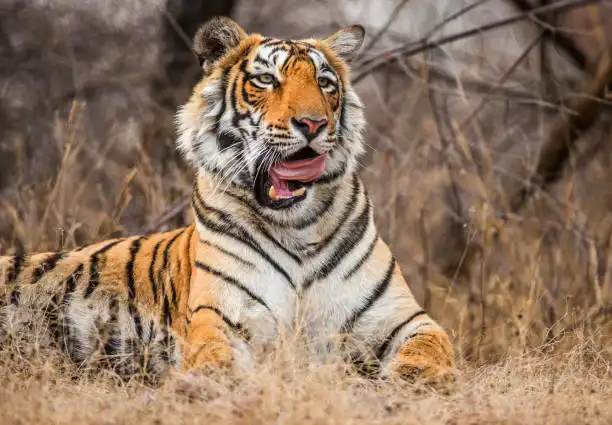
How to Book Mukundra National Park
How to Book Mukundra National Park (Online Safari Booking)
Visit the official Rajasthan Forest Department safari booking portal.
Select Mukundra Hills Tiger Reserve and your preferred date and slot (morning/evening).
Choose your vehicle type — jeep or canter.
Enter visitor details exactly as they appear on your photo ID.
Pay online and save your confirmation — you’ll need it, along with a physical ID, at entry.
Online safari booking for Mukundra National Park is strongly recommended over walk-in booking, especially between December and February when domestic tourist traffic across Rajasthan peaks. Last-minute, on-spot availability exists but shouldn’t be your primary plan if you’re traveling from far away.
Practical tips:
Carry a physical ID — a phone screenshot isn’t always accepted at the gate.
Book at least a couple of weeks ahead during peak season.
Wear neutral, muted colours and bring a light jacket for morning safaris — open jeeps at sunrise are colder than you’d think, even in a desert state.
Ask your guide questions. Because Mukundra sees far less traffic than Ranthambore, guides here often have more time to actually explain tracks, terrain, and animal behaviour instead of rushing to the next sighting.
History of Mukundra National Park
Before it was a conservation zone, this land belonged to the Maharaja of Kota, who used it as his private hunting ground. The name “Darrah” actually means “pass” in the local language — a literal nod to the valley’s shape, wedged between two hill ranges.
That same terrain had a second life during times of conflict. Maratha soldiers, Rajput warriors, and later British forces all reportedly used the dense forest cover here as a retreat point during regional conflicts. It’s a more eventful military history than you’d expect from a place now known for birdwatching.
The protection timeline, in short:
1955 – Declared a Wildlife Sanctuary
2004 – Upgraded to a National Park
2013 – Approved as a Tiger Reserve by the National Tiger Conservation Authority (NTCA)
2023 – Bhainsrodgarh Sanctuary merged into the core reserve area
Here’s the part most guides skip: for decades, this reserve had the right habitat but no resident tigers. The current population exists because of a deliberate reintroduction program — tigers were relocated here from Ranthambore starting with a single male, followed by tigresses to build breeding pairs. It wasn’t smooth. Some early relocations didn’t succeed, and it took years of monitoring before breeding started to stick. So when you visit today, you’re not looking at a reserve with a century of continuous tiger presence — you’re looking at one that’s still rebuilding, which honestly makes a sighting feel more earned.
Birding in Mukundra National Park
Birding in Mukundra National Park: Bring binoculars even if wildlife photography isn’t your main goal. The mix of river, wetland, grassland, and dry forest habitat draws a wide variety of species — raptors overhead, waterfowl near Jawahar Sagar reservoir and the Chambal, and forest birds through the drier stretches. Winter months bring migratory visitors, which is when serious birders should plan their trip.
Now, the honest bit nobody likes to say out loud: tiger sighting odds here are lower than at Ranthambore. The population is smaller and still stabilizing, and these cats haven’t had decades of exposure to safari vehicles the way Ranthambore’s have. If a guaranteed tiger photo is your entire trip’s purpose, factor that in before booking. If you want a fuller wildlife experience — crocodiles, birds, leopards, a landscape that doesn’t feel overrun — Mukundra earns its place.
| Best Time to Visit Mukundra National Park | ||
|---|---|---|
| The reserve is open October through June and closed for monsoon, July through September, when unpaved tracks become unsafe. | ||
| Season | Months | What You Get |
| Winter | October–February | Cool, comfortable safaris; peak birdwatching as migratory species arrive |
| Late Winter/Spring | February–March | Balanced weather with rising wildlife activity near water |
| Summer | April–June | Hot (often 40°C+), but animals cluster around shrinking waterholes — better predator-sighting odds |
If comfort matters most, go in winter. If sightings matter most, tolerate the heat and go in April or May — that’s when tigers and leopards have fewer places to hide.
Mukundra National Park Tour Packages
If planning each piece separately feels like too much, several Rajasthan-based tour operators offer Mukundra National Park tour packages that bundle safari bookings, local transport, and accommodation into one arrangement. These are worth considering if:
You’re travelling as a family and want fewer logistics to manage
You’re combining Mukundra with Kota, Bundi, or a wider Rajasthan circuit and want one operator handling the whole route
You’re a foreign tourist unfamiliar with India’s park booking systems and want a local expert managing the paperwork
If you’d rather book everything yourself, that’s entirely doable too — the steps above cover exactly what a package would otherwise handle for you.
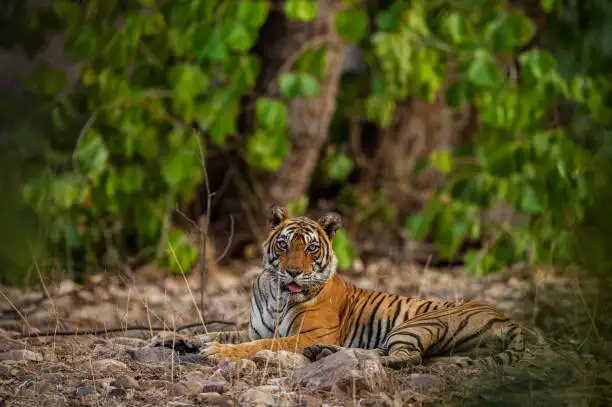
Mukundra National Park Tour Packages
Mukundra National Park Safari Booking: Zones, Timings, Charges & Online Booking
This is the section that matters most if you’re actually planning a visit, and it’s also the one that goes stale fastest across the internet — safari zone status, timings, and fees are managed by the Rajasthan Forest Department and get revised seasonally. Treat any number here (and anywhere else online) as a planning reference, then confirm it against the official portal before you travel.
Mukundra National Park Safari Charges & Ticket Price
Fees are broken down by category, not charged as one flat rate:
Entry fee (varies for Indian vs. foreign nationals)
Vehicle charges (jeep vs. canter)
Camera/photography fee, where applicable
Foreign national rates run higher than domestic rates — standard practice across Indian national parks, not unique to Mukundra. For the exact current Mukundra National Park ticket price, check the official Forest Department booking page close to your travel date, since rates are revised periodically.
Jeep Safari Booking Mukundra National Park
Two vehicle options are typically available:
Jeep (Gypsy) safari – smaller group, more flexible routing, better for photographers who want control over positioning
Canter safari – larger shared vehicle, more budget-friendly, works well for bigger groups or families traveling together
If you’re a serious photographer or a couple wanting a quieter, more personal experience, jeep safari booking for Mukundra National Park is worth the extra cost over a canter.
Mukundra National Park Safari Timings
Two daily slots, timed around sunrise and sunset:
Morning safari – commences around sunrise, with the precise time varying according to the season.
Evening safari – ends near sunset
Because timings move with daylight hours, check the current schedule for your travel month rather than assuming a fixed time.
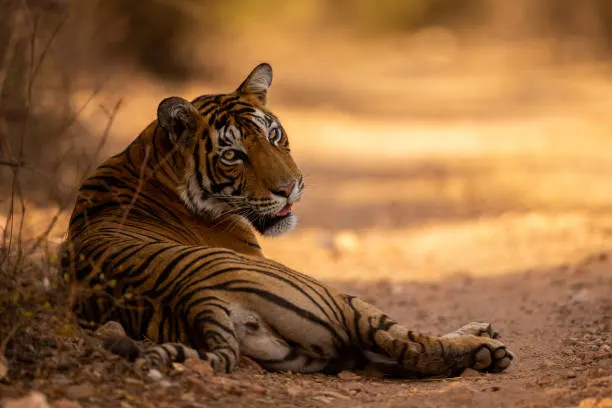
Resorts Near Mukundra National Park
Resorts Near Mukundra National Park
This is where most Mukundra content quietly fails you — search for “hotels near Mukundra” and half the results redirect you to Ranthambore listings, because that’s what those sites are actually built to sell.
Here’s the real picture:
Stay in Kota city – the most common choice, with a full range of budget-to-upscale hotels and real city infrastructure. The trade-off is a 45–60 minute drive to the reserve each way, which matters for early-morning safaris.
Stay closer to the reserve boundary – a smaller, growing number of resorts and guesthouses have opened nearer the park in recent years as tourism catches up to the reserve’s tiger-reserve status. Simpler, more nature-focused, and cuts your commute significantly.
Homestays and heritage stays – community-run pilots in villages near the reserve offer a genuinely different experience for culture-focused travellers, though they’re limited in number and need advance booking.
One honest note for luxury travellers: Mukundra doesn’t yet have Ranthambore’s dense cluster of high-end jungle lodges built up over two decades. If five-star jungle luxury is non-negotiable, that currently favours Ranthambore. If you’re fine trading some polish for a quieter, less commercial experience, Mukundra’s current stage of development is part of its charm, not a drawback.
| Comparison Table: Mukundra vs. Ranthambore vs. Sariska | |||
|---|---|---|---|
| Factor | Mukundra | Ranthambore | Sariska |
| Tiger density | Low, still recovering | High, well-established | Moderate |
| Crowd levels | Low | High in peak season | Moderate |
| Booking difficulty | Easier, more flexibility | Books out weeks ahead in peak season | Moderate |
| Scenery | Long valley, hill ranges, rivers | Dense forest, historic fort, lakes | Aravalli hills, ruins |
| Best suited for | Birders, photographers wanting space, first-timers curious about a quieter reserve | Near-guaranteed tiger sightings | A middle ground between the two |
| Accommodation | Limited, still developing | Extensive, all budget tiers | Moderate |
if a tiger sighting is the single goal of a limited trip, Ranthambore remains the statistically safer bet. If you’ve already done Ranthambore, or you value a fuller wildlife experience with fewer crowds, Mukundra is a genuinely worthwhile detour — not a consolation prize.
Biography of Mukundra National Park
If you think of Mukundra less as a static protected area and more as a place with an actual life story, it goes something like this: royal hunting ground → wartime refuge → neglected forest → wildlife sanctuary → national park → tiger reserve → active reintroduction project → expanding conservation corridor. Every stage left a mark still visible today — old hunting-era structures near the hills, forest tracks that predate any tourism infrastructure, and a tiger population whose family tree traces directly back to Ranthambore. Few reserves in India have this layered a backstory, and almost none of the ranking content mentions it.
Flora and Fauna of Mukundra National Park
Tigers aren’t the whole story here, and honestly, they shouldn’t be the only reason you go.
Carnivores: Bengal tiger, Indian leopard, Indian wolf, and sloth bear. Leopards are spotted more consistently than tigers, thanks to the rocky, cliff-heavy terrain they favour.
Herbivores: Chital, sambar deer, nilgai, wild boar, and chinkara — the prey base that keeps the carnivore population fed.
Reptiles: This is where Mukundra genuinely stands out. The Chambal River, running along the reserve’s edge, is one of the cleanest major rivers left in India, and it still supports the mugger crocodile and the far rarer gharial — a narrow-snouted, critically endangered crocodilian now confined to just a few river systems in the country.
How to Reach Mukundra National Park
By air: Kota doesn’t have major commercial flight connectivity, so most travellers fly into Jaipur (around 250 km away) or Udaipur (around 300 km away) and continue by road or rail.
By train: Kota Junction is your best bet — it sits on the Delhi–Mumbai main line with strong connections from Delhi, Jaipur, and Mumbai. For most visitors, this is the easiest way in.
| From | Distance | Travel Time |
|---|---|---|
| Kota | 45–50 km | 1–1.5 hours |
| Jaipur | ~250 km | 4–5 hours |
| Udaipur | ~300 km | 5–6 hours |
| $Delhi | ~450 km | 7–8 hours |
A Delhi-to-Mukundra day trip isn’t realistic — plan for at least one overnight stay if you’re coming from that far.
Things to Do In and Around Mukundra National Park
Jungle safari – the core activity, on jeep or canter
Birdwatching – especially rewarding near Jawahar Sagar reservoir and the Chambal in winter
Kota heritage sites – forts, palaces, and the Chambal Gardens riverfront pair well with safari days
Photography – early morning and late afternoon light through dry deciduous forest, with far less jeep traffic than Ranthambore to fight for a clean shot
Day-trip pairing with Bundi – stepwells and a blue-hued old town make a natural two-to-three-day loop combining wildlife with architecture
Conservation & Why This Reserve Matters
Mukundra isn’t just a place to visit — it’s an active piece of India’s tiger conservation strategy. Its long, narrow shape connects it toward Ranthambore, Ramgarh Vishdhari, and Gandhi Sagar, functioning as a wildlife corridor rather than an isolated block. That connectivity matters because isolated tiger populations lose genetic diversity over generations; corridors let animals move between larger populations and prevent that decline.
A few terms worth knowing before your visit:
Core/critical tiger habitat – the most strictly protected zone
Buffer zone – where conservation and local community livelihoods are managed together
Corridor – a landscape link allowing safe movement between forest blocks
Eco-sensitive zone (ESZ) – a regulated area around the reserve limiting activities that could pressure the core habitat
The 2023 addition of Bhainsrodgarh Sanctuary to the core reserve is the most significant recent development, expanding the protected footprint and strengthening the population’s long-term stability.
If you visit, the single most useful thing you can do is stay on marked routes, keep noise to a minimum, and treat your guide’s instructions as rules, not suggestions. A reserve still rebuilding its ecosystem depends on visitor discipline more than an established one does.
FAQs
Is Mukundra National Park the same as Mukundra Hills Tiger Reserve? Yes. The park was upgraded to a tiger reserve in 2013 after NTCA approval. “Mukundra National Park,” “Mukundara Hills National Park,” and “Mukundra Hills Tiger Reserve” all refer to the same protected area.
What is the Mukundra National Park ticket price? Fees are split by category — Indian nationals, foreign nationals, vehicle type, and camera charges — and are revised periodically by the Rajasthan Forest Department. Confirm current rates through the official booking portal before you travel.
How do I complete Mukundra National Park online booking? Book directly through the Rajasthan Forest Department’s official safari booking portal — select your date, time slot, and vehicle type, then pay online and save your confirmation for entry.
What are the Mukundra National Park safari timings? Two slots daily, one near sunrise and one near sunset, with exact clock times shifting by season.
Are there tour packages for Mukundra National Park? Yes. Several Rajasthan-based operators offer packages bundling safari booking, transport, and accommodation — useful if you’d rather not coordinate each piece yourself.
Which is better — Mukundra or Ranthambore? Neither is universally “better.” Ranthambore offers far higher tiger-sighting odds and more developed infrastructure; Mukundra offers a quieter, less crowded experience with strong birdlife and scenery, at lower sighting odds.
Is Mukundra National Park open during monsoon? No. It closes from July through September and reopens in October.
Can foreign tourists visit and book safaris? Yes. Foreign nationals can book safaris directly, though fees are typically higher than domestic rates, in line with standard practice at Indian parks.
Mukundra National Park isn’t trying to be Ranthambore, and honestly, it shouldn’t try to be. It’s a reserve still writing its own story — a former royal hunting ground turned conservation corridor, home to a tiger population that’s being rebuilt one relocation at a time, wrapped around a landscape of rivers, hills, and grassland that rewards patient travellers more than trophy-hunters with a checklist. Go in with realistic expectations about tiger sightings, plan your safari booking properly, and you’ll come away with something Ranthambore increasingly struggles to offer: a wildlife experience that doesn’t feel like standing in a queue.
Ready to Plan Your Visit?
Confirm current safari charges, zone availability, and booking windows through the Rajasthan Forest Department’s official portal before you finalize your dates — details shift seasonally, and this is the one part of any Mukundra guide worth double-checking close to your travel date. Once you’re set, book your jeep safari early, pack for cold mornings and hot afternoons, and give this reserve the couple of days it actually deserves instead of a rushed half-day stop.