Kabini National Park
- Home
- Kabini National Park
Kabini National Park
Kabini National Park: The Complete Guide to Safaris, Booking, and Planning Your Trip
If you’ve searched “Kabini National Park” and landed on five different resort websites all telling you why their property is the best, you’re not alone — and you’re probably no closer to actually knowing how to plan your trip. This guide skips the sales pitch. It’s built to answer the real questions: how much a safari actually costs, how booking works, when to go, and what you’ll realistically see once you’re there.
I’ve pulled this together from forest department timings, resort tariffs, and the kind of details that only show up once you’ve actually gone through the booking process yourself — not just copied from another travel site.
What Is Kabini National Park?
Kabini isn’t a standalone national park in the strict administrative sense — it’s a range within Nagarhole National Park (officially Rajiv Gandhi National Park), located in Karnataka’s HD Kote taluk, about 80 km from Mysuru. What sets it apart from the rest of Nagarhole is the Kabini Reservoir, a backwater stretch formed by a dam on the Kabini River, running straight through dense deciduous forest.
That mix — thick jungle bordering open water — is rare in Indian wildlife tourism. It’s also exactly why Kabini National Park draws such a wide mix of visitors: photographers chasing elephant herds at the water’s edge, families wanting an easy boat safari, and serious birders after a 300-species checklist.
How to Book Kabini National Park Safaris
How to Book Kabini National Park Safaris
Here’s the part most articles gloss over. The actual process depends on how you’re staying:
Resort guests: Safaris are usually bundled into your stay package. The resort books your zone and slot as part of your reservation — no separate action needed on your end.
Independent travellers: Kabini National Park online booking through the Karnataka Forest Department is possible, but the booking portal and rules are revised fairly often, so confirm the current process directly with the forest department or a local operator close to your travel date rather than relying on older articles online.
ID requirements: Carry a valid photo ID — passport for foreign nationals, any government-issued ID for Indian nationals — for verification at the forest check post.
Booking window: During peak season (March to May, and the December–January holiday stretch), safari slots can fill up 4 to 6 weeks ahead if you’re booking independently.
If slots are full: Ask your resort about additional paid safaris beyond your bundled package — most properties can arrange extra rides subject to availability.
The practical takeaway: don’t assume you can walk in and join a safari on the day, especially between March and May. Book your stay and safari plan together.
History of Kabini National Park
The area has a longer story than most visitors realize. Long before it became a conservation success story, Kabini was the private hunting ground of the Wodeyar royal family of Mysore and British colonial officers. The broader Nagarhole region was declared a wildlife sanctuary in 1955, expanded significantly in 1974, and finally earned national park status before being brought under Project Tiger in 1999 as a designated tiger reserve.
That transition — from royal hunting estate to protected tiger habitat — is part of what makes the region’s background genuinely interesting, not just a footnote. The Kabini River Lodge itself, now a wildlife resort, was originally the Maharaja of Mysore’s hunting lodge, and you can still see traces of that colonial-era architecture in the property today.
The forest is also home to indigenous communities — the Kadu Kurubas, traditionally hunter-gatherers — who were relocated to villages outside the park boundary when it was formally protected. It’s worth knowing this context before you go; it adds real depth to a safari that otherwise risks feeling like a checklist exercise.
Birding in Kabini National Park
If birds are your priority, don’t skip this. Over 300 species have been recorded here, resident and migratory, including cormorants, darters, herons, and several raptor species. The backwaters concentrate bird activity in a way the dense forest interior simply doesn’t, so if birding is your main goal, the boat safari should be your first choice over the jeep. Bring a lens with real reach — 400mm or more if you can manage it — since many birds sit well out on the water.
Kabini National Park Safari Charges and Ticket Price
Costs vary by property and safari type, and they’re revised periodically, so treat any number you read online as a starting reference rather than the final word:
Resort packages typically bundle stay, meals, and two safaris a day into a single per-person tariff.
Independent forest department bookings price the jeep safari, boat safari, and entry fee separately, and rates often differ for Indian nationals versus foreign visitors.
Camera charges, if applicable, are usually extra on top of the base safari cost.
Before you book, confirm current Kabini National Park ticket price details directly with your resort or the forest department — this is one area where outdated blog posts genuinely mislead travellers.
Kabini National Park Safari Charges and Ticket Price
| Resorts in Kabini National Park: An Honest Comparison | ||||
|---|---|---|---|---|
| Every resort's own website will tell you it's the best choice. Here's a more neutral breakdown by budget: | ||||
| Property Type |
Example | Price Tier | What's Typically Included |
Best For |
| Luxury | Evolve Back, Kabini | Premium (₹₹₹₹) | Boutique cottages, curated dining, spa, private safari experiences | Honeymooners, luxury travellers |
| Mid-range, heritage |
Kabini River Lodge (Jungle Lodges & Resorts) |
Moderate (₹₹) | Former royal hunting lodge, buffet meals, two safaris a day, campfire evenings | Families, first-timers, groups |
| Budget | Homestays near Beerambally/Karapura | Low (₹) | Basic rooms, home-cooked meals, safaris arranged separately | Backpackers, students, independent travellers |
If you want a five-star holiday that happens to include wildlife, go luxury. If you want the classic jungle-lodge feel — campfires, shared meals, naturalist-led evenings — the heritage mid-range tier delivers that at a fraction of the price. If you just want the safaris without the frills, a nearby homestay stretches your budget furthest, though you’ll need to arrange your own safari bookings.
Kabini National Park Safari Timings
Safaris run in two fixed daily slots:
Morning: Roughly 6:00 AM to 9:15 AM
Evening: Roughly 3:30 PM to 6:15 PM
Exact start times shift slightly by season (earlier sunrise in summer, later in winter), so confirm the current slot with your resort or the forest department close to your travel date.
Jeep Safari Booking for Kabini National Park
If you’re staying at a resort, jeep safari booking is typically handled for you as part of check-in — you just show up at the departure point. If you’re booking independently through the forest department, jeep safari seats are limited per slot and tend to fill up faster than boat safaris during peak season, so lock in your dates as early as you can.
Safaris in Kabini National Park: Jeep, Boat, and Zones
Safaris in Kabini National Park: Jeep, Boat, and Zones
Kabini is accessed through a few entry points, generally referred to as zones — Zone 1, Zone 2, and the Dammana Katte gate are the ones you’ll most commonly encounter. Zone assignment is handled by the forest department or your resort at the time of booking, based on rotation and availability. You can’t request a specific zone, so don’t build your itinerary around it.
Jeep safari: Runs morning and evening, roughly 3 to 3.5 hours each, taking you into the forest interior. Best for gaur, deer, sloth bear, and — with some luck — big cats.
Boat safari: Also runs twice daily, lasting about 90 minutes each. This is your best bet for elephants at the water’s edge, crocodiles, and birdlife, and it’s gentler on the body than a jeep bouncing over forest tracks.
Coracle ride: A traditional round boat made of bamboo and buffalo hide, offered at some lodges as a shorter, more rustic alternative to the motorboat.
| Best Time to Visit Kabini National Park | ||
|---|---|---|
| This is the question that shapes everything else about your trip, so here's a straight answer by season: | ||
| Season | Months | What to Expect |
| Summer | March – May | Peak sighting season. Waterholes shrink elsewhere in the forest, pulling elephants and other wildlife to the river. Best odds for tigers too, thanks to thinner dry-season foliage. |
| Monsoon | June – September | Fewer sightings but a genuinely beautiful, green, misty landscape. Good for photographers who want mood over volume, and easier to book last-minute. |
| Winter | October – February | Comfortable weather, reliable all-round sightings, strong bird activity. The easiest season for families and first-time visitors. |
If you’re chasing tigers specifically, April and May give you the best shot. If comfort matters more than raw sighting odds — say, you’re traveling with young kids or older parents — October to February is the safer bet.
Flora and Fauna of Kabini National Park
Flora: The forest here is a mix of dry deciduous and moist deciduous vegetation, with patches of teak plantation and unique microhabitats called hadlus — shallow, clay-bottomed valleys that turn into swamp savannas during the wet months. Flowering trees like the flame of the forest and Indian coral tree add striking color, especially in the drier months when the canopy thins out.
Fauna: Kabini reportedly supports one of the highest densities of wild herbivores anywhere in Asia, which is exactly why predator numbers here are strong too. Here’s the honest rundown:
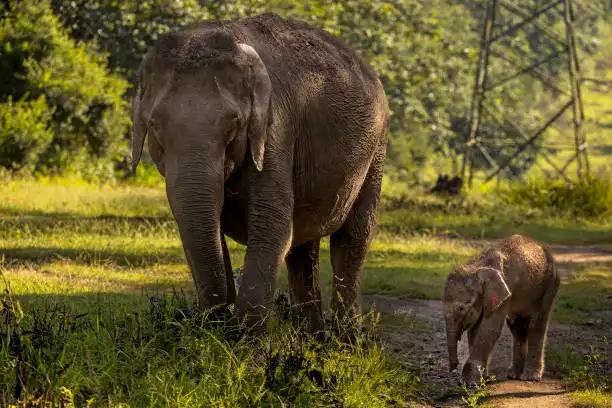
Elephants — Herds of 20 to 30 Asian elephants gathering at the backwaters in summer is the single most reliable wildlife spectacle in Kabini.
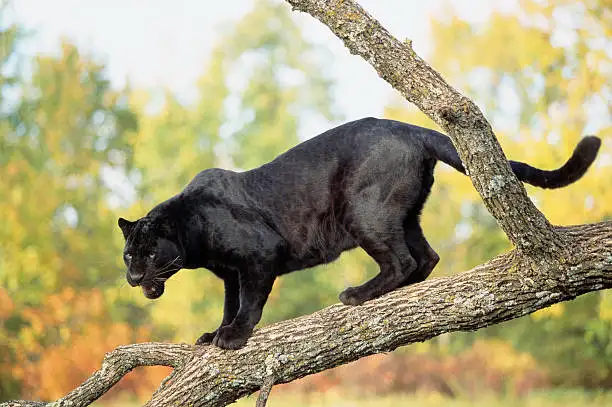
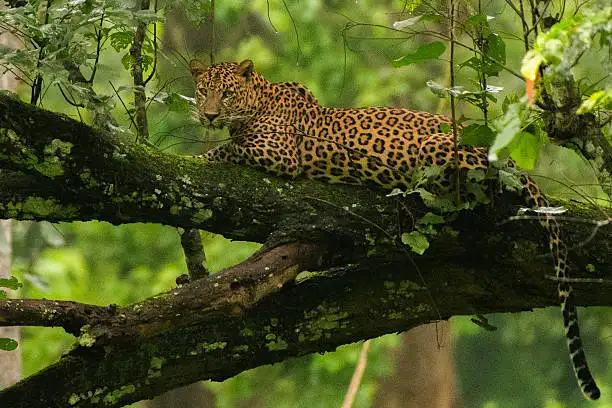
Big cats — Tiger, leopard, and occasional black panther (melanistic leopard) sightings happen, but never assume they’re guaranteed on a given safari.
Other mammals — Gaur, sloth bear, dhole (Indian wild dog), sambar, spotted deer, wild boar, bonnet macaque, and common langur.
Reptiles — Marsh crocodiles are a near-certain sighting on the boat safari.
Kabini National Park Tour Packages: What's Usually Included
Most resort tour packages follow a similar structure: accommodation, all meals, and two safaris a day (one jeep, one boat, or a mix depending on availability). Some also throw in a nature walk, a wildlife documentary screening in the evening, or a coracle ride. When comparing packages, check specifically whether both safaris are guaranteed or subject to availability — this detail is easy to miss and matters a lot if wildlife sightings are your main priority.
| How to Reach Kabini National Park | |||
|---|---|---|---|
| From | Distance | Travel Time | Route |
| Mysuru | ~80 km | 1.5–2 hours | Well-connected roads, taxi or self-drive |
| Bengaluru | ~220–240 km | 4.5–5.5 hours | Self-drive, taxi, or bus to Mysuru then onward cab |
| Wayanad (Kerala) | ~60–65 km | ~2 hours | Via Mananthavady road |
| Ooty | ~200 km | ~4 hours | Via Bandipur and Gundlupet |
Nearest airport: Mysuru Airport, with limited connections mainly to Bengaluru. Most long-haul and international travellers fly into Bengaluru’s Kempegowda International Airport and drive or connect onward to Mysuru.
Nearest railway station: Mysuru Junction, about 80 km away, well connected to major Indian cities.
If you’re not confident navigating rural Indian roads, book a car with a driver from Mysuru or Bengaluru — the final stretch into Kabini runs through forest roads that are easy to misjudge if you’re unfamiliar with them.
Planning Tips by Traveller Type
Families with kids: The boat safari is gentler and easier for young children to sit through than a jeep ride. Many resorts discount rates for kids aged 5–12.
Solo and international travellers: Kabini is a well-established, safe destination for solo and foreign visitors. Carry your passport for forest check-post verification.
Couples and honeymooners: Boutique properties like Evolve Back are built around private decks, curated dining, and spa treatments alongside the safaris.
Students and groups: Budget homestays or dormitory-style rooms at heritage lodges work well, especially paired with a naturalist-led evening session for added educational value.
Photographers: Bring at least a 300mm lens. Early morning light (the 6 AM slot) is softer and more flattering than the afternoon session.
What to pack: Neutral-colored clothing (green, khaki, grey, brown), closed shoes, sunscreen, a torch, and insect repellent. Mobile phones are typically not allowed on safaris, so plan your camera gear accordingly.
Frequently Asked Questions
Is one day enough to visit Kabini National Park? You can do it as a day trip from Mysuru with a single safari, but staying at least one night lets you do both a morning and evening safari, which meaningfully improves your chances of a good sighting.
How does Kabini National Park booking work if I’m not staying at a resort? You’ll need to arrange your own accommodation and book forest department safari slots independently. Resort guests generally get priority access to bundled safari seats, so independent bookings can be more competitive during peak months.
What are the current Kabini National Park safari charges? Charges vary by property and safari type and are revised periodically. Resort packages bundle safari costs into the overall tariff, while independent forest department bookings price safaris and entry separately. Always confirm current rates directly before booking.
What are the Kabini National Park safari timings? Two fixed daily slots — roughly 6:00 AM to 9:15 AM in the morning, and 3:30 PM to 6:15 PM in the evening — for both jeep and boat safaris, with slight seasonal variation.
Is Kabini National Park safe for solo or international travellers? Yes, generally. It’s an established tourist destination with resorts experienced in hosting solo and international guests. Standard travel precautions apply as they would anywhere.
Are kids allowed on safari in Kabini National Park? Yes, there’s no strict age restriction, though very young children may find early wake-up times and summer heat challenging. The boat safari is the easier option for families.
When is the best time to see tigers versus elephants? Elephants are reliably seen year-round, with the largest congregations in summer (March–May) when water is scarce elsewhere. Tigers are also more visible during this period for the same reason.
Nearby Places to Combine With Kabini
Kabini pairs naturally with a few other destinations. Nagarhole National Park is the larger reserve Kabini belongs to, and Bandipur National Park sits just to the southeast, making a combined Kabini–Bandipur wildlife circuit a popular multi-day itinerary. Wayanad Wildlife Sanctuary in Kerala is only 60–65 km away if you want to cross state lines, and Mysuru works well as a cultural add-on for its palace and heritage sites.
Kabini National Park earns its reputation honestly — the elephant congregations alone are worth the trip, and the boat safari option is something few other Indian parks can offer. But the trip works best when you plan around realistic expectations: book your stay and safaris together, pick your season based on what you actually want to see, and treat a tiger sighting as a bonus rather than a guarantee.
Whether you’re traveling with kids, chasing bird photography, or planning a honeymoon, the right approach here is less about which resort has the best website and more about matching your travel style to the right season, safari type, and stay tier.
Ready to plan your Kabini trip? Compare current resort packages and safari availability before you book — slots fill up fast in peak season, and getting your stay and safari dates locked together is the single biggest factor in how good your trip turns out.