Panna Tiger Reserve
- Home
- Panna Tiger Reserve
Panna Tiger Reserve
Welcome to Panna Tiger Reserve: The Complete Guide to Safaris, History, and Planning Your Trip
If you’ve searched “Panna Tiger Reserve” hoping for something more useful than a government fact sheet, you’re in the right place. Most of what’s online either reads like an official brochure or a templated booking page. Neither actually tells you which zone to pick, what a safari costs today, or why this particular reserve has one of the most remarkable comeback stories in Indian wildlife conservation.
This guide covers all of it — real zone comparisons, current booking logistics, resort options, the flora and fauna you’ll actually encounter, and the history that makes Panna worth visiting beyond just ticking off another tiger reserve.
Panna Tiger Reserve: A Quick Overview
Panna Tiger Reserve sits in the Panna and Chhatarpur districts of Madhya Pradesh, roughly 25 to 28 km from Khajuraho — close enough that most visitors combine both in a single trip. The park covers a core area of about 542.67 square kilometers, with the wider biosphere reserve, declared by UNESCO in 2020, stretching across nearly 3,000 square kilometers when you include buffer zones and surrounding forest divisions.
Panna National Park was established in 1981 and formally declared a tiger reserve in 1994, making it the 22nd tiger reserve in India and the fifth in Madhya Pradesh. The Ken River runs through the park, feeding a landscape of plateaus, gorges, and dense dry-deciduous forest that looks genuinely different from the sal forests you’ll see at Bandhavgarh or Kanha.
| Detail | Information |
|---|---|
| Location | Panna & Chhatarpur districts, Madhya Pradesh |
| Established | 1981 (National Park) / 1994 (Tiger Reserve) |
| Core Area | 542.67 km² |
| Biosphere Reserve Area | ~2,998 km² (Declared by UNESCO, 2020) |
| Nearest City | Khajuraho (~25–28 km) |
| Main River | Ken River |
| Open Season | October to June |
| Closed | July 1 – September 30 (Monsoon) |
One quick heads-up before you plan anything else: tiger population figures for Panna vary depending on the source and when the count was taken — official documentation sometimes cites smaller cohort-specific numbers, while more recent estimates for 2026 run considerably higher. India’s next nationwide tiger census is expected in 2026, which should settle the number with more certainty. Treat any specific figure, including ones in this guide, as a current estimate rather than a fixed fact.
Best Time To Visit Panna National Park
Best Time to Visit Panna National Park
The generic “October to June” answer doesn’t tell you enough, so here’s the breakdown by what you actually want out of your trip.
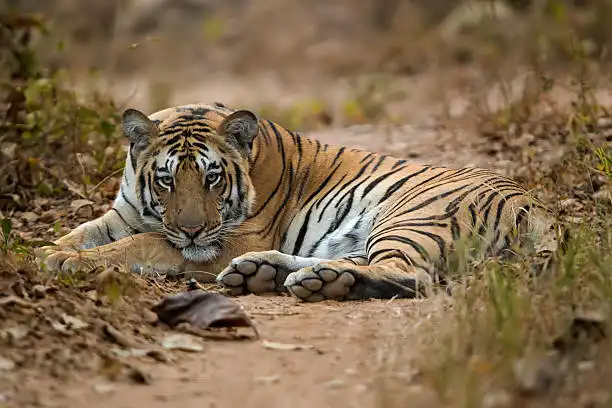
April to June — peak tiger-sighting season. It’s hot, often above 40°C, but that heat forces tigers toward visible water sources, which genuinely improves your odds. If seeing a tiger is your top priority, this is your window.
November to February — the comfortable season, with cool mornings and pleasant daytime temperatures. This is also the best stretch for photography light and for birdwatching, since migratory species arrive in numbers. Sightings are less predictable than summer, but the overall experience is far more pleasant.
July 1 to September 30 — the core zones are fully closed for monsoon. This trips up more travelers than any other detail on this list, so build your dates around it rather than around it.
If you’re a serious photographer, March to April tends to be the sweet spot: strong sighting odds without the harshest summer heat, plus atmospheric haze that can actually work in your favor for dramatic shots.
| Panna National Park Safari Zones Compared | ||||
|---|---|---|---|---|
| This comparison rarely shows up anywhere else, and it's the single most useful thing you can know before you book. | ||||
| Zone | Type | Sighting Odds | Crowd Level | Best For |
| Madla | Core | High | Busiest (main gate) | First-time visitors, standard safari experience |
| Hinouta | Core | High | Moderate, less crowded than Madla | Photographers wanting fewer jeeps per sighting |
| Jhinna | Buffer | Moderate, improving | Low | Budget travellers, quieter repeat visits |
Madla is the default choice, and for good reason — it’s the primary entry point, closest to most resorts, and has the most established safari infrastructure. Book here if it’s your first visit.
Hinouta sits farther out (around 60 km from Khajuraho versus Madla’s 28 km), but photographers consistently prefer it because sightings are shared with fewer vehicles. If you have previously experienced a tiger safari, this is the enhancement that justifies the additional travel time.
Jhinna, a buffer zone, costs less and draws smaller crowds, though sighting odds are somewhat lower than the core zones. It’s an excellent second or third safari on a multi-day trip, once you’ve already had your core-zone tiger moment.
One more detail worth flagging: Panna’s core zones close for evening safaris every Wednesday. Morning safaris on Wednesdays usually still run, but confirm this directly when booking — it’s an easy detail to miss.
How to Book Panna National Park: Tickets, Permits & Safari Costs
Panna offers two genuinely different safari experiences, and most visitors only know about one.
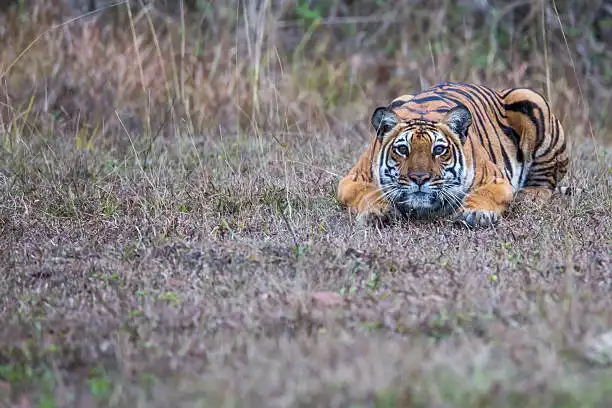
Panna National Park jeep safari is the standard option — a 3 to 4-hour drive through core or buffer zone in a private 4×4 Gypsy. Unlike some other Indian reserves, Panna doesn’t run shared canter safaris; nearly everything is private-vehicle, which matters if you’re traveling solo. You’ll either cover the full vehicle cost yourself or split it — and solo travellers can often find sharing partners right at the Madla Gate counter or through their tour operator, which is worth asking about specifically since it noticeably cuts the cost.
Boat safari on the Ken River is what actually sets Panna apart from Bandhavgarh or Kanha. Instead of driving through forest, you drift along the river, watching animals come down to drink and gharials basking on the banks. If you only have time for one extra experience, make it this one.
For Panna Tiger Reserve safari booking, you’ll typically pay for:
A safari ticket (permit fee)
Vehicle and guide hire
A separate camera fee for serious camera equipment
How To Book Panna National Park
Panna Tiger Reserve History: How It Went From Zero Tigers to a Global Conservation Model
Here’s the part most guides gloss over, and it’s genuinely worth knowing before you book.
By the early 2000s, Panna had more than 40 tigers. By 2009, it had none. Years of poaching — compounded by forest department denial rather than early intervention — wiped the population out completely. When the truth finally surfaced, it triggered a national scandal and an inquiry that reached the Prime Minister’s Office.
What happened next turned Panna into a case study taught in conservation circles worldwide. Rather than abandon the reserve, authorities launched an active tiger translocation program in 2009, bringing in a tigress from Bandhavgarh (T1) and one from Kanha (T2), followed by a male from Pench (T3).
The male didn’t settle immediately. He wandered off and appeared to be trying to walk back to his home territory in Pench, and forest staff tracked him on foot for over a month through farmland and villages before guiding him back to Panna. Remarkably, he caused zero incidents with local communities the entire time — a detail that says a lot about how well-managed wildlife corridors can actually work.
He eventually established territory and started breeding. T1 had four cubs in 2010, T2 had four more shortly after, and the population began climbing from there. By 2019, a decade after starting from zero, Panna crossed 50 tigers — a milestone that earned it international recognition, and in 2021, formal CAITS certification (Conservation Assured Tiger Standards) from India’s National Tiger Conservation Authority.
That’s the short version of Panna Tiger Reserve’s biography: a park that lost everything and rebuilt itself almost entirely from scratch within fifteen years. As of 2026, most current estimates put the population somewhere between 70 and 82-plus tigers, cubs included.
Beyond the Safari: What Else to See in Panna
Build in at least one non-safari day if your schedule allows it — safari after safari without a break is a fast way to burn out before your best sighting window (usually early morning) even arrives.
Pandav Falls: a scenic waterfall inside the park, surrounded by dense greenery. Easy, low-effort, and photographs beautifully in almost any light — a great option for families.
Panna’s diamond mines: this region has produced high-quality diamonds for centuries, and you can visit sites to learn about the mining history. It’s a genuinely unique addition that neither Bandhavgarh nor Kanha can offer.
Ancient rock paintings: roughly 2,000 years old and scattered through the reserve. They’re not part of the standard safari route by default, so ask your guide specifically if this interests you.
| Panna Tiger Reserve vs. Bandhavgarh vs. Kanha | |||
|---|---|---|---|
| If you're weighing Panna against Madhya Pradesh's more famous reserves, here's the honest trade-off. | |||
| Factor | Panna Tiger Reserve | Bandhavgarh | Kanha |
| Tiger sighting odds | Moderate to high | Highest in MP | High |
| Crowd density | Lower | Higher | Moderate to high |
| Unique experience | Boat safari on Ken River | Dense tiger population | Large, varied terrain |
| Best paired with | Khajuraho temples | Standalone trip | Standalone or Pench combo |
| Best suited for | Repeat visitors, couples, quieter trips | First-time visitors wanting guaranteed odds | Photographers wanting varied landscapes |
Choose Bandhavgarh or Kanha if this is your one shot at a tiger safari and you want the highest possible odds. Choose Panna if you’ve already done one elsewhere and want a quieter experience, the boat safari option, or an easy pairing with a Khajuraho trip. Neither is the “wrong” choice — it depends on what you’re actually optimizing for.
Panna National Park Ticket Prices
Panna National Park Ticket Prices
Panna National Park ticket prices shift seasonally and vary between zones, so treat any figure you see quoted online — including here — as a rough guide rather than a confirmed price. Always verify current Panna Tiger Reserve ticket price details directly with the official booking portal or your operator before finalizing plans.
For peak season (roughly March to June), book core zone permits 45 to 60 days ahead if possible. Buffer zone slots are far more flexible and can usually be arranged just days in advance.
If you want something different, ask about the night patrol buffer safari — an after-dark jeep safari through buffer territory alongside forest patrol staff. It’s not offered everywhere in India, and it’s a genuinely distinct way to experience the reserve if you’ve already done a standard daytime safari elsewhere.
Flora and Fauna of Panna National Park
Panna’s ecosystem is more layered than a typical “spot the tiger” itinerary suggests, and understanding it actually improves your safari odds.
The park sits at an ecological crossroads — it’s the northernmost stretch of natural teak forest in India and the easternmost edge of natural Anogeissus pendula (locally called Kardhai) forest. That mix of forest types creates varied habitat, from dense tree cover to open grassland, which is why Panna supports such a wide range of species in a relatively compact core area.
Mammals you’re likely to encounter:
Bengal tigers (the headline draw, obviously)
Indian leopards
Sloth bears
Chital (spotted deer) and sambar deer
Nilgai and chinkara
The rarely-seen rusty-spotted cat, one of the smallest wild cats on earth
Birdlife is where Panna genuinely surprises people. Over 200 species have been recorded here, and birding in Panna National Park deserves its own dedicated morning rather than being treated as a side note to the tiger safari. Look out for the red-headed vulture, changeable hawk-eagle, plum-headed parakeet, and — during migration season — the bar-headed goose, one of the highest-flying birds in the world.
Reptiles get their own dedicated space at the Ken Gharial Sanctuary, inside the reserve, which protects critically endangered gharials along with other crocodile and reptile species. It’s an easy add-on if you’re doing a boat safari on the Ken River, and it gives your trip a conservation story beyond “we saw a tiger.”
Panna Tiger Reserve Resorts: Where to Stay
Choose your resort based on which gate you’ll enter from, not just budget. A beautiful property 40 minutes from your morning safari gate means a punishing daily wake-up call.
Near Madla Gate: the widest range of Panna National Park resorts, from budget lodges to higher-end stays, since this is the primary entry point. The safe default for most travelers.
Near Hinouta Gate: fewer properties, generally quieter — a good match if you’ve chosen Hinouta specifically for its lower crowd density.
Budget and group stays: look near Madla, where a wider range of price points is available.
Luxury and honeymoon stays: several higher-end Panna Tiger Reserve resorts lean into the quiet, intimate positioning that draws couples to this park in the first place.
How to Reach Panna National Park
By air: Khajuraho Airport is your best option, roughly 25 to 28 km from the Madla gate. Most visitors pair a Khajuraho temple visit with their Panna trip for exactly this reason.
By rail: Khajuraho and Satna are the nearest major rail stations, with onward road transfer to the park.
By road: Panna connects reasonably well to other Madhya Pradesh wildlife circuits — Bandhavgarh sits about 250 km away if you’re planning a multi-park trip.
If you’re building an itinerary from scratch, two to three days at the Khajuraho temples followed by two to three days of Panna safaris is the natural, low-friction combination — and it works particularly well if you’re traveling with a mixed group of wildlife lovers and history enthusiasts, since each half gets something built specifically for them.
Practical Tips Before You Go
Pack layers. Early-morning open-jeep safaris are cold even in warmer months — you’ll want a fleece for the first hour.
Bring a real zoom lens if photography matters to you. A 300mm-plus lens is close to the minimum for a usable tiger shot from safari distance.
No flash photography of wildlife, ever.
Mention mobility concerns when booking. Jeep tracks can be rough, and some operators can suggest smoother routes or shorter safari durations for elderly travelers.
Follow your guide’s instructions. No loud noises, no standing up unexpectedly — it protects you and the animals.
Know the bigger picture: the Ken River running through Panna is part of an ongoing, contested river-linking project (the Ken-Betwa link), which environmentalists warn could affect core tiger habitat. While it will not impact your visit from a logistical standpoint, it is important to be informed about it.
Frequently Asked Questions
The current population of tigers in Panna Tiger Reserve is approximately ? Current estimates for 2026 range from roughly 70 to 82-plus, including cubs, though figures vary by source. A definitive national count is expected from India’s next tiger census, due in 2026.
What is the best zone for a Panna National Park safari? For those visiting Madla for the first time, it serves as the primary entrance, featuring the most developed infrastructure and high chances of sighting. Hinouta is the better pick if you want fewer crowds and have some safari experience already.
How do I book a Panna Tiger Reserve safari? Book through the official online portal or a registered local operator. Core zone permits should be booked 45 to 60 days ahead during peak season (March–June); buffer zone slots are more flexible.
What is the Panna Tiger Reserve ticket price? Prices vary by zone and season, covering the permit fee, vehicle/guide hire, and an additional camera fee if applicable. Always confirm current rates directly with the official booking portal before your trip.
Is Panna Tiger Reserve better than Bandhavgarh? Not necessarily better — different. Bandhavgarh generally offers higher tiger-sighting odds; Panna offers a quieter experience, a boat safari option, and easy pairing with Khajuraho.
How far is Panna National Park from Khajuraho? Roughly 25 to 28 km to the Madla gate, making it an easy same-trip pairing with the Khajuraho temples.
Can I visit Panna without doing a safari? Yes. Pandav Falls, the diamond mines, and the ancient rock art sites are accessible without a wildlife permit, though the jeep or boat safari remains the main draw for most visitors.
Panna Tiger Reserve isn’t just another stop on India’s tiger circuit — it’s a park with a genuine comeback story, a river safari you won’t find at Bandhavgarh or Kanha, and enough non-safari attractions to fill out a full trip rather than just a couple of jeep drives. Whether you’re chasing your first tiger sighting, planning a quieter honeymoon safari, or building a Khajuraho-Panna combo trip with the whole family, knowing which zone to pick and when to go makes the difference between an average visit and a genuinely memorable one.
Ready to Plan Your Panna Tiger Reserve Trip?
Check current safari availability, compare resort options near Madla and Hinouta gates, or get help building a tour package around your dates and group size — [start planning your Panna Tiger Reserve safari today →]