
History of Ranthambore
- Home
- History of Ranthambore
History of Ranthambore
What Is the History of Ranthambore?
The history of Ranthambore spans over 1,000 years. It began as a 10th-century Rajput fort built by the Chauhan dynasty, survived repeated sieges by the Delhi Sultanate, changed hands between Mewar, the Hada Rajputs, and the Mughals, then became a royal hunting ground for Jaipur’s Maharajas. After independence, it was protected as a sanctuary in 1955, brought under Project Tiger in 1973, declared a national park in 1980, and recognized as a UNESCO World Heritage Site in 2013.
If you’re planning a trip to Ranthambore, that quick summary is the version most people search for. Everything below fills in the parts that actually make it interesting.
Key Takeaways
Ranthambore Fort was built in the mid-10th century by the Chauhan Rajput dynasty and is one of the oldest forts in Rajasthan.
The fort survived at least two failed sieges by the Delhi Sultanate before finally falling to Alauddin Khilji in 1301.
It later passed through Mewar, the Hada Rajputs of Bundi, and finally the Mughals under Akbar in 1568.
The surrounding forest became a royal hunting reserve for the Maharajas of Jaipur — the reason wildlife habitat survived long enough to be protected later.
Ranthambore became a sanctuary in 1955, a Project Tiger reserve in 1973, and a national park in 1980.
In 2013, the fort was inscribed as a UNESCO World Heritage Site under “Hill Forts of Rajasthan.”
As of the most recent tiger census, the Ranthambore landscape supports close to 90 tigers, one of the strongest recovery stories in Indian conservation.
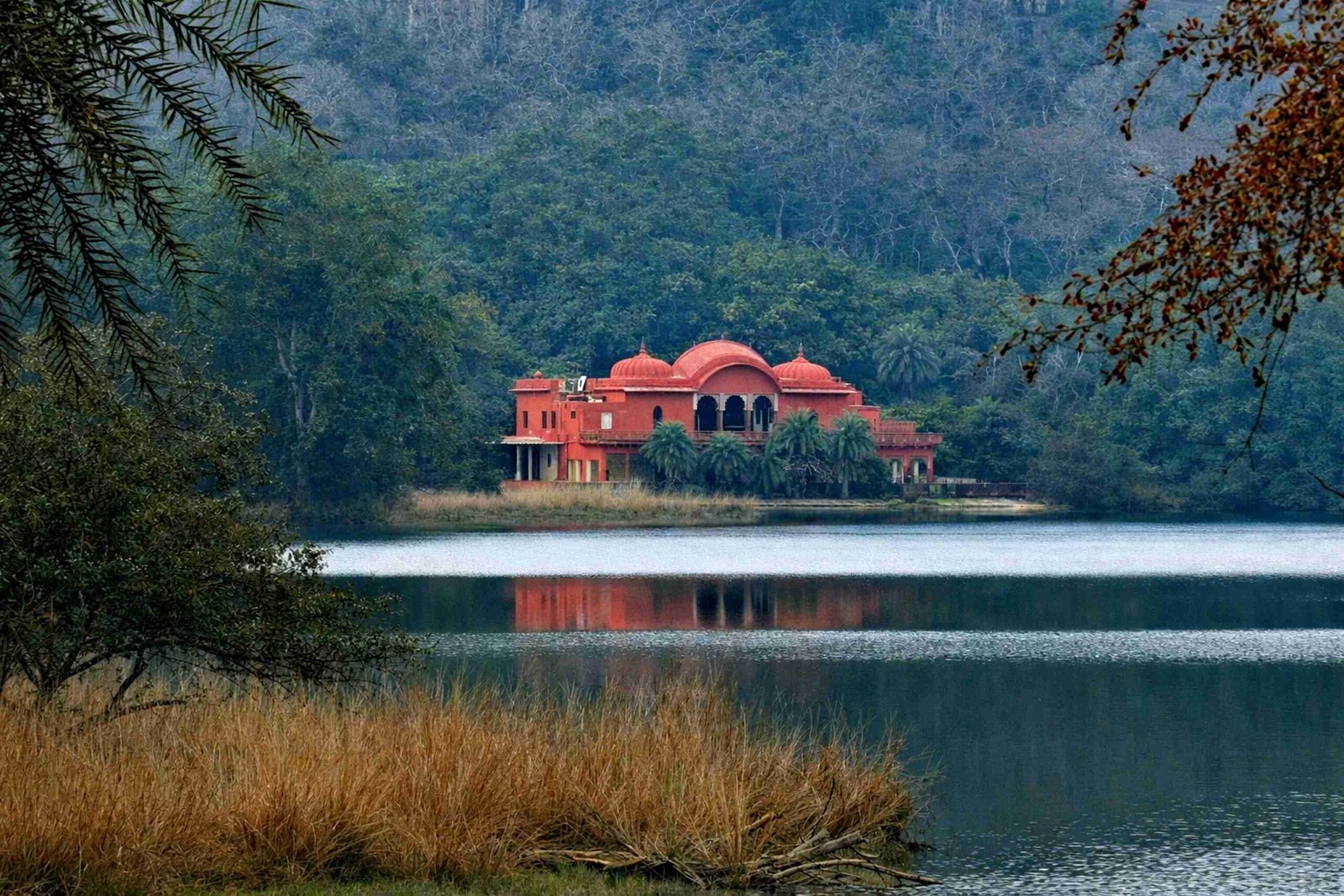
The Founding of Ranthambore Fort (5th–10th Century)
Ranthambore Fort sits nearly 700 feet above the surrounding plains. That height wasn’t an accident. In an era when armies fought with elephants, siege ladders, and patience measured in months, a fort you couldn’t easily climb to was worth more than one you could.
The name comes from Sanskrit — “Ranastambhapura,” roughly “the city of the battle post.” Early tradition credits the fort’s founding to Maharaja Jayanta. However, it was properly fortified in the mid-10th century under Sapaldaksha, a ruler of the Chauhan Rajput dynasty.
From that point forward, whoever controlled Ranthambore controlled the route between Delhi and the trade corridors running through Rajasthan and central India. That single fact explains almost everything that happens to this fort over the next 350 years.
Quick fact: Historians and UNESCO’s own nomination documents note that the remains of Hammir’s palace inside the fort are among the oldest surviving palace structures in India — a detail most visitors walk past without realizing.
The Age of Sieges: Rajputs vs. the Delhi Sultanate (1192–1301)
This is the part of Ranthambore’s history most guides skim past, and it’s a mistake — it’s genuinely dramatic.
How Delhi's Sultans Tried and Failed to Hold It
The story starts with a defeat elsewhere. In 1192, Prithviraj Chauhan lost the Second Battle of Tarain to Muhammad of Ghor, and Ranthambore came under Ghurid influence soon after. Delhi’s new rulers understood exactly what they’d captured — a fort that controlled access south.
Iltutmish took it outright in 1226. The Chauhans recaptured it after his death. For the next few decades, Ranthambore became a recurring problem for Delhi. Ghiyasuddin Balban laid siege to it twice, in 1248 and again in 1253, and failed both times.
Two failed sieges by a sitting Sultan of Delhi tells you exactly how seriously this fort was engineered.
The Fall of Hammiradeva (1301)
The event that really defines Ranthambore happened in 1301. At that time, the fort was under the control of Hammiradeva, the final notable ruler of the Chauhan dynasty. When Alauddin Khilji’s rebel general Muhammad Shah fled to Ranthambore for protection, Hammiradeva sheltered him — a decision rooted in the Rajput code of protecting those who sought refuge, regardless of cost.
Alauddin Khilji wasn’t going to let that go. He personally laid siege to the fort. Hammiradeva refused to hand over the man he’d protected. The siege dragged on for months, and it ended the way many Rajput last stands of that era did: with defeat rather than surrender.
The Chauhan dynasty’s 350-year hold on Ranthambore ended there.
Worth remembering on-site: if you visit the fort, you’re walking the same walls that held off the Sultan of Delhi twice — and finally fell on principle, not in open battle.
Changing Hands: Mewar, the Hada Rajputs, and the Mughals (1326–1568)
After Khilji’s conquest, Ranthambore kept changing hands for another two and a half centuries. This is where the history of Ranthambore fort gets genuinely complicated — but three transitions matter most.
Mewar control (1326 onward) — Rana Hamir Singh of Mewar took the fort, and it stayed under Mewar’s growing influence through the reigns of Rana Kumbha and Rana Sanga, two of Mewar’s most significant rulers.
Hada Rajput rule — control eventually passed to the Hada Rajputs of Bundi, a rival Rajput clan.
Brief Gujarat Sultanate capture (1532–1535) — before returning to Rajput hands.
The final major shift came in 1568, when Akbar took the fort as part of his broader consolidation of northern India. Unlike his predecessors, Akbar wasn’t interested in Ranthambore as a contested prize. He folded it into the Mughal administrative system, and its centuries as an actively besieged war fort effectively ended.
Takeaway: by the late 16th century, Ranthambore had gone from a battleground to a settled part of the Mughal empire — setting up the quieter, very different chapter that follows.
The Jaipur Royal Era: A Fort Becomes a Hunting Ground (17th Century–1947)
This transition rarely gets explained properly, and it’s the key to understanding everything that happens next.
Once Mughal control settled, the region eventually passed to the Kachwaha Maharajas of Jaipur. Here’s the part that matters: the forest around the now-quiet fort wasn’t cleared or abandoned. The Maharajas of Jaipur turned it into their private hunting ground, reserved for royal shikar (hunting) expeditions — and tigers were the prized game.
It’s easy to skip past this detail, but it’s the hinge the entire story turns on. A forest that’s actively managed — even if the management goal is “keep this stocked with game for royal hunts” — is a forest that doesn’t get cleared for farmland or settlement.
Ranthambore’s decades as a royal hunting reserve are the reason there was still a forest left to protect once India’s priorities changed. Without that accident of history, there’s a real chance there’d be no tigers left here at all.
Project Tiger and the Birth of Ranthambore National Park (1973–1980)
By the early 1970s, India’s tiger population had collapsed. Decades of unchecked hunting — including some of the same royal shikar traditions that had once kept Ranthambore’s forest intact — had pushed the species toward extinction nationwide. Estimates suggest India’s tiger count fell from around 40,000 at the turn of the century to roughly 1,800 by 1972.
In response, Prime Minister Indira Gandhi launched Project Tiger in 1973, and Ranthambore was declared one of the reserve’s original tiger reserves in 1973–74. It wasn’t just policy on paper — armed anti-poaching patrols, habitat protection, and a hard stop on hunting all followed immediately.
In 1980, the sanctuary was upgraded and formally declared Ranthambore National Park. This required relocating villages that sat inside the new reserve boundary — a genuinely difficult process that doesn’t get much attention in most tourist-facing histories, but it shaped the park’s modern boundaries.
Independence and the Turn Toward Conservation (1947–1966)
When India gained independence in 1947, princely states — including Jaipur — began joining the new nation. Jaipur formally acceded in 1949 and became part of Rajasthan in 1950.
What happens next is the direct link between “royal hunting ground” and “protected sanctuary”:
1953: Rajasthan passes its Forest Act.
1955: The former royal hunting grounds are officially declared the Sawai Madhopur Game Sanctuary, covering roughly 282 sq km.
1966: The fort and its surrounding palace structures are formally handed to the Government of India.
The land itself didn’t change. The intent behind protecting it did. Hunting for sport gave way to hunting being banned outright.
Growth, Recovery, and UNESCO Recognition (1983–Present)
The reserve kept expanding through the 1980s. The Kailadevi Wildlife Sanctuary was added in 1983, followed by the Sawai Man Singh Sanctuary in 1984, extending total protection well beyond the original park boundary. Today the full landscape — park plus both sanctuaries — covers about 1,334 sq km, according to current Rajasthan Forest Department figures.
Recovery hasn’t been a straight line. Ranthambore went through a serious poaching crisis in the early 2000s that nearly undid decades of protection work, with numbers dropping into the low 20s at the worst point. But sustained conservation effort has paid off. According to recent census data, the Ranthambore landscape has climbed to its highest recorded tiger count — reported at 92 tigers in the 2026 census, up from 88 the year before. That’s one of the strongest recovery curves of any tiger reserve in India, though it’s worth checking the Rajasthan Forest Department’s latest published figures before you travel, since numbers are actively monitored and updated.
In 2013, Ranthambore Fort received a different kind of recognition. It was inscribed by the UNESCO World Heritage Centre as part of the “Hill Forts of Rajasthan” series, alongside five other major forts including Chittorgarh and Kumbhalgarh. The listing wasn’t given for scenery — UNESCO’s own nomination documents cite Ranthambore specifically as an outstanding example of a “forest hill fort,” noting that the remains of Hammir’s palace are among the oldest surviving palace structures in India.
Given everything Ranthambore’s walls actually survived, it’s a fitting reason to be recognized.
Ranthambore Fort Timeline at a Glance
| Year | Event |
|---|---|
| Mid-10th century | Fort fortified under Sapaldaksha of the Chauhan dynasty |
| 1192–1301 | Repeated sieges by the Delhi Sultanate; Balban fails twice |
| 1301 | Alauddin Khilji conquers the fort; end of Chauhan rule |
| 1326 | Rana Hamir Singh of Mewar takes control |
| 1532–1535 | Brief capture by the Gujarat Sultanate |
| 1568 | Akbar annexes the fort into the Mughal Empire |
| 17th century | Kachwaha Maharajas of Jaipur use the forest as a royal hunting ground |
| 1949–1950 | Jaipur accedes to India; becomes part of Rajasthan |
| 1955 | Declared Sawai Madhopur Game Sanctuary |
| 1966 | Fort handed to the Government of India |
| 1973–74 | Included under Project Tiger |
| 1980 | Declared Ranthambore National Park |
| 1983–1984 | Kailadevi and Sawai Man Singh sanctuaries added |
| 2013 | Inscribed as a UNESCO World Heritage Site |
Sacred Ranthambore: Temples and Living Heritage
One thing that surprises first-time visitors: Ranthambore Fort isn’t just ruins. It’s an active pilgrimage site.
The Trinetra Ganesh Temple, built from red Karauli stone in the 12th or 13th century, sits inside the fort walls and remains one of the most visited Ganesh temples in India. Families across the country send wedding invitations here by mail — a tradition unique to this particular temple. Five aartis are performed daily, and during festivals like Ganesh Chaturthi, the fort draws crowds that have nothing to do with tigers or history at all.
The fort also holds Shiva and Ramlalaji temples, plus a Digambara Jain temple dedicated to Sumatinatha and Sambhavanatha — a reminder that this was a multi-faith religious site long before it became a tourist destination.s
If your main purpose for visiting is wildlife, you might overlook this aspect of Ranthambore if you only schedule a safari and neglect to explore the fort itself.
Why This History Still Shapes Your Visit Today
Knowing the history changes what you notice on the ground.
Naulakha Gate wasn’t decorative. It’s positioned exactly where it needed to be to control who entered the fort.
Jogi Mahal sits close to Padam Talao, one of the lakes that made this location viable for a prolonged siege — water access mattered as much as elevation.
Raj Bagh’s ruins, now a favorite photography spot because tigers occasionally walk past the old arches, were once functional palace structures, not scenery.
If you’re a photographer, late-afternoon light on the fort’s eastern walls combined with the Raj Bagh backdrop produces one of the more distinctive frames here — the layering of two very different eras in a single shot is what makes it work.
If you’re traveling with kids or as part of an educational group, the fort-to-forest story is a genuinely effective way to explain conservation to someone who’s never thought about it before: this land wasn’t always protected, someone had to decide to protect it, and it nearly didn’t survive long enough for that decision to matter.
Ready to see this history in person? Explore Ranthambore safari options or check the best time to visit Ranthambore to start planning.
Frequently Asked Questions
Who built Ranthambore Fort? The fort’s early founding is credited to Maharaja Jayanta, but it was substantially fortified in the mid-10th century by Sapaldaksha of the Chauhan Rajput dynasty, making it over 1,000 years old.
How old is Ranthambore Fort? Ranthambore Fort dates back more than 1,000 years, with major fortification traced to the 10th century CE, making it one of the oldest surviving forts in Rajasthan.
Why is Ranthambore famous for tigers? The forest around the fort was historically kept as a royal hunting reserve by Jaipur’s Maharajas, which preserved the habitat. After independence, it became a sanctuary in 1955, joined Project Tiger in 1973, and was declared a national park in 1980 — turning a hunting ground into a conservation success story.
Is Ranthambore Fort a UNESCO World Heritage Site? Yes. It was inscribed in 2013 as part of the “Hill Forts of Rajasthan” UNESCO World Heritage listing, alongside five other major Rajasthani forts, recognized for its Rajput military architecture and its status as a rare forest hill fort.
What is the history of Ranthambore fort in simple terms? It’s a 10th-century Rajput fort that survived multiple sieges, changed rulers several times, became a royal hunting ground, and was eventually turned into a protected tiger reserve after India’s independence — one location, two very different chapters.
How many tigers live in Ranthambore today? According to the most recent census data, the Ranthambore landscape supports close to 90 tigers, making it one of India’s strongest tiger recovery stories. Always check the Rajasthan Forest Department’s latest figures before planning a safari, since numbers are updated regularly.
The history of Ranthambore isn’t really two separate stories that happen to share a location — it’s one long story about how the same piece of land keeps being protected, generation after generation, for completely different reasons. First because a king needed to defend it. Then because another king wanted to hunt on it. Now, because we finally decided it was worth saving for its own sake.
That thread — defense, then privilege, then protection — is what makes Ranthambore worth understanding before you go, not just visiting for the tiger sightings.
Planning your trip? Book a Ranthambore safari to see the reserve firsthand, or explore the best tiger zones in Ranthambore to plan your route through 1,000 years of history.