
Biography of Ranthambore
- Home
- Biography of Ranthambore
Biography of Ranthambore
The Biography of Ranthambore: The Complete Story of India's Most Iconic Tiger Reserve
Most people show up in Ranthambore looking for one thing: a tiger. Fair enough. It’s one of the best places on earth to see one in the wild, sitting out in the open, completely unbothered by a jeep full of tourists with cameras.
However, the park possesses a narrative that is equally as dramatic as any experience you would encounter on a safari. The biography of Ranthambore is one of fortresses, sieges, royal hunts, near-extinction, and an unlikely comeback — all in English, all in one place, and all backed by real dates and real events, not folklore dressed up as history.
This is the biography of Ranthambore — a thousand years compressed into one park.
Key Takeaways
Ranthambore Fort was built in the 10th century by the Chahamana (Chauhan) dynasty — nearly 1,000 years before the tiger reserve existed.
The same land that’s now a tiger sanctuary was once a private royal hunting ground for Mughal emperors and the Maharajas of Jaipur.
Unregulated hunting nearly wiped out Ranthambore’s tigers by the mid-20th century.
Legal protection came in three stages: wildlife sanctuary (1955), Project Tiger reserve (1973), national park (1980).
A single tigress, Machli, made Ranthambore globally famous between 1996 and 2016.
The recovery isn’t finished — a 1990s poaching crisis and a modern genetic-bottleneck concern show conservation here is ongoing, not solved.
Short biography of Ranthambore National Park, in brief: Built as a fort in the 10th century, turned into a royal hunting ground for centuries, driven to near-collapse by unregulated hunting, and revived through sanctuary status, Project Tiger, and national park status — Ranthambore is now one of the best places in the world to see a wild tiger.
Birth of a Fortress
Ranthambore didn’t start as a wildlife reserve. It started as a fort.
Ranthambore Fort was built around the 10th century by the Chahamana (Chauhan) dynasty, perched on a hill that gave whoever controlled it a clear view of the surrounding plains. That’s exactly the kind of defensible position a medieval ruler wanted. The fort predates the “national park” concept by roughly a thousand years. Everything you see today — the tiger reserve, the lakes, the forest — grew up around that stone structure at its center.
That’s also why the fort holds its own UNESCO World Heritage recognition today, as one of the six Hill Forts of Rajasthan. Most visitors don’t realize the tiger reserve is essentially built around a medieval citadel. Ancient battlements and wild tigers sharing the same 1,300 square kilometers is an unusual combination, and it’s part of what makes Ranthambore genuinely different from most other tiger reserves in India.
Practical tip: if you’re visiting, build in time to walk through the fort itself, not just the safari zones. Most tour packages treat it as an afterthought, but it’s a short, worthwhile detour and gives real context to everything else you’ll see.
Siege, Legend, and the Fall of a Kingdom
The fort’s most dramatic chapter came in 1301, when Alauddin Khilji, the Sultan of Delhi, laid siege to it. The ruler at the time, Rana Hammir Deva, held out for months before the fort eventually fell.
This siege is tied to one of Rajasthan’s most enduring legends — the story of Rani Padmavati (also spelled Padmini). According to the legend, rather than face capture by Khilji’s forces, the queen and the women of the fort committed jauhar, a ritual mass self-immolation, at what’s now called Padam Talao — one of the three lakes inside the park. Historians still debate how much of the legend is verified fact versus later embellishment, but the story has shaped Rajasthani folklore for over 700 years.
That’s why Padam Talao carries real weight. It’s not just a scenic lake where you might catch a tiger drinking at dawn — it’s a place with centuries of legend behind it that most visitors walk right past without knowing.
Rebirth — From Sanctuary to National Park
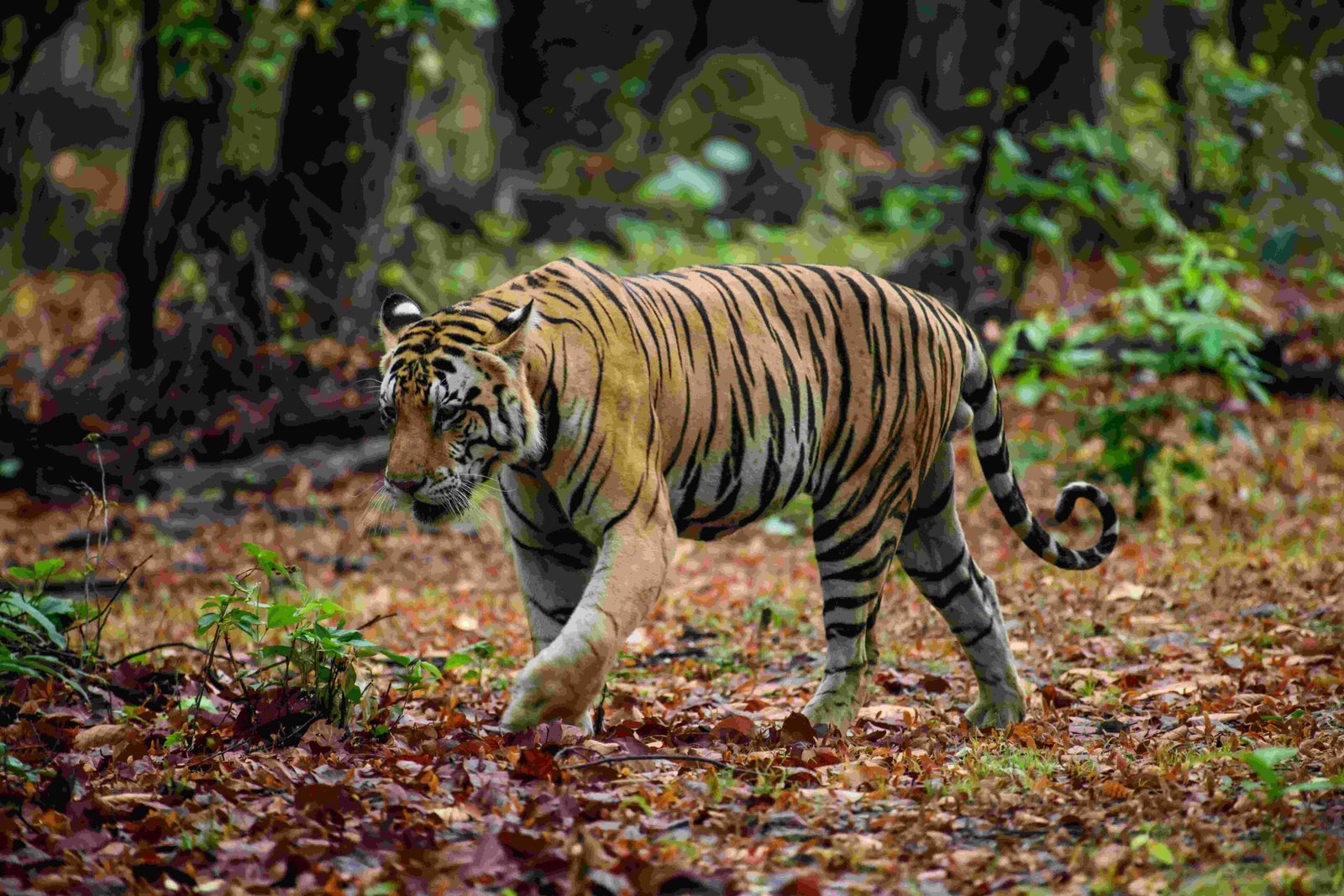
The turnaround started in 1955, when Ranthambore was declared a wildlife sanctuary — the first real legal step toward protecting what was left.
The bigger shift came in 1973, when Ranthambore was brought under Project Tiger, India’s landmark conservation initiative launched in direct response to the country’s collapsing tiger numbers. India’s total wild tiger population had dropped to an estimated 1,800 by 1972, down from tens of thousands a century earlier. Project Tiger gave Ranthambore real protection, real funding, and real enforcement for the first time in its history.
Then in 1980, it was officially designated a national park.
This is the turning point in Ranthambore’s biography — the moment the story stops being about decline and starts being about recovery.
| Before vs. After Project Tiger | ||
|---|---|---|
| Here's a quick side-by-side of what changed once formal protection kicked in: | ||
| Aspect | Before 1973 | After 1973 |
| Legal status | Unprotected hunting ground / early sanctuary | Project Tiger reserve, later national park |
| Tiger population trend | Sharp decline | Gradual, monitored recovery |
| Human activity in core zone | Villages and hunting parties present | Villages progressively relocated out of core zone |
| Enforcement | Minimal to none | Dedicated forest department patrolling |
| Global visibility | Largely unknown outside India | International wildlife tourism destination |
| Primary threat | Unregulated hunting | Poaching (1990s), now genetic isolation |
A Royal Hunting Ground
After Khilji’s conquest, the fort and surrounding forest changed hands over the centuries, eventually falling under the control of the Maharajas of Jaipur. Here’s where the story takes an ironic turn: for the next few hundred years, this same land — the one that today exists to protect tigers — was used almost exclusively to hunt them.
Ranthambore became a private shikar, a royal hunting reserve, first for Mughal emperors and later for the Jaipur royal family. Tiger hunts here were treated as prestigious events, sometimes staged for visiting dignitaries. The forest that now shelters one of India’s healthiest tiger populations spent centuries doing the exact opposite job.
The Age of Machli — How One Tigress Changed Everything
If Project Tiger gave Ranthambore its legal protection, it was a single tigress who gave it its global fame.
Machli, born in 1996, ruled Ranthambore’s Zone 3 for two decades until her death in 2016. She wasn’t just another tiger in the park. She became one of the most photographed tigers in the world, known for raising multiple litters of cubs and, in one particularly well-documented incident, for fighting off a large crocodile in a lake in front of tourists. That single event alone brought international wildlife photographers and documentary crews to Ranthambore in a way no marketing campaign could have.
Machli’s twenty-year reign lines up almost exactly with the period when Ranthambore transformed from a recovering reserve into one of the most visited tiger parks on earth. She wasn’t the reason the tigers survived; Project Tiger gets that credit. But she’s a huge part of the reason the rest of the world started paying attention.
Her legacy continued through her descendants, including tigers like Sundari and, in a more complicated chapter, Ustad — a male tiger who became controversial after being linked to multiple human deaths and was eventually relocated to a zoo. That decision ignited a significant discussion among conservationists regarding the management of tigers that frequently encounter conflicts with humans. It’s a reminder that “successful conservation” isn’t a clean, tidy story. It comes with hard tradeoffs.
A Fragile Future — Conservation's Unfinished Chapter
Here’s the part most articles about Ranthambore skip entirely: the recovery wasn’t permanent, and it isn’t finished.
In the early 1990s, Ranthambore faced a serious poaching crisis. Organized poaching networks were killing tigers for the illegal wildlife trade, and for a while it looked like the park could slide backward. Conservationists like Valmik Thapar, who spent decades studying and advocating for Ranthambore’s tigers, pushed hard for stronger enforcement and drew national attention to the crisis. Alongside stricter patrolling, authorities also relocated several villages out of the park’s core zone to reduce human-tiger conflict — a process that was necessary for conservation but genuinely difficult for the communities involved.
More recently, a different kind of problem has emerged, one that’s less about poachers and more about biology. Because Ranthambore’s tiger population is geographically isolated from other reserves, with limited corridors connecting it to other tiger habitats, researchers have raised concerns about genetic bottlenecking. In simple terms, the tigers here are increasingly related to one another, which narrows genetic diversity and can make the population more vulnerable over the long run. It’s not a crisis on the scale of the 1990s poaching wave, but it’s a real, ongoing concern for wildlife biologists studying the park’s future.
The honest version of this story isn’t “tigers were saved and now everything’s fine.” It’s closer to: tigers were saved, and now the challenge is keeping them genetically and ecologically secure for the next hundred years.
The Long Decline
By the early-to-mid 20th century, unregulated hunting had taken a brutal toll. Tigers across India were disappearing fast, hunted for sport, for trophies, and for their skins. Ranthambore was no exception. By the time India gained independence in 1947, the tiger population here, like in most of the country, was in freefall.
This wasn’t a slow, gentle decline. Within a couple of generations, a landscape that had supported tigers for centuries came dangerously close to losing them entirely.
Ranthambore Today
Walk through Ranthambore now and you’ll see the entire history layered on top of itself. Langurs sit on the crumbling walls of a thousand-year-old fort. Tigers nap in the shade near lakes with 700-year-old legends attached to them. Photographers wait for hours by Padam Talao hoping for the kind of shot that made Machli famous. Families, honeymooners, birdwatchers, and history buffs all end up on the same jeep trails, each looking for something slightly different in the same landscape.
If you’re planning a visit, check the best time to see tigers and safari zone options before booking — sightings and access vary a lot by season and zone.
That’s what makes Ranthambore worth understanding beyond just “great place to see a tiger.” It’s a place that’s been a battlefield, a killing ground, and a sanctuary, sometimes all three within the same century, and it’s still figuring out what comes next.
FAQs
Why is Ranthambore famous? It’s famous for being one of the best places in the world to reliably spot wild tigers during the day, combined with a dramatic history that includes a medieval fort, a royal hunting past, and one of India’s most well-known conservation recovery stories.
How old is Ranthambore Fort? The fort dates back to roughly the 10th century, built by the Chahamana (Chauhan) dynasty, making it nearly a thousand years older than the national park itself.
What happened to the tigers of Ranthambore? Their numbers collapsed due to unregulated hunting under royal and colonial-era hunting practices, hitting a low point by the mid-20th century. Protection began in 1955, accelerated under Project Tiger in 1973, and continued through the 1990s despite a serious poaching crisis, with the population growing significantly since.
Is Ranthambore a UNESCO site? Ranthambore Fort is a UNESCO World Heritage Site as part of the Hill Forts of Rajasthan, though the surrounding national park doesn’t carry a separate UNESCO designation.
Where can I read more about Ranthambore’s history? For a factual, encyclopedia-style reference, Wikipedia’s Ranthambore National Park page covers dates and statistics. This article goes further into the human stories, the sieges, the legends, and the tigers, behind those dates.
Who was Machli, and why is she important to Ranthambore’s history? Machli was a tigress who lived in Ranthambore from 1996 to 2016. She’s credited with putting the park on the global wildlife tourism map, largely due to her long life, multiple litters, and a famous encounter with a crocodile that was widely photographed and shared internationally.
Ranthambore’s story isn’t a straight line from “endangered” to “saved.” It’s a thousand-year arc that runs through a medieval siege, a legendary queen, centuries as a royal hunting ground, a near-total collapse of its tiger population, a hard-won legal recovery, one unforgettable tigress, and an ongoing conservation challenge that hasn’t fully resolved. Knowing that arc changes how you experience the park. You’re not just looking for a tiger anymore. You’re looking at the latest chapter of a very long story.