
Fauna in Ranthambore
- Home
- Fauna in Ranthambore
Fauna in Ranthambore
Fauna in Ranthambore: The Complete Guide to Wildlife, Zones, and When to See What
Most articles about the fauna in Ranthambore read like a checklist copied from a brochure: tiger, leopard, sloth bear, deer, crocodile, done. What they don’t tell you is where each animal actually spends its time, when your odds of seeing it peak, or that the list of big cats here just got a third member for the first time in recorded history.
This guide covers all of that — with real zone recommendations, a seasonal sighting calendar, and the conservation context that makes a Ranthambore safari feel like more than a photo op.
Key Takeaways
Ranthambore’s fauna in Ranthambore spans big cats, over 300 recorded bird species, marsh crocodiles, and dozens of mammal species — all packed into a relatively compact, visible landscape.
As of 2025–26, cheetahs from the Kuno reintroduction project have started moving into the Ranthambore landscape, making it one of the only places on Earth where tiger, leopard, and cheetah ranges currently overlap.
Different zones favor different animals: Zones 2–4 for tigers, Kachida Valley and Zones 6–7 for leopards and sloth bears.
April–June (despite the heat) often gives the best tiger sightings, while October–March is peak season for migratory birds.
Ranthambore’s tiger population has grown from around 25 in the mid-2000s to an estimated 75–90+ across the wider landscape today — one of India’s clearer conservation recovery stories.
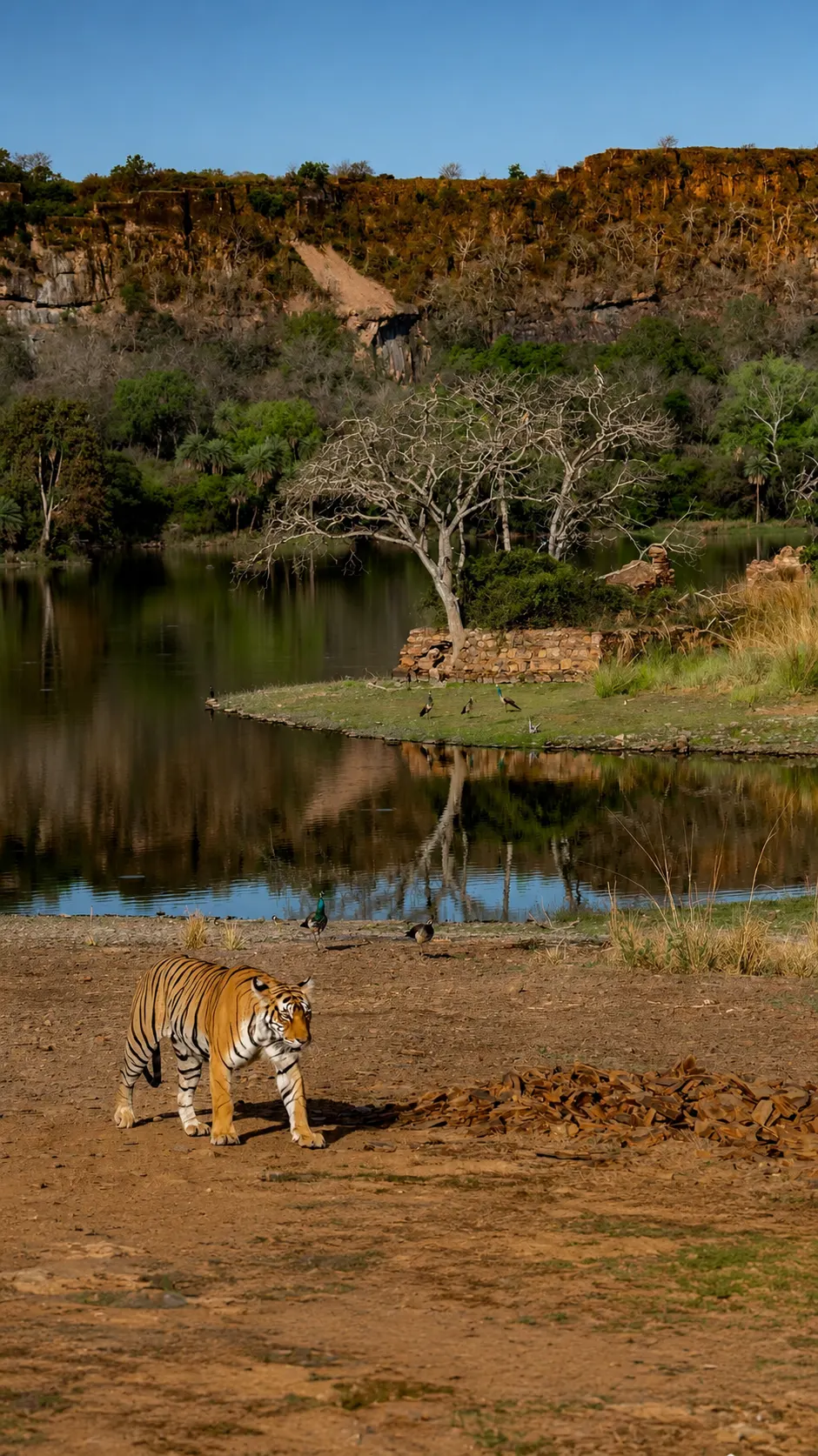
T-124 Riddhi Tigeress Ranthambore National Park
The Big Cats: Tigers, Leopards, and a New Arrival
Tigers
Ranthambore is Rajasthan’s flagship tiger habitat, and its individual tigers have genuine name recognition among wildlife enthusiasts. Machli (T-16), known as the “Queen of Ranthambore,” lived roughly 19 years in the wild and became globally famous after a fight with a full-grown marsh crocodile in Rajbagh Lake — a story naturalists still tell on safari today. More recently, tigresses Arrowhead and Riddhi have taken over territories around Zones 2 and 3, with their cubs now forming the next generation of resident tigers.
As of the 2026 tracking season, forest officials estimate roughly 75–90 tigers across the broader Ranthambore landscape, up from around 25 in the mid-2000s. That number varies depending on whether buffer-zone dispersal is included, so treat any single figure as a working estimate rather than a fixed count.
Leopards
Leopards get a fraction of the attention tigers do, but Ranthambore has a genuinely healthy population — they simply occupy different terrain: rocky escarpments, denser thorn scrub, and buffer areas like Kachida Valley, where they avoid direct competition with tigers.
Cheetahs — the story most guides miss
Here’s something that almost no competing article covers, because it’s too recent: since 2025–26, cheetahs reintroduced through Kuno National Park’s cheetah program have started wandering into and around the Ranthambore landscape. This pushes the region’s big cat count from two species to three — tiger, leopard, and now cheetah — an overlap that doesn’t naturally exist anywhere else in the wild, since no living cheetah population coexists with tigers elsewhere.
Wildlife specialists are monitoring this situation attentively, due to its ecological uniqueness and genuine worries regarding the safety of cheetahs in areas dominated by tigers. If you visited Ranthambore just a few years back and regarded it as a park for two big cats, that perspective is now outdated.
Reptiles: Crocodiles, Monitor Lizards & Snakes
Marsh crocodiles (muggers) around Rajbagh and Padam Talao are one of Ranthambore’s more visible reptile populations, largely because the shallow, warm lakes give them ideal basking conditions in full view of safari vehicles. Monitor lizards are common along the water’s edge, and the park hosts a range of snake species, though those sightings are incidental rather than something you can plan around.
Photographer’s tip: winter mornings, when crocodiles bask longer to regulate body temperature in cooler air, give the clearest and most consistent shots.
Why Ranthambore's Geography Shapes Its Fauna
Ranthambore sits where the Aravalli and Vindhya hill ranges meet, wrapped around a cluster of old lakes and the ruins of a 10th-century fort. That mix — dry deciduous forest, rocky ridges, and open water within a 1,334 sq km stretch — is exactly why the park supports such a dense variety of fauna in a relatively small area.
Unlike the thick, closed-canopy forests of parks like Kanha or Bandhavgarh, Ranthambore’s scrub is comparatively open. Animals have fewer places to hide, and the lakes — Padam Talao, Rajbagh, and Malik Talao — pull wildlife into visible clearings, especially as temperatures rise and smaller water sources dry up.
That’s the practical reason Ranthambore is considered one of India’s more reliable parks for daytime sightings: the terrain does the work that patience alone has to do elsewhere.
Zone-by-Zone Guide: Where to Find Each Animal
Ranthambore is split into 10 safari zones, and treating them as interchangeable is the most common mistake first-time visitors make.
| Zone Area | Terrain | Best For | Notes |
|---|---|---|---|
| Zones 2–4 (core, lake-adjacent) | Open scrub, lakes, ruins | Tigers, crocodiles, waterfowl | Highest tiger sighting consistency; Zone 3 features the Rajbagh ruins backdrop. |
| Zones 1, 5 | Mixed forest, grassland | Sambar, chital, general game viewing | Good backup zones when Zones 2–4 are booked out. |
| Zones 6–10 (buffer) | Rocky, drier terrain | Leopard, striped hyena, chinkara, caracal (rare) | Less touristed; better for leopard-focused safaris. |
| Kachida Valley | Broken hills, caves | Leopard, sloth bear | Not a numbered zone; ask your operator specifically. |
Practical advice: if your main interest lies with tigers, be sure to request Zones 2, 3, or 4 during your booking. Should you have a particular desire to see leopards or sloth bears, make that clear — the majority of safari operators tend to prioritize tiger-centric zones unless specified, and many tourists often overlook this detail.
Beyond the Big Cats: Mammals of Ranthambore
Tigers and leopards dominate the marketing, but most of an actual safari is spent watching everything else — and that’s the ecosystem functioning as intended, not a consolation prize.
Sloth bear — shaggy, near-sighted, most active at dawn while digging for termites in rockier zones.
Striped hyena — nocturnal and rarely photographed; a genuine “lucky sighting” even for repeat visitors.
Chital (spotted deer) — the primary prey base, found in open grassland and forest edges.
Sambar — Ranthambore’s largest deer species; unlike chital, sambar regularly wade into lakes to feed on aquatic plants.
Nilgai The Nilgai, also known as the blue bull, is the largest antelope in India. It is frequently found in open grasslands, yet it is often disregarded as it is not perceived as an ‘exotic’ species.
Chinkara (Indian gazelle) — smaller and faster than nilgai, found in drier scrub away from water.
Gray langur — the park’s most visible primate; their alarm calls often give the first warning of a tiger’s movement, which is why experienced guides watch langurs as closely as the ground itself.
Jackals and civets — present but mostly seen at dusk or by chance.
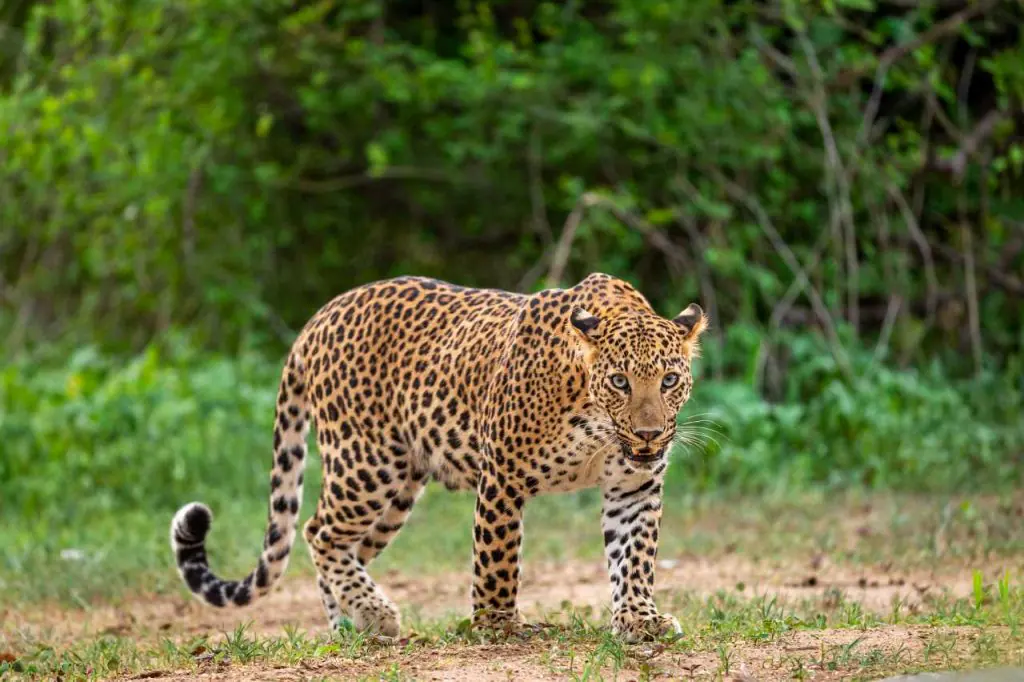
Leopard in Ranthambore National Park
Birds of Ranthambore: A Migratory Hotspot
Ranthambore’s bird checklist runs into the hundreds of species. Resident water birds — kingfishers, herons, storks — are visible year-round around the three main lakes. The real spectacle, though, is the migratory season: between October and March, the lakes fill with wintering waterfowl arriving from Central Asia, making this the strongest window for serious birdwatchers rather than tiger-focused visitors. Raptors, including crested serpent eagles, are also easier to spot in the cooler months, when weaker thermals force them to hunt lower.
| Seasonal Wildlife Calendar | ||
|---|---|---|
| Months | What's Happening | Best For |
| October – February | Migratory birds arrive; pleasant weather; crocodiles basking visibly. | Birdwatchers, families, first-time visitors. |
| March – April | Water sources shrink, concentrating prey and predators near remaining lakes. | Tiger sightings, photography. |
| May – June | Extreme heat, but animals rarely leave shrinking waterholes. | Serious tiger sighting attempts. |
| July – September | Core zones closed for monsoon; some buffer zones open with lush terrain. | Quiet, green-season visits. |
Overlooked Species Worth Knowing About
Most articles stop at the animals above. A few species get one line, if that:
Indian civets and small Indian mongoose — mostly nocturnal, occasionally spotted at dusk near forest edges.
Indian hare and hedgehog — easy to miss but genuinely present in scrub zones.
Butterflies and insects — an under-discussed layer of Ranthambore’s biodiversity, particularly active in the lush post-monsoon buffer zones.
If you’re a photographer, student group, or anyone with a genuine interest in biodiversity rather than just tiger-spotting, ask your naturalist guide to point these out specifically — it makes for a far less crowded and more educational kind of safari.
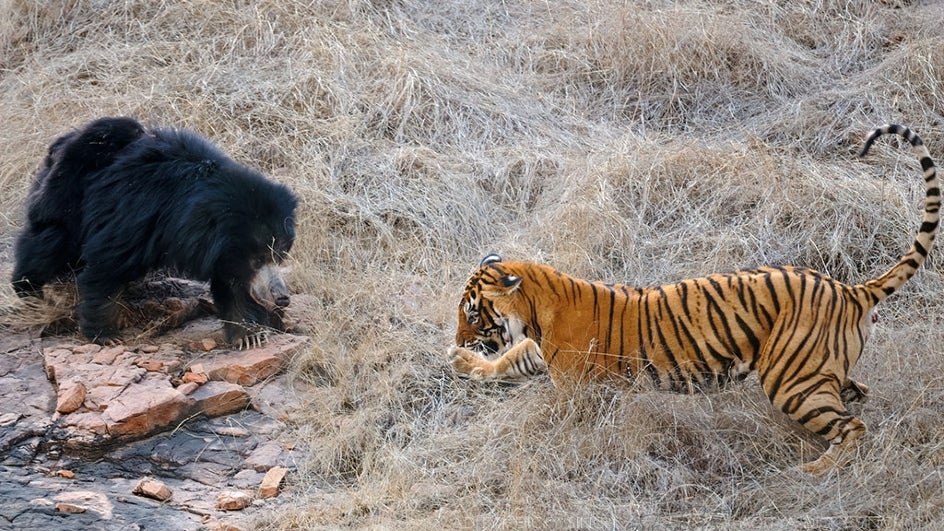
SLOTH BEAR V/S TIGER RANTHAMBORE NATIONAL PARK
Conservation Story Behind the Numbers
Ranthambore’s tiger recovery is one of India’s clearer conservation success stories, and understanding the arc adds real context to a visit. From an estimated 25 tigers in the mid-2000s, NTCA (National Tiger Conservation Authority) census tracking points to roughly 75–90 tigers across the Ranthambore landscape by 2026. India as a whole recorded 3,682 wild tigers in the 2025–26 national census — close to three-quarters of the world’s wild tiger population.
That growth isn’t without tension. Ranthambore’s core habitat is relatively small and increasingly crowded, which pushes tigers into buffer zones and occasionally into contact with nearby villages. Experts also flag a genetic concern: because the current population rebuilt itself from a small, geographically isolated founder group, inbreeding remains a long-term risk under active monitoring. None of this should alarm a first-time visitor — if anything, it makes a safari feel like witnessing an unfinished recovery story rather than a static wildlife park.
FAQs
What types of fauna are found in Ranthambore? Ranthambore is home to tigers, leopards, sloth bears, marsh crocodiles, sambar and chital deer, nilgai, chinkara, gray langurs, striped hyenas, and over 300 recorded bird species, plus a growing presence of cheetahs from the nearby Kuno reintroduction program.
How many species of fauna live in Ranthambore? There’s no single official headline number, but forest department records point to over 40 mammal species, 300+ bird species, and dozens of reptile species across the reserve.
Can you see snow leopards in Ranthambore? No — snow leopards live in high-altitude Himalayan terrain with no range overlap with Ranthambore’s dry deciduous lowlands.
Is it true there are cheetahs near Ranthambore now? Yes. Since 2025–26, cheetahs from the Kuno reintroduction project have been recorded moving into and around the Ranthambore landscape — the first known overlap of tiger, leopard, and cheetah ranges anywhere in the wild.
Which zone is best for leopard sightings rather than tigers? Kachida Valley and buffer Zones 6–7 are the better bet, since leopards actively avoid the lake-zone terrain tigers dominate.
What’s the rarest animal to spot in Ranthambore? Striped hyena and caracal are the two most genuinely elusive mammals — both nocturnal, low in number, and rarely photographed even by frequent visitors.
Where can I verify Ranthambore’s official fauna data? Wikipedia’s Ranthambore National Park entry and Britannica both cite forest department and NTCA data; these are good starting points for verified species and population figures.
where terrain dictates behavior, seasons rewrite the sighting odds every few weeks, and even the roster of apex predators is still changing. Knowing which zone matches what you actually want to see, and which month suits your priorities, will get you a noticeably better safari than booking whichever slot happens to be open.
Ready to plan your safari around the wildlife you actually want to see? [Check live zone-wise safari availability →]