Nagarhole Tiger Reserve
- Home
- Nagarhole Tiger Reserve
Nagarhole Tiger Reserve
Nagarhole Tiger Reserve: A Complete Travel and Safari Guide
You’ve probably landed on ten different pages trying to plan this trip already. One tells you Nagarhole is stunning. Another tells you it’s called Kabini. A third has a booking link that doesn’t explain what you’re actually booking. None of them tell you what you actually need — how much a safari costs, which zone to pick, when to go, and how not to waste your one shot at seeing a tiger.
So let’s just get into it.
What Is Nagarhole Tiger Reserve?
Nagarhole Tiger Reserve stretches across roughly 848 sq km in Karnataka’s Kodagu and Mysuru districts, right at the foothills of the Western Ghats. It’s part of a much bigger, connected wilderness — the Nilgiri Biosphere Reserve — which also includes Bandipur Tiger Reserve and Wayanad Wildlife Sanctuary. There’s no fence between them. A tiger that crosses your jeep track one morning might wander into Bandipur territory the next week.
Here’s the one thing that clears up 90% of the confusion people have: Nagarhole and Kabini are the same place. Kabini is the river that runs along the reserve’s edge, and resorts started using “Kabini” as a marketing name because it sounds gentler and more romantic than “Nagarhole.” When someone offers you a “Kabini safari package,” they’re selling you a safari inside Nagarhole Tiger Reserve. Same forest, same animals, different name on the brochure.
It was declared India’s 37th Tiger Reserve in 2003 and is recognized as one of the country’s higher-density tiger habitats — right behind Corbett and Kaziranga. That density is exactly why serious wildlife photographers keep coming back here year after year, even when they’ve already “done” a dozen other Indian reserves.
Best Time to Visit Nagarhole Tiger Reserve
Best Time to Visit Nagarhole Tiger Reserve
The honest answer depends on what you’re chasing.
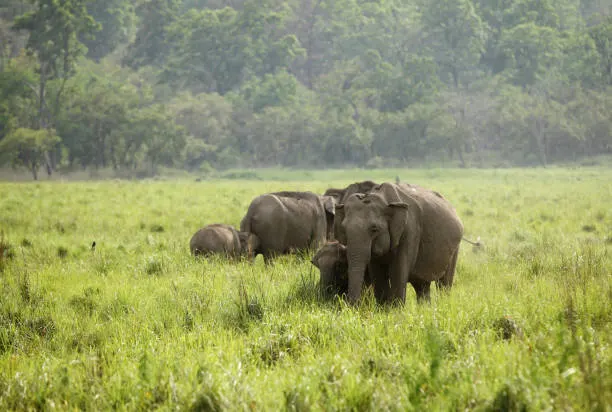
March to May (summer): This is peak sighting season, full stop. As smaller water sources dry up across the forest, animals — elephants especially — funnel toward the Kabini reservoir and remaining streams, which makes sightings far more predictable. It’s hot, particularly by midday, so book your safaris for the early morning slot if you can.
June to September (monsoon): The forest turns a deep, saturated green, and honestly, it’s the best season for landscape photography even if animal sightings become more scattered. Water is no longer scarce, so wildlife spreads out across the reserve instead of clustering near a few points. Some safari operations may run limited schedules during the heaviest rain, so check ahead if you’re locked into these months.
October to February (winter): Comfortable temperatures, solid all-round sightings, and — thanks to migratory activity — this is genuinely the best time to visit Nagarhole Tiger Reserve if birding is your main interest.
If you can only pick one window and tigers are the priority, go with April or May. If you’d rather have comfortable weather and strong birdlife, winter won’t disappoint you either.
History of Nagarhole Tiger Reserve
The history of Nagarhole Tiger Reserve goes back further than most visitors realize. Long before conservation laws existed, this forest was the private hunting ground of the Wodeyar kings of the Kingdom of Mysore. Royalty came here for sport; today, people come here to put the camera down and just watch.
The name itself tells a story. In Kannada, naga means serpent and hole means stream — a nod to the way the forest’s rivers curve and wind like snakes through the landscape.
A quick biography of Nagarhole Tiger Reserve, in dates:
1955: Declared a wildlife sanctuary, covering around 285 sq km
1983: Upgraded to a national park, expanded to over 570 sq km
1986: Folded into the Nilgiri Biosphere Reserve alongside Bandipur
2000: Brought under Project Elephant, recognizing its major elephant population
2003: Declared a Tiger Reserve under Project Tiger
2012: Expanded to its current size of approximately 848 sq km
There’s also a human story here that most travel blogs skip entirely. The Jenu Kuruba, a tribal community of traditional honey-gatherers, have lived in this forest for generations — their name literally comes from jenu (honey). Conservation-driven relocation efforts over the decades have moved many Jenu Kuruba families out of the core forest, and it’s remained a genuinely sensitive, unresolved issue. In 2025, a group of Jenu Kuruba families returned to a village inside the reserve they’d been evicted from forty years earlier, and the settlement was reportedly cleared again shortly after. If you’re the kind of traveller who likes understanding a place beyond its safari highlights, this is worth reading up on before you go.
Flora and Fauna of Nagarhole Tiger Reserve
Ask most people what’s in Nagarhole and they’ll say “tigers.” Fair enough — but the flora and fauna of Nagarhole Tiger Reserve go a lot deeper than that.
The forest itself is dry deciduous, shifting to moist deciduous in patches, dominated by teak, rosewood, crocodile bark, and clumps of bamboo. In April, you will notice the golden shower trees (Cassia fistula) displaying their vibrant yellow blooms amidst the dry brown undergrowth — truly one of the more overlooked sights in this area, and an opportunity that photographers equipped with a wide-angle lens should not miss.
On the wildlife side:
Predators: Bengal tiger, Indian leopard, dhole (Asiatic wild dog), sloth bear, jungle cat
Herbivores: Asiatic elephant (one of the largest wild populations in the country), gaur (Indian bison — bigger and more startling in person than most people expect), sambar deer, chital, four-horned antelope, wild boar
Reptiles: Mugger crocodile (easy to spot from the boat safari, usually basking near the banks), Indian python, Bengal monitor lizard
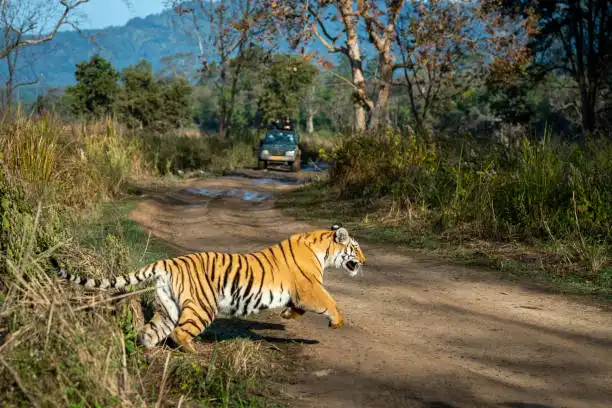
A fair warning, from someone who’s talked to enough disappointed first-timers: a tiger sighting is never guaranteed, in Nagarhole or anywhere else in India. What is close to guaranteed is a strong mix of elephants, gaur, deer, and birdlife — and honestly, most people leave more impressed by a herd of forty elephants crossing the river than by a fleeting tiger glimpse anyway.
Nagarhole Tiger Reserve Booking: How to Book, Step by Step
There isn’t one single system for Nagarhole Tiger Reserve booking — it depends on whether you want a jeep safari, a boat safari, or a full resort package. Here’s how to think through Nagarhole Tiger Reserve safari booking without getting confused halfway through.
Jeep safari booking (Forest Department): This is your route for the Nagarhole/Karapura, Antarasante, and D.B. Kuppe zones. Online safari booking Nagarhole Tiger Reserve tickets go through the official Karnataka Forest Department e-ticketing portal. Slots disappear fast in peak season — book at least two to three weeks out if you’re traveling in a weekend during December to May.
Boat safari booking: This one isn’t independently ticketed. It’s tied to staying at a Jungle Lodges & Resorts (JLR) property or a partner resort with backwater access. If the boat safari matters to you, lock in your resort first, not your safari.
Jungle Lodges & Resorts online booking: For the most seamless experience, JLR’s own reservation system lets you book accommodation and safaris together in one go — this is genuinely the easiest version of Nagarhole Tiger Reserve online booking if you don’t want to juggle separate tickets.
Private resort bookings: Many resorts near Hunsur bundle their own safari arrangements. Always ask which specific zone they have access to before paying — this single question saves a lot of post-arrival disappointment.
A quick, practical tip: cancellation policies differ sharply between the forest department system and private resorts. Government tickets tend to be far less flexible on refunds, so don’t book those dates until you’re certain.
Nagarhole Tiger Reserve Booking
Birding in Nagarhole Tiger Reserve
If you’re the type who packs a spotting scope before a swimsuit, birding in Nagarhole Tiger Reserve is one of the park’s quietest strengths. Over 270 recorded species make this an officially recognized Important Bird Area. Keep an eye out for the white-rumped vulture, the grey-headed fish eagle, and the Nilgiri wood pigeon — a species found almost nowhere outside this stretch of the Western Ghats. The Kabini backwaters, in particular, pull in large numbers of herons, darters, and ospreys through the winter months, making the boat safari as much a birding trip as a big-cat one.
Nagarhole Tiger Reserve Safari Charges and Ticket Price
Nagarhole Tiger Reserve safari charges vary depending on the zone, safari type, and whether you’re an Indian or foreign national — and prices do get revised periodically, so treat the numbers below as planning estimates rather than gospel, and reconfirm before you book.
| Bandipur vs Nagarhole vs Mudumalai: Quick Comparison | |||
|---|---|---|---|
| Factor | Bandipur | Nagarhole | Mudumalai |
| Tiger sighting odds | Moderate | Slightly higher | Moderate |
| Best for | Convenience, elephants, gaur | Serious wildlife photographers | Extension of an Ooty trip |
| Access | Easiest (near Mysore) | Slightly farther from Mysore | Easiest from Ooty |
| Stay options | Wide range | Fewer, more premium | Growing but limited |
| Ideal for | First-time visitors, families | Repeat wildlife travellers | Combined Nilgiris trip |
The Nagarhole Tiger Reserve ticket price for a standard jeep safari is genuinely affordable compared to many other Indian reserves — the bigger cost driver for most travellers ends up being the resort stay, not the safari ticket itself.
Resorts Near Nagarhole Tiger Reserve
Resorts Near Nagarhole Tiger Reserve
Your choice of resort quietly decides which safaris you get access to, so this isn’t purely a comfort decision.
Luxury: Properties such as Kabini River Lodge, along with a select few private luxury resorts situated on the backwaters, offer access to both jeep and boat safaris, comprehensive meal plans, and scenic riverside views. These accommodations are ideally suited for honeymooners and travellers seeking a hassle-free experience.
Mid-range: Comfortable resorts around Hunsur and the Mysuru–Kutta stretch typically arrange jeep safaris reliably, though not all of them offer boat safari access — always confirm this specifically.
Budget/homestay: Simple stays near Hunsur and Veeranahosahalli, usually without bundled safaris. You’d book your forest department jeep tickets separately, which suits backpackers and solo travellers who don’t mind handling their own logistics.
Nagarhole Tiger Reserve Tour Packages
Most Nagarhole Tiger Reserve tour packages bundle accommodation, meals, and safaris into one price rather than selling them piece by piece — and for most travellers, this ends up being the simpler, less stressful route. A typical two-night JLR package, for instance, includes both a jeep and a boat safari, all meals, and naturalist-led sessions, which takes the guesswork out of coordinating separate bookings.
If you’re the type who prefers building your own itinerary — picking your own resort, your own safari zone, your own pace — that’s entirely doable too, it just takes a bit more planning up front.
Nagarhole Tiger Reserve Safari Timings
Nagarhole Tiger Reserve safari timings run twice a day, and this is fairly consistent across zones:
Morning safari: Roughly 6:00 AM to 9:00 AM
Afternoon safari: Roughly 3:00 PM to 6:00 PM
Exact start times shift slightly with the season — sunrise safaris start earlier in summer and a little later in winter. If you’re choosing between the two, the morning slot generally has the edge for predator activity, since big cats are more active before the heat sets in.
How to Reach Nagarhole Tiger Reserve
From Bangalore: ~220 km, about 5–6 hours by road via Mysuru
From Mysuru: ~80 km, roughly 2 hours — the more practical base for a shorter trip
From Coorg (Madikeri): ~90 km, about 2.5 hours, an easy add-on if you’re already there
Nearest airport: Mysuru Airport (limited flights) or Bengaluru International Airport (better connectivity, longer drive)
Nearest railhead: Mysuru Junction
A weekend dash from Bangalore is possible, but you’ll spend a good chunk of it in the car. If you can stretch it to two or three nights, the pace — and the sightings — improve considerably.
| Bandipur vs Nagarhole vs Mudumalai: Quick Comparison | |||
|---|---|---|---|
| Factor | Bandipur | Nagarhole | Mudumalai |
| Tiger sighting odds | Moderate | Slightly higher | Moderate |
| Best for | Convenience, elephants, gaur | Serious wildlife photographers | Extension of an Ooty trip |
| Access | Easiest (near Mysore) | Slightly farther from Mysore | Easiest from Ooty |
| Stay options | Wide range | Fewer, more premium | Growing but limited |
| Ideal for | First-time visitors, families | Repeat wildlife travellers | Combined Nilgiris trip |
If the boat safari is essential for you, Nagarhole is the clear choice — it is the only one among the three that provides this experience. If you’re short on time and based in Bangalore, Bandipur is the more efficient choice. And if you’re already planning a Kerala leg of your trip, Wayanad lets you fold wildlife into that itinerary without much detour.
Frequently Asked Questions
Is Nagarhole the same as Kabini? Yes. Kabini refers to the river and reservoir along the reserve’s edge, and it’s the name most resorts use in their marketing. There’s no separate “Kabini National Park” — it’s the same tiger reserve.
What are the Nagarhole Tiger Reserve safari charges? Jeep safaris typically cost around ₹500–800 per person for Indian nationals, with foreign nationals charged roughly three to four times that rate. Boat safaris are usually included in resort packages rather than priced separately. Camera fees apply on top of the base ticket.
How do I book a Nagarhole Tiger Reserve safari online? Jeep safaris are booked through the Karnataka Forest Department’s official e-ticketing portal. Boat safaris are booked indirectly, through a Jungle Lodges & Resorts or partner resort reservation.
What are the Nagarhole Tiger Reserve safari timings? Morning safaris typically run 6:00 AM to 9:00 AM, and afternoon safaris run 3:00 PM to 6:00 PM, with slight seasonal variation.
What is the best time to visit Nagarhole Tiger Reserve? March to May offers the most predictable sightings as animals gather near shrinking water sources. October to February is better for comfortable weather and birding.
How many days should I plan for Nagarhole? Two nights is a comfortable minimum — enough for two to three safaris without feeling rushed. A one-night trip works but limits you to a single safari.
Is a tiger sighting guaranteed? No, and it’s worth going in with that expectation set correctly. Elephants, gaur, deer, and strong birdlife are far more consistent — a tiger sighting is a genuine bonus, not something any operator can promise.
Nagarhole Tiger Reserve rewards the traveller who plans a little before showing up — not because it’s complicated, but because the difference between a good trip and a forgettable one usually comes down to picking the right zone, the right season, and the right stay. Get those three things right, and whether you end up watching a tiger cross the trail or simply drifting past a hundred elephants on the Kabini backwaters, you’ll leave with the trip you actually came for.
Ready to Plan Your Trip?
Check real-time safari availability through the Karnataka Forest Department’s official portal, or book a Jungle Lodges & Resorts package if you want both jeep and boat safaris handled for you. Still deciding between zones or resorts? Drop your questions in the comments — happy to help you figure out the right fit before you book.