
Pilibhit Tiger Reserve
- Home
- Pilibhit Tiger Reserve
Pilibhit Tiger Reserve
Pilibhit Tiger Reserve: The Complete 2026 Travel Guide
Somewhere between the sugarcane fields of northern Uttar Pradesh and the Nepal border, there’s a forest that quietly did something no other tiger reserve on the planet had managed before it — it doubled its tiger population in four years, half the time anyone expected. That forest is Pilibhit Tiger Reserve, and if you’re reading this, you’re probably trying to figure out how to actually visit it, not just read about it.
Here’s the problem you’ve likely already run into: the official booking sites feel like they were built in 2012 and never updated, the travel blogs recycle the same three facts about tigers and grasslands, and nobody tells you which safari gate to pick or what a tree hut in Chuka actually costs in plain rupees. This guide fixes that. Real numbers, real steps, and the parts of the story — like the human-wildlife conflict here — that most articles conveniently skip.
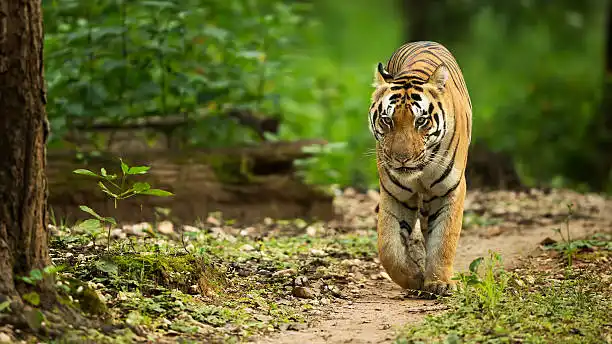
Best Time to Visit Pilibhit Tiger Reserve
Best Time to Visit Pilibhit Tiger Reserve
The reserve operates November through June and shuts down for monsoon season from July to October, when heavy rain and animal breeding cycles make the forest off-limits to visitors.
Within that window, timing changes your experience more than most guides let on:
November to February — Cool, clear, and the strongest all-round window for both tiger and bird activity. Migratory birds arrive during these months. It’s also peak season, so book early.
March to April — Temperatures start climbing, but crowds thin out and animals begin gathering near shrinking water sources. A strong middle-ground choice.
May to mid-June — Genuinely hot, often past 40°C in the afternoon. But this is when tiger sightings become more predictable, since dwindling water sources concentrate wildlife in fewer spots.
If comfort matters more to you than odds, go in winter. If you’re chasing tiger photographs specifically, summer mornings are worth the heat.
What Makes Pilibhit Tiger Reserve Worth the Trip
Pilibhit is located within the Terai Arc Landscape, which is a region characterized by forests, grasslands, and river systems that stretch along the border between India and Nepal. It shares this landscape with Dudhwa National Park and Kishanpur Wildlife Sanctuary, and together they form one of the most important tiger corridors left in northern India.
What sets Pilibhit apart isn’t just the tigers, though there are plenty. It’s the mix. You’ve got dense sal forest giving way to open grassy meadows called “chaurs,” rivers threading through the reserve, and a wetland ecosystem that supports over 450 bird species. Few reserves in India pack this much ecological variety into 730 square kilometers.
And then there’s the award. In 2020, Pilibhit became the first tiger reserve in the world to win the TX2 award — recognition for doubling a tiger population well ahead of the global ten-year target. That’s not a marketing line; it’s a measurable conservation result, and it’s part of why wildlife researchers pay closer attention to Pilibhit than its relatively young age (a tiger reserve only since 2014) would suggest.
How to Book Pilibhit Tiger Reserve
Online safari booking for Pilibhit Tiger Reserve happens through the official UP Ecotourism portal, but the process isn’t always intuitive if it’s your first time. Here’s how it actually works:
Go to the official UP Ecotourism booking site and select the Pilibhit Tiger Reserve / Chuka option.
Choose your travel dates and preferred entry gate — Mustafabad or Pilibhit City.
Decide between full-vehicle booking (best for groups of four or more) or per-person booking (better for solo travellers or couples).
Complete payment online. You’ll receive a confirmation immediately.
For hut accommodation, book separately through the same portal’s tariff section, ideally at the same time as your safari to lock in availability.
A tip that isn’t obvious from the booking page: book at least two to three weeks ahead if you’re traveling in December or January. Winter weekends fill up faster than the calendar interface suggests, and huts go first.
If the government portal feels like more hassle than you want to deal with — which is a fair reaction, especially for international travellers — local tour operators offer Pilibhit Tiger Reserve tour packages that bundle safari booking, stay, and transport. You’ll pay a markup, but it removes the guesswork.
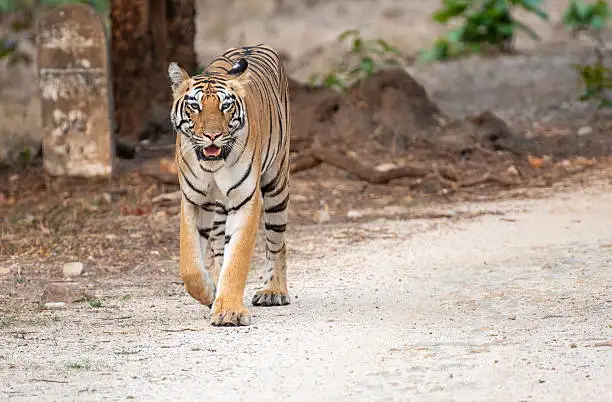
How to Book Pilibhit Tiger Reserve
History of Pilibhit Tiger Reserve
The history of Pilibhit Tiger Reserve goes back further than most visitors realize. Long before it became a protected tiger habitat, this land functioned as a timber-yielding reserve forest — trees were cut here, not conserved.
The shift began in 2008, when a proposal went to the Indian government to turn Pilibhit’s forests into a dedicated tiger habitat. The area had the right ingredients: enough open space, enough prey density, and an ecosystem type well suited to tiger populations. It took a few more years of process, but in June 2014, Pilibhit was officially declared India’s 46th tiger reserve.
If you’re curious about the fuller biography of Pilibhit Tiger Reserve — meaning its transformation from working forest to conservation success story — that six-year gap between proposal and declaration is the part worth knowing. It reflects how much groundwork goes into establishing a reserve before a single safari jeep ever enters the forest.
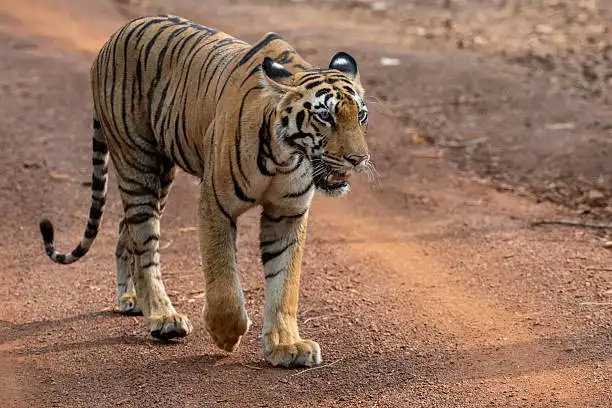
Jeep Safari Booking Pilibhit Tiger Reserve
Jeep Safari Booking Pilibhit Tiger Reserve
Jeep safari booking at Pilibhit works on two models: a full vehicle (seating up to seven) or individual per-person seats on a shared jeep, available only through offline booking at the gate.
Full-vehicle booking makes sense if you’re traveling with family or a small group — you control the pace, the stops, and don’t share the jeep with strangers. Per-person booking is more economical if you’re solo or a couple, though you’ll need to book that in person rather than online.
Guide fees and vehicle entry charges are already included in these rates. Photography charges are billed separately under UP Forest Department rules, so don’t assume your ticket price covers professional camera equipment.
For accommodation, Chuka’s Tharu huts start around ₹4,250 per room for Indian visitors (roughly ₹10,600 for foreign nationals), while tree huts start near ₹6,950 for Indian visitors and ₹14,200 for foreign nationals. Prices scale up with additional rooms and occupancy.
| Safari Departure Gate | ||
|---|---|---|
| Here are the real numbers, not vague "affordable" language: | ||
| Safari Departure Gate | Full Vehicle (up to 7 people) | Per Person (offline only) |
| Mustafabad | ₹3,600 | ₹720 |
| Pilibhit City | ₹4,500 | ₹900 |
Flora and Fauna of Pilibhit Tiger Reserve
This is where Pilibhit quietly outperforms its reputation. Most people arrive expecting “maybe a tiger, some deer.” What they find is a lot more layered.
On the flora side, the reserve is a mix of North Indian tropical moist deciduous forest — sal-dominated, with patches of mixed deciduous and dry Shivalik forest types. Add in grasslands, old teak and eucalyptus plantations from decades past, and riparian vegetation along the rivers, and you get a landscape that changes character every few kilometers.
On the fauna side, tigers share this space with:
Leopards and sloth bears
Indian elephants moving through buffer zones
Swamp deer (barasingha) — genuinely one of Pilibhit’s specialties
Barking deer, chital, sambar, and four-horned antelope
Marsh crocodiles and gharials along the rivers
Indian rock pythons and king cobras
A rusty-spotted cat was even recorded here by camera trap in 2010 — a small but notable find, since this is one of the smallest wild cat species in the world and not commonly documented in this part of India.
Birding in Pilibhit Tiger Reserve
If tigers are the headline, birding in Pilibhit Tiger Reserve is the subplot that ends up stealing the show for a lot of visitors.
With 450 resident bird species, this reserve holds its own against dedicated birding destinations. Keep an eye out for Sarus cranes, three species of hornbill, six eagle species, swamp francolins, and white-rumped vultures — a species that’s become increasingly rare across India, which makes sightings here genuinely significant.
The best birding windows line up with the lakes and reservoir edges near Chuka, especially in early morning light during the winter migratory season. If you’re serious about this, pack a 400mm lens minimum — a lot of the action happens across open water or grassland, not up close in dense forest.
How to Reach Pilibhit Tiger Reserve
By air: The nearest airport is Lucknow, about 230 km away — plan on a 4.5 to 5-hour taxi ride, typically ₹4,000–6,000 one-way for a private cab.
By train: Pilibhit Junction is only about 20 km from the reserve and connects well to Delhi and Lucknow. This is usually the most convenient route in.
By road: Pilibhit connects via state highways SH 26, SH 29, and SH 33, plus NH 730 and NH 731K. From Delhi, expect around 6–7 hours of driving; from Lucknow, closer to 4–5 hours.
A one-day visit is only realistic if you’re already based in Pilibhit town or nearby Bareilly. Coming from Delhi or Lucknow and back in a single day means more hours in transit than in the forest.
Resorts and Accommodation Near Pilibhit Tiger Reserve
Inside the reserve, your options are the Chuka ecotourism huts — Tharu huts and tree huts, both forest-department managed and simple by design rather than luxurious.
For more comfort, Pilibhit town, about 20 km away, has hotels ranging from basic to mid-range. There isn’t yet a genuine five-star resort tier directly at Pilibhit the way there is around Corbett, so if luxury amenities are non-negotiable for your trip, plan to base yourself in town and treat the reserve as a day-safari destination rather than an overnight stay.
| Pilibhit Tiger Reserve vs Other Terai Reserves | |||
|---|---|---|---|
| Factor | Pilibhit | Corbett | Dudhwa |
| Distance from Delhi | ~280 km | ~250 km | ~450 km |
| Crowd levels | Low | High | Moderate |
| Best for | Birding + tigers, budget safaris | Tiger sightings | Rhinos + tigers |
| Safari cost | Lower | Higher | Moderate |
| Signature species | Swamp deer, Sarus crane | Tigers, elephants | Indian rhinoceros |
If guaranteed tiger sightings in a single weekend are your only goal, Corbett still has the edge — decades of infrastructure will do that. But if you want a quieter forest, stronger birding, and a noticeably lighter price tag, Pilibhit wins comfortably.
Pilibhit Tiger Reserve Safari Timings
Safari timings shift by season, and getting this wrong is an easy way to miss your slot:
Winter (November to March)
Morning: 6:30 AM – 10:00 AM
Afternoon: 2:30 PM – sunset
Summer (April to mid-June)
Morning: 6:00 AM – 9:30 AM
Afternoon: 3:30 PM – sunset
Morning safaris consistently produce better sightings — animals are more active before the heat sets in, and the forest is quieter overall. If you can only book one safari, make it the morning one.
A Note on Human-Wildlife Conflict
This part gets left out of most Pilibhit content, and it shouldn’t be, because it’s a real reason some people search for this reserve in the first place.
Pilibhit borders dense sugarcane farmland, and that proximity has led to a higher rate of tiger-human conflict here than in most Indian reserves — it’s been covered in national news over the years. The core issue is that sugarcane fields offer cover similar enough to grassland that tigers move through farmland at the forest edges, occasionally bringing them into contact with agricultural workers.
For visitors, this matters far less than the headlines suggest. These incidents happen at the farmland boundary involving local workers, not inside the managed safari zones where you’ll be traveling by vehicle with a trained guide. Reserve authorities have also been actively addressing this through corridor management and community engagement programs. It’s worth knowing about, but it shouldn’t change your decision to visit.
Frequently Asked Questions
How many tigers live in Pilibhit Tiger Reserve? Population estimates currently sit above 60 tigers, a number that’s grown substantially since the reserve’s 2014 establishment and helped it earn the global TX2 award in 2020.
What is the Pilibhit Tiger Reserve ticket price? Safari charges run around ₹3,600 per vehicle (up to 7 people) from Mustafabad gate, or roughly ₹4,500 from Pilibhit City gate, with guide and vehicle entry fees included.
What is the best time to visit Pilibhit Tiger Reserve? November to February offers the most comfortable weather and strong bird activity, while April to mid-June brings better tiger-sighting odds despite the heat, since animals gather near remaining water sources.
How do I book a Pilibhit Tiger Reserve safari online? Book through the official UP Ecotourism portal by selecting your dates, entry gate, and vehicle type, then completing payment online for instant confirmation. Book two to three weeks ahead for winter weekends.
Is Pilibhit Tiger Reserve safe to visit? Yes. While the surrounding farmland does experience tiger-human conflict, this occurs outside the managed safari zones and doesn’t affect visitors traveling with a guide inside the reserve.
Is a one-day trip to Pilibhit Tiger Reserve possible? Only if you’re already based in Pilibhit town or Bareilly. Traveling from Delhi or Lucknow same-day means spending more time in transit than actually inside the reserve.
How is Pilibhit Tiger Reserve different from Jim Corbett National Park? Pilibhit is quieter, less expensive, and stronger for birdwatching, while Corbett offers more established infrastructure and generally higher tiger-sighting odds due to decades of operation.
Pilibhit isn’t trying to be Corbett, and that’s exactly its appeal. It’s a working conservation success story with a genuinely rare mix of grassland, forest, and wetland packed into one manageable reserve — the kind of place where a morning safari might get you a tiger sighting and an afternoon by the reservoir gets you a hornbill instead. Go in with realistic expectations about the accommodation (simple, not luxurious), plan your gate and timing around the season, and you’ll come away with a trip that feels a lot less scripted than the bigger-name parks.
Ready to Plan Your Trip?
If your dates are already set, head straight to the official UP Ecotourism portal and lock in your safari and hut before winter weekends fill up. Still weighing your options? Compare Pilibhit against Corbett and Dudhwa first to make sure you’re picking the Terai reserve that actually fits what you’re looking for.