Bandhavgarh Tiger Reserve
- Home
- Bandhavgarh Tiger Reserve
Bandhavgarh Tiger Reserve
Welcome To Bandhavgarh Tiger Reserve
Ask a wildlife photographer where they saw their first proper tiger — not a stripe through the bushes, but a long, unhurried look — and there’s a fair chance they’ll say Bandhavgarh. This is the reserve with the highest tiger density in India, and that’s not a marketing line. Spend one morning in a gypsy here, and your guide will casually mention you’ve already crossed through the territory of two or three resident tigers before breakfast.
Most articles on Bandhavgarh Tiger Reserve repeat the same fort legend and the same “best time to visit” paragraph you’ve probably already read five times. This guide skips that. Instead, you’ll get real safari prices, a booking process that won’t leave you stuck on a government portal at midnight, honest sighting odds by zone, and practical answers to the questions people actually type into Google before a trip.
What Is Bandhavgarh Tiger Reserve?
Bandhavgarh National Park, officially Bandhavgarh Tiger Reserve, sits in the Umaria district of Madhya Pradesh, on the Vindhya hill range. It became a national park in 1968 and was declared a tiger reserve in 1993.
The full protected area covers roughly 1,536 square kilometres — a core zone of about 716 sq km surrounded by a buffer of around 820 sq km. Only a small slice of that core, split into the Tala, Magadhi, and Khitauli zones, is open for safari tourism. The rest stays untouched, which is a big reason the tiger population here has stayed so strong.
There’s also a piece of Bandhavgarh’s history most visitors never hear about. Every white tiger alive in captivity today, in zoos from Delhi to Cincinnati, descends from one tiger: Mohan, captured near Bandhavgarh by the Maharaja of Rewa in 1951. You won’t see a white tiger on safari — the trait no longer exists in the wild population — but you’re standing in the place where that entire bloodline began.
| Quick Facts Table | |
|---|---|
| Detail | Information |
| Location | Umaria district, Madhya Pradesh, India |
| Total reserve area | ~1,536 sq km |
| Core zone area | ~716 sq km |
| Declared national park | 1968 |
| Declared tiger reserve | 1993 |
| Tiger count (2022 census) | 135 |
| Core safari zones | Tala, Magadhi, Khitauli |
| Buffer safari zones | Panpatha, Dhamokhar, Johila |
| Park season | Mid-October to end of June |
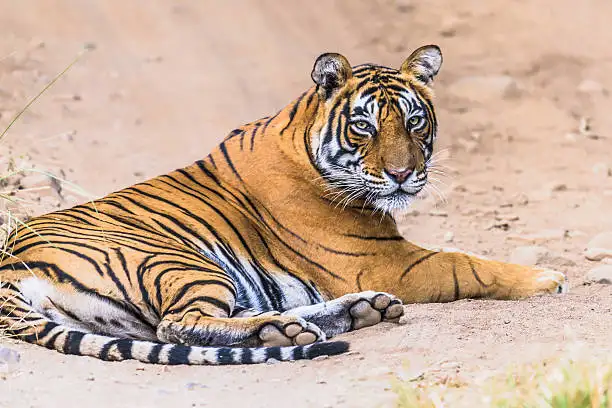
Bandhavgarh Tiger Reserve Safari Price
Real Bandhavgarh Tiger Reserve Price: What a Safari Actually Costs
Most pages dodge this with “contact us for a quote.” Here’s the real breakdown.
A safari isn’t one fee — it’s three, and you pay all three separately:
Entry permit, booked online in advance through the official portal
Jeep safari fee (the Gypsy vehicle hire), paid at the gate, not online
Guide fee, compulsory, also paid at the gate
Based on recent traveller-reported figures, here’s roughly what to expect for the Bandhavgarh national park ticket price:
Entry permit: around ₹3350–₹3550 for a standard weekday slot, rising toward ₹6,000–₹8,000 for foreign nationals on weekend, peak-season, core-zone permits
Jeep safari fee: roughly ₹6,500–₹10,500, depending on zone and how far the gate is from your stay
Guide fee: around ₹600–₹1200
The vehicle and guide fees are split evenly among everyone riding in that gypsy, so a full six-person jeep is far cheaper per head than booking a seat alone. As a working budget, two people doing three safaris across two days should plan for somewhere around ₹15,000–₹25,000 total on permits, jeep, and guide — before you even add accommodation.
A Short, Honest Look at Bandhavgarh Tiger Reserve History
Long before it was a wildlife destination, Bandhavgarh was a fort. Local legend ties it to the Ramayana, claiming Lord Rama gifted the fort to his brother Lakshmana to keep watch over Lanka — hence the name, “Bandhavgarh,” meaning brother’s fort.
Later, it became the hunting reserve of the Maharajas of Rewa, which is exactly why the forest survived relatively intact into the 20th century — royal hunting grounds were, ironically, often better protected than open land. That royal history is also where the white tiger story comes from, and it’s the single most distinctive thread in Bandhavgarh Tiger Reserve history compared to any other Indian park.
The fort itself still stands inside Tala zone today, and you can hike up to it with a permit and guide — more on that later.
How to Book Bandhavgarh National Park Safari, Step by Step
The only legitimate channel for Bandhavgarh national park safari booking is the Madhya Pradesh Forest Department’s official portal at forest.mponline.gov.in. Copycat sites exist that take your payment and hand you a permit that means nothing at the gate — if the URL isn’t this one, don’t trust it with your card details.
Here’s the actual process for Bandhavgarh tiger reserve safari booking:
Check the release window. Slots open in advance, and popular ones — especially Tala zone on weekends and anything in April or May — sell out within minutes.
Have every traveller’s ID ready. Foreign nationals need passport details entered exactly as they appear on the document you’ll carry to the gate. A mismatch can get you turned away.
Pick your zone at the time of booking, not on arrival. Tala, Magadhi, and Khitauli are chosen upfront, so decide your priority — sighting odds or fewer crowds — before you sit down to book.
Push the payment through carefully. The gateway occasionally times out or double-charges during high-demand release windows. Screenshot your confirmation the second it appears.
Keep a backup plan. A limited walk-in (“Tatkal”) counter exists for unsold permits, but it’s unreliable, especially in peak season — treat it as a last resort, not a strategy.
At the gate, your ID gets checked against the permit, and you pay the jeep and guide fees in cash. Cards are often not accepted at the counter, so carry enough cash for the full group.
If dealing with a government portal isn’t how you want to spend your evening, most resorts and lodges will handle the booking for you as part of a stay package — you’ll pay a small premium, but it removes the stress entirely.
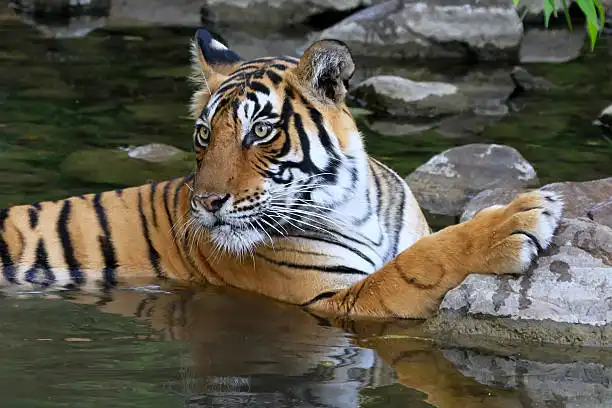
How to Book Bandhavgarh National Park Safari
Tiger Sighting Probability by Zone and Month
Nobody wants to hear “it’s just luck,” so here’s what actually shapes the odds.
Tala zone has the strongest sighting record of the three, thanks to the highest concentration of resident tigers and open meadow terrain like Chakradhara that keeps visibility high. It’s also the most requested zone, so permits go fast and gypsy traffic is heaviest.
The Magadhi zone closely follows, featuring a combination of forested areas and open spaces, along with significantly fewer visitors compared to Tala. Several long-standing tiger families have held territory here for years.
Khitauli zone has generally lower tiger-sighting odds, but it wins on scenery, birdlife, and breathing room — a real plus if a crowd of eight gypsies around one tiger sounds more stressful than magical.
By month, the pattern holds across every zone: sightings climb as the dry season progresses and water sources shrink, pulling animals toward the waterholes that remain. April and May, brutal as the heat is, consistently deliver the year’s best sighting numbers. Winter is comfortable and scenic, but dense post-monsoon foliage works against visibility, and animals aren’t forced toward exposed water the way they are in summer.
Be realistic: even Tala in May doesn’t guarantee a sighting on a single safari. Guides and repeat visitors consistently recommend budgeting three to four safaris if seeing a tiger is your priority.
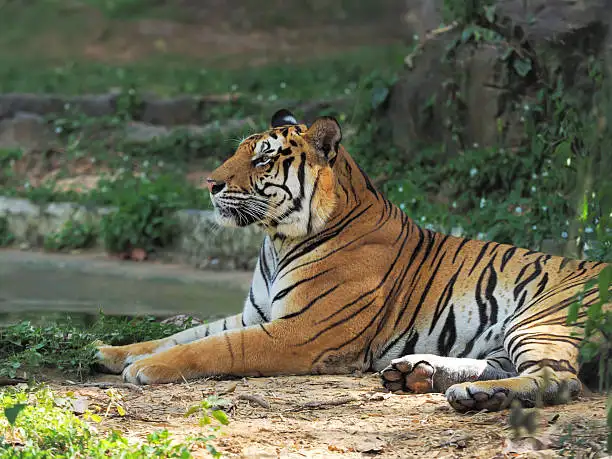
Bandhavgarh National Park Jeep Safari
Jeep Safari vs. Canter Safari
Not every visitor rides in a private gypsy, and this is where most Bandhavgarh guides go quiet.
Bandhavgarh national park jeep safari: an open 4WD Gypsy, seating up to six people, booked in advance online. This is what almost everyone means by “a safari” here, and it’s what gives you the flexibility to request a preferred zone and guide.
Bandhavgarh national park canter safari: a larger open vehicle carrying up to eighteen people, booked on the spot at the gate rather than in advance. Canters are a genuinely useful fallback if jeep permits for your dates are sold out, though you’ll have less say over route and pace.
There’s also a full-day safari option — sunrise to sunset in one continuous booking, limited to four people per jeep and only a handful of jeeps per day, at a significantly higher flat rate. Lodges rarely advertise it, but they’ll arrange it if you ask directly. It’s worth it if photography is the whole point of your trip.
Meet the Tigers of Bandhavgarh
What separates Bandhavgarh from a generic wildlife checklist is that its tigers have names, histories, and genuine followings. Guides track them the way football fans track players.
The most legendary resident was Charger, a dominant male whose command over Tala decades ago is still the benchmark local guides measure other tigers against. More recently, sisters Spotty and Dotty — both born in Magadhi in 2012 — became park celebrities. Spotty, identifiable by a distinctive “T”-shaped marking above her right eye, took over prime Tala territory around 2015 before her death in 2022. Dotty stayed in Magadhi and has been seen in recent seasons raising her own cubs.
On the male side, Bheem, named for the powerfully built Mahabharata figure, has held ground across Khitauli and Magadhi and remains one of the largest documented males in the reserve. His likely successor, a younger male called Chhota Bheem, born in 2017, has been showing the same bold, camera-friendly confidence his father was known for.
One honest caveat: tiger territories genuinely shift, through death, displacement, or a younger animal simply winning a fight for ground. Treat any “current resident tigers” list, including this one, as a snapshot rather than fact set in stone — ask your guide on arrival who actually holds territory in your zone that season. They’ll know far better than any article can.
If you want a sense of what following one of these tigers looks like across years rather than days, the BBC’s Dynasties series filmed an entire season in Bandhavgarh tracking a tigress through four years of raising cubs and defending territory. It’s worth watching before you go, both for atmosphere and for a feel of how much individual character these animals actually carry.
Bandhavgarh Tiger Reserve Safari Timings
Safaris run twice a day, and the Bandhavgarh tiger reserve safari timings shift with the season because they’re tied to sunrise and sunset:
Morning safari: begins roughly 30 minutes before sunrise, so summer starts are earlier (around 5:30–6:00 a.m.) and winter starts later (closer to 6:30–7:00 a.m.)
Afternoon safari: begins mid-afternoon and runs until sunset, so winter afternoon safaris start earlier than summer ones
Each safari runs about three hours. Arrive at your gate at least 30 minutes before your slot — late arrivals can lose their vehicle allocation entirely, and there’s no flexibility on this.
How to Reach Bandhavgarh National Park
Getting here is more manageable than the reserve’s remote-forest reputation suggests.
By air: the nearest airports are Jabalpur (around 165 km) and Khajuraho (around 240 km), both connected to major Indian cities. From either, you’ll need a pre-arranged taxi or transfer, since public transport options from the airport are limited.
By rail: Umaria (about 35 km from the park) is the closest railway station, though Katni and Jabalpur are larger junctions with more frequent connections if Umaria’s options don’t fit your schedule.
By road: Bandhavgarh connects well to Khajuraho, Jabalpur, and Varanasi by highway, making it easy to combine with a broader Madhya Pradesh or central India itinerary rather than visiting in isolation.
Most travellers combine the train-to-Umaria route with a pre-booked resort transfer, since taxi availability right at the station can be limited outside peak hours.
Birding in Bandhavgarh National Park
If you only think of Bandhavgarh as a tiger destination, you’re missing half of it. Birding in Bandhavgarh National Park is genuinely excellent, with more than 250 recorded species, including changeable hawk-eagles, crested serpent eagles, Indian rollers, and several hornbill species.
Winter (November through February) is the strongest window for birding, both because migratory species are present and because the cooler weather makes long, still observation far more comfortable than it is in summer’s heat.
Who Should Visit Bandhavgarh?
Families with kids: works best for children roughly eight and older who can handle a pre-dawn wake-up and a long, quiet, bumpy morning. Kids under five ride free; ages five to twelve get a half-price seat.
First-time and foreign visitors: logistics are manageable, but expect patchy mobile coverage near Tala village and inside the buffer zones, and carry cash since card payments at the gate are unreliable.
Photographers: prioritize the full-day safari option and the early and late light windows — the middle of the day is the least productive stretch for both sightings and photography.
Couples and honeymooners: a private, full gypsy (rather than a shared one) is worth the extra cost for a quieter, more personal experience.
History and culture enthusiasts: the Bandhavgarh Fort hike, inside Tala zone, needs a permit and guide — plan it deliberately rather than assuming you can add it on the day.
| Bandhavgarh vs. Kanha, Pench & Tadoba: Which Should You Pick? | ||||
|---|---|---|---|---|
| Feature | Bandhavgarh | Kanha | Pench | Tadoba |
| Tiger sighting odds | Highest density in India | Strong, more spread out | Good, smaller core area | Very strong, growing fast |
| Crowd levels | High in Tala, moderate elsewhere | Moderate | Moderate | High and rising |
| Signature draw | White tiger origin, fort and history | Jungle Book inspiration, open landscapes | Also Jungle Book-linked, well managed | Strong reputation, easy access from Nagpur |
| Best suited for | First-time visitors wanting the best odds | Travelers who want space and scenery | Shorter trips with solid infrastructure | Photographers, easy Maharashtra access |
If raw tiger-sighting probability plus a real cultural and historical layer matters most to you, Bandhavgarh is genuinely hard to beat. If open space and fewer vehicles per sighting matter more than odds, Kanha is the stronger fit.
Bandhavgarh Tiger Reserve Resorts: Where to Stay
Bandhavgarh’s stay options cluster near the Tala gate, and they range widely:
Budget and forest rest houses, basic but functional, ideal if your priority is spending money on safaris rather than accommodation
Mid-range lodges, typically offering guided safari packages, decent food, and easy walking distance to the gate
High-end luxury properties, which compete less on scale and more on access, naturalist quality, and location right at the forest’s edge
If you’re picturing a sprawling five-star beach-resort experience, recalibrate: Bandhavgarh Tiger Reserve resorts are built around proximity to the forest and the quality of guiding, not spa menus and pool decks. Booking through a resort is also one of the easiest ways to handle safari booking without touching the government portal yourself.
Fauna in Bandhavgarh National Park
Tigers get the headline, but Bandhavgarh’s fauna is genuinely rich beyond them.
Leopards, often seen on the park’s rockier fringes, where they avoid competing directly with tigers
Indian gaur (bison), reintroduced from Kanha in 2012 and now a conservation success story in their own right
Sloth bears, spotted less often but present, particularly around rocky, fruit-bearing terrain
Chital, sambar, and barking deer, the primary prey base that keeps the tiger population fed
Wild boar, nilgai, and langurs, common sightings on almost every safari
Seeing the full range of fauna, not just tigers, is part of why repeat visitors keep coming back even on safaris without a tiger sighting.
Flora in Bandhavgarh National Park
The vegetation here isn’t just a backdrop — it’s what makes tiger sightings possible in the first place.
Bandhavgarh is dominated by sal forest in the valleys, mixed with bamboo stands, patches of grassland, and rocky, scrub-covered hillsides. The open meadows, like Chakradhara, are the areas where sightings happen most often, simply because there’s nowhere for a tiger to disappear into. In contrast, the dense sal cover elsewhere in the park is exactly why winter sightings can be harder — more leaf cover means more places to vanish.
FAQs About Bandhavgarh Tiger Reserve
What is the best time to see a tiger in Bandhavgarh? April and May give the strongest sighting odds, driven by water scarcity pulling animals toward visible waterholes, though the heat is intense. November to February is more comfortable but slightly lower on sighting probability.
How much does a Bandhavgarh Tiger Reserve safari cost? Expect roughly ₹3350–₹3550 for the entry permit depending on zone, day, and season, plus a shared jeep fee (around ₹3500–₹3,800) and guide fee (around ₹600–₹1200) split among your vehicle’s passengers.
How do I book a Bandhavgarh National Park safari? Book directly through the official portal at forest.mponline.gov.in, with every traveller’s ID ready at the time of booking. Avoid third-party sites claiming to be official — they can issue invalid permits.
What are the Bandhavgarh Tiger Reserve safari timings? Two safaris run daily: a morning slot starting about 30 minutes before sunrise, and an afternoon slot ending at sunset. Exact times shift seasonally, so confirm against the current month before you travel.
Is Bandhavgarh superior to Kanha for observing tigers? On raw density and probability, yes — Bandhavgarh consistently posts higher sighting rates. Kanha offers more open space and fewer vehicles per sighting if crowding matters more to you than odds.
How do I reach Bandhavgarh National Park? The nearest airports are Jabalpur and Khajuraho, and the nearest railway station is Umaria, about 35 km from the park. Most visitors combine a train to Umaria with a resort-arranged transfer.
Is Bandhavgarh suitable for young children? It’s physically demanding — early starts, long bumpy rides, no guaranteed sightings — and generally suits kids around eight and up better than toddlers.
Bandhavgarh Tiger Reserve earns its reputation the hard way: through consistent sightings, a genuinely rich ecosystem beyond just tigers, and a history that goes back centuries before it became a safari destination. The difference between an average trip and a great one usually comes down to preparation — booking the right zone early, budgeting enough safaris to actually see a tiger, and knowing the real costs before you land in Umaria.
Get those pieces right, and Bandhavgarh delivers one of the most reliable wildlife experiences anywhere in India.
Don’t leave your sighting odds to chance or your booking to a copycat website. Book your Bandhavgarh Tiger Reserve safari through the official portal well ahead of your travel dates, or reach out to a trusted local resort to handle the booking, transfers, and guiding for you — so all you have to do is show up before sunrise and watch.