
Pench Tiger Reserve
- Home
- Pench Tiger Reserve
Pench Tiger Reserve
Welcome to Pench Tiger Reserve: The Complete Guide to Booking, Safaris, and Sightings
Somewhere between Madhya Pradesh and Maharashtra, a slow-moving river called the Pench cuts through more than a thousand square kilometres of teak forest. This is Pench Tiger Reserve — the landscape that fed Rudyard Kipling’s imagination for The Jungle Book, and today one of central India’s most consistent places to actually see a wild tiger.
Here’s the catch nobody tells you upfront: Pench isn’t one park. It’s split across two states, with two separate booking systems, two sets of gates, and two very different tourist experiences. Most articles either gloss over this or drown you in generic species lists. This guide skips the filler and gets straight to what you need to actually plan the trip — where to book, which zone to pick, what it costs, and what you’ll realistically see.
What Is Pench Tiger Reserve?
Pench Tiger Reserve sits across the Seoni and Chhindwara districts of Madhya Pradesh and the Nagpur district of Maharashtra, covering roughly 1,179 sq km on the MP side and another 741 sq km across the border. It was declared a tiger reserve in 1992, the 19th under India’s Project Tiger programme, though the original Pench Sanctuary dates back to 1977.
The reserve gets its name — and its lifeline — from the Pench River, which runs north to south through the core forest before joining the Kanhan River. A dam at Totaladoh has turned part of that river into a wide reservoir, and it’s this water source that shapes almost everything about wildlife behaviour here, especially in the dry summer months.
If you’ve read The Jungle Book, you’ll recognise the bones of it in Pench: the mixed teak forest, the grassy clearings where old villages once stood, the river gorge. Kipling never actually visited — more on that later — but the landscape he imagined is remarkably close to what you’ll drive through on safari.
| At a glance: | |
|---|---|
| Detail | Information |
| States | Madhya Pradesh (Seoni, Chhindwara) & Maharashtra (Nagpur) |
| Total area | ~1,179 sq km (MP) + ~741 sq km (Maharashtra) |
| Declared tiger reserve | 1992 |
| Nearest airports | Jabalpur (MP side), Nagpur (Maharashtra side) |
| Best time to visit | November to June (Peak: April–May for sightings) |
| Closed season | Monsoon, roughly July to mid-October |
| Known for | Tiger density, Jungle Book connection, Collarwali's lineage |
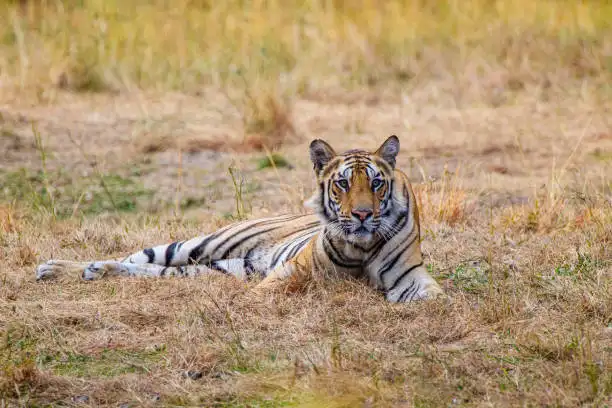
How to Book Pench National Park
How to Book Pench National Park
Booking trips people up mostly because there are two separate systems, and because fees change by season and gate. Here’s the straightforward version.
MP side bookings go through the official Madhya Pradesh Forest Department portal. Online safari booking for Pench National Park typically opens around 120 days before the travel date, and in-demand gates like Turia can fill within days during peak season — so if your dates are fixed, book the moment the window opens.
Maharashtra side bookings run through a separate portal tied to the gates on that side of the reserve.
What the fee actually covers: the permit, the gypsy vehicle, and the mandatory forest guide are usually bundled, though the exact breakdown varies slightly by gate. Some dates are flagged as “premium” (weekends, holidays) and cost more than regular weekday slots — always check the live rate shown at checkout rather than a number from an old blog post, since rates shift season to season.
Group size is capped at 6 people per gypsy, regardless of which side you book.
Foreign nationals are charged a higher entry fee compared to Indian nationals, which is a common practice in Indian tiger reserves and not exclusive to Pench.
Booking through a resort or local agent costs more but takes the pressure off timing a government portal yourself, which is genuinely useful if you’re travelling from abroad.
Only the vehicle leader named on a booking is allowed entry — one safari per name at a time, and it’s not transferable to friends travelling separately.
A tip that saves real money and stress: if your dates are flexible, avoid weekends and Indian public holidays entirely. The gap in crowd density between a Tuesday morning safari and a Saturday one at Turia gate is enormous, and it directly affects how good your sighting experience feels, tiger or not.
Pench National Park vs Pench Tiger Reserve — Are They the Same Thing?
Quick clarification, because this trips people up in search results constantly: Pench National Park is the core protected area on the Madhya Pradesh side, first notified in 1983. Pench Tiger Reserve is the larger designation that includes that national park, the Mowgli Pench Sanctuary, and the buffer zones around it — plus the connected protected area across the border in Maharashtra.
In everyday conversation, and in most booking contexts, people use the two names interchangeably. For this guide, we’ll do the same, but the distinction matters if you’re specifically searching for the national park’s core zone versus the reserve’s full extent — the national park is the older, more tourist-developed piece of a much bigger conservation puzzle.
MP Side vs Maharashtra Side: Which One Should You Book?
This is the decision that shapes your entire trip, and it’s the one question most guides skip.
Madhya Pradesh side (Turia, Karmajhiri, Jamtara, Khursapar gates) is the original, more developed half. It has a longer tourism track record, a stronger sighting reputation — largely because the famous tigress Collarwali and her descendants have denned in this stretch for years — and more resort choices near the gates. Jabalpur is the closer airport, though plenty of travellers fly into Nagpur and drive across instead.
Maharashtra side (Sillari, Khursapar, Chorbahuli gates) is newer to tourism and noticeably quieter. If you’re flying into Nagpur, it’s the shorter drive — often under two hours — and because fewer vehicles book this side, sighting spots feel less crowded even during peak season.
Here’s a simple way to decide:
First safari trip, want the strongest odds → MP side, Turia gate
Flying into Nagpur, short on time → Maharashtra side, Sillari gate
Photographer who wants breathing room at a sighting → Maharashtra side
Combining with Kanha or Bandhavgarh → MP side fits that travel corridor better
Been to MP Pench already, want something different → Maharashtra side
Worth remembering: tigers don’t check passports. A cat denning near the river can move between both sides. You’re really choosing infrastructure and crowd levels, not a “better” forest.
Best Time to Visit Pench National Park
Winter (November–February) is the most comfortable window and the most popular one. Daytime temperatures sit between 10°C and 28°C, though early morning safaris can be genuinely cold — pack a jacket even if the afternoon feels warm. Visibility through the undergrowth is decent, and this is when most families and first-time visitors travel, so gates like Turia get busy on weekends.
Summer (March–June) is uncomfortable but statistically the best window for sightings. As temperatures climb past 40°C, water sources shrink fast, and animals — tigers included — cluster around what’s left. April and May regularly produce the most consistent tiger sightings of the year. Serious photographers plan around the heat on purpose.
Monsoon (July–mid-October) means the park is largely closed. This is the breeding season for the reserve’s wildlife, and much of the terrain floods. Don’t build a trip around these months — check the reopening date for the specific season you’re travelling in, since it can shift slightly year to year.
Quick guide by traveller type:
Families and first-timers → December to February
Serious wildlife photographers → April to June
Birders → winter months, when migratory species overlap with residents
Honeymoon and luxury travellers → December to February, when resort experiences are at their best
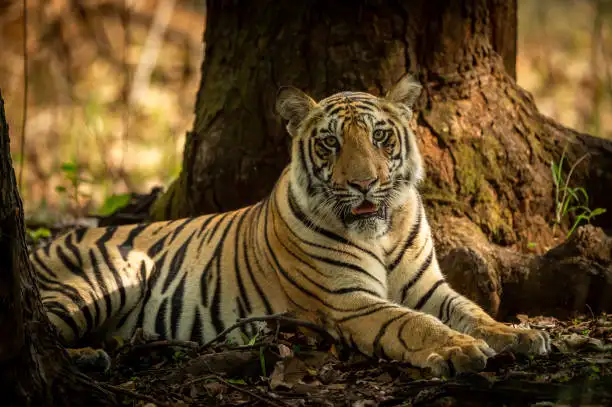
Best Time to Visit Pench National Park
How Likely Are You to Actually See a Tiger?
Every operator will affirm that Pench offers outstanding opportunities for wildlife viewing, and in comparison to numerous Indian reserves, this assessment is justified. But it’s not a guarantee, and treating it as one sets people up for a disappointing single-safari trip.
Realistically, if you book two to three safaris across a two or three day visit — especially during summer or a cool winter morning — your odds of at least one sighting are good, though not certain. A single drive can genuinely go either way. Fresh pugmarks and langur alarm calls are strong signs a tiger is nearby, even without a visual.
What you’re far more likely to see on any given safari:
Chital and sambar deer, often in large herds
Gaur, especially near the Pench River during dry months
Langurs and rhesus macaques
Strong birdlife, particularly near water bodies
Occasionally leopard, dhole, or sloth bear — rarer than tiger, but memorable when they show up
If a guaranteed tiger sighting is the only outcome that makes the trip worthwhile, budget for more safaris and lean toward the summer months. If a rich overall wildlife experience with a real chance of a tiger works for you, Pench delivers consistently either way.
Flora and Fauna of Pench National Park
Pench carries one of the higher prey-base densities among India’s tiger reserves, which is a big part of why its tiger population stays healthy.
Predators and carnivores: Bengal tiger, Indian leopard, dhole (Asiatic wild dog), striped hyena, sloth bear, jungle cat, golden jackal, and Indian wolf along the reserve’s fringes.
Herbivores: chital, sambar, gaur, nilgai, wild boar, Indian muntjac, and the four-horned antelope — a species genuinely hard to spot elsewhere in India, worth flagging to your guide if you’re keeping a serious sighting list.
Forest cover: Teak dominates the canopy, with bamboo along streams and open grassy meadows scattered through the reserve. Many of those clearings were once village pastureland before relocation, and they’re now some of the best herbivore-viewing spots in the park.
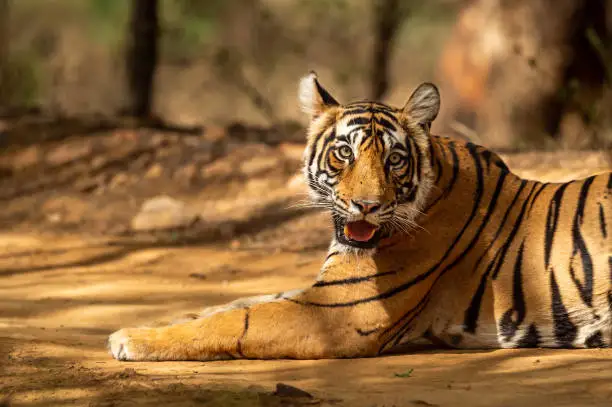
Pench Tiger Reserve Ticket Price
Pench Tiger Reserve Ticket Price: What to Expect
Pench National Park ticket prices are made up of a few separate charges rather than one flat fee: the entry permit, the gypsy vehicle charge, and the guide fee, sometimes with a small portal processing charge added on top. Premium dates cost more than regular ones, and Indian nationals pay less than foreign visitors — this pricing structure is common across India’s tiger reserves.
Because these numbers are revised from season to season, the only reliable source is the live rate shown on the official booking portal at the time you check out. Budget-wise, plan for the fact that two or three safaris across a short trip will cost noticeably more than a single drive — factor that into your overall trip budget rather than assuming one safari will be enough (it usually isn’t, if a tiger sighting matters to you).
Birding in Pench National Park
If birding matters to you, say so to your guide before the safari starts — most are trained to prioritise tiger sightings by default. Pench’s mix of forest and water bodies, especially around the Totaladoh backwaters, supports strong resident and migratory birdlife, including raptors and waterfowl in winter and dense-forest species like the paradise flycatcher in season. Winter safaris tend to be the strongest window for combining tiger-watching with serious birding.
Pench Tiger Reserve Resorts: Where to Stay
Accommodation clusters differently depending on which side of the reserve you’ve booked.
On the MP side, resorts concentrate around Turia and Karmajhiri, ranging from simple forest lodges to well-established luxury properties with pools and spa facilities — this side has more accumulated tourism infrastructure since it’s been open to visitors longer.
On the Maharashtra side, options near Sillari are fewer but growing, generally a mix of mid-range and boutique jungle stays. If you want fewer crowds at your resort as well as on safari, this side delivers that too.
A few practical points when comparing Pench National Park resorts:
Distance from the gate matters more than star rating for early starts — some properties are a 10-minute drive from the entrance, others closer to an hour, which is a real difference on a 6 AM safari
Many resorts bundle safari booking with the stay, which is convenient but usually costs more than booking each separately yourself
Ask about power backup and Wi-Fi reliability if you need to stay connected, since mobile network is patchy near most gates
How to Reach Pench National Park
By air: Nagpur airport suits the Maharashtra-side gates best (roughly 1.5–2 hours by road). Jabalpur airport serves the MP side, though many travellers still fly into Nagpur and drive across given its stronger flight connectivity.
By rail: Nagpur and Jabalpur are both well-connected railheads, with Seoni also usable for MP-side gates.
By road: Pench sits directly on the Nagpur–Jabalpur highway corridor, making a self-drive or hired car straightforward from either city.
Inside the reserve: mobile signal is weak to non-existent in the core safari zones — plan to be offline during your drive, which for most visitors turns out to be part of the appeal rather than an inconvenience.
The Jungle Book Connection — Fact vs Myth
Here’s something worth knowing before you repeat it to fellow travellers: Kipling never set foot in this forest. He wrote The Jungle Book in 1894 using secondhand material, drawing heavily on the writings of Robert Armitage Sterndale, whose accounts of the Seoni region gave Kipling the terrain and wildlife detail without him ever visiting himself.
Mowgli’s origin is stranger and darker than the storybook version — it traces back to Sir William Henry Sleeman’s 1830s account of a “wolf-boy” reportedly found near Sant Baori village in Seoni district. Real places from the book, including the Waingunga river and the Seeonee hills, sit in this exact stretch of Madhya Pradesh, which is part of why the region leans so heavily on the Kipling connection in its tourism branding.
Conservation: What's Actually at Stake in Pench
Pench’s tiger population survives inside real, ongoing pressure, and it’s worth knowing this rather than treating the reserve as a static wildlife backdrop.
Livestock grazing remains an issue on the Maharashtra side specifically, with research showing grazing activity spread across a meaningful share of the protected area — a sign of how much the reserve’s edges get used by surrounding communities, creating friction with grassland ecology.
A bigger structural concern is the Satpuda–Pench wildlife corridor, the forest link that lets tigers move between Pench and neighbouring reserves. Mining and encroachment have eaten into a large stretch of that corridor over time, which matters for genetic diversity — a tiger population that can’t disperse to nearby reserves is more vulnerable long-term, even when the core area looks healthy on paper.
Poaching remains a periodic threat too, usually via poisoned carcasses left for predators. Forest Department patrols, camera-trap networks, and newer AI-assisted monitoring pilots are the primary defences. None of this should put you off visiting — tourism revenue is part of what funds these conservation efforts — but it’s worth understanding the fuller picture rather than treating a safari as pure entertainment.
Tips for First-Time Visitors
Wear muted, forest-toned clothing — bright colours and white genuinely stand out and can affect sightings
Keep at least 50 metres between your vehicle and another at a sighting spot; it’s a Forest Department rule, not a courtesy
Don’t play music or shout when you spot an animal — sound travels far in a quiet forest
Carry a power bank; charging points are scarce near the gates
Pack layers for winter mornings even if the day warms up quickly
For elderly travellers or families with young kids, factor in that a safari runs on unpaved forest tracks for hours — check resort distance from the gate and consider seat cushioning
Carry printed or downloaded ID — you’ll need it at the gate alongside your permit
| MP Side vs Maharashtra Side: Quick Comparison | ||
|---|---|---|
| Factor | Madhya Pradesh Side | Maharashtra Side |
| Main gates | Turia, Karmajhiri, Jamtara | Sillari, Khursapar, Chorbahuli |
| Nearest airport | Jabalpur (also Nagpur, driving) | Nagpur |
| Drive time from airport | Varies, often 2+ hours | Roughly 1.5–2 hours |
| Crowd levels | Higher, especially Turia | Lower, generally quieter |
| Sighting reputation | Strong, well-established | Growing, less documented |
| Resort options | More developed, wider range | Fewer, mostly mid-range/boutique |
| Best suited for | First-timers, families, Kanha/Bandhavgarh combo trips | Photographers, Nagpur flyers, repeat visitors |
Frequently Asked Questions
Is Pench Tiger Reserve worth visiting for a weekend? Yes, especially from Nagpur via the Maharashtra-side gates. From Delhi or Mumbai, a 3–4 day trip works better than a strict weekend once you factor in travel time.
How do I book Pench Tiger Reserve safari online? Through the official Madhya Pradesh Forest Department portal for MP-side gates, or the separate Maharashtra portal for gates like Sillari. Bookings typically open around 120 days ahead, and popular gates fill quickly during peak season.
When is the ideal time to explore Pench National Park? November to February for comfort, April to June for the strongest tiger-sighting odds. The park is closed for most of the monsoon, roughly July to mid-October.
Is Pench better than Kanha National Park? They’re different rather than one being outright better. Kanha has a larger core area and more open meadows; Pench has the Kipling connection and a calmer experience on its Maharashtra side. Many travellers combine both since they’re geographically close.
Can foreign tourists book Pench safaris directly? Yes, through the same official portals, at a higher permit rate than Indian nationals. Many international visitors book through a resort or agent instead, simply to avoid navigating an Indian government site from abroad.
How many safaris should I book to see a tiger? Two to three safaris across a short trip meaningfully improve your odds over a single drive, especially during summer months when water scarcity concentrates wildlife near remaining sources.
Is Pench Tiger Reserve safe for solo travellers? Yes. Safaris are guided, structured experiences with a forest guide and driver present throughout, and resorts near the gates are used to hosting solo visitors. Choose well-reviewed accommodation and confirm pickup arrangements ahead of time.
Pench Tiger Reserve rewards a little upfront planning far more than most Indian wildlife destinations. Pick the wrong side, skip the crowd-timing tips, or bank everything on a single safari, and you’ll walk away thinking the hype was overblown. Get the basics right — the right gate for your priorities, a realistic number of safaris, a booking window you don’t miss — and it’s one of the most reliable places in the country to genuinely encounter a wild tiger, not just its pugmarks.
Whether you’re chasing that Jungle Book nostalgia, building a serious photography portfolio, or planning a family trip that needs to work for everyone from an eight-year-old to a grandparent, Pench has a version of itself that fits. The forest doesn’t change much between visitors — how well you plan around it does.
Ready to lock in your dates? Check live availability on the official Pench safari booking portal before your preferred gate fills up — Turia and Sillari both move fast once winter booking season opens.