Navegaon Nagzira Tiger Reserve
- Home
- Navegaon Nagzira Tiger Reserve
Navegaon Nagzira Tiger Reserve
Welcome To Navegaon Nagzira Tiger Reserve: The Complete Guide to Safaris, Sightings & Stays
Somewhere between Nagpur and the Chhattisgarh border, tucked into the Gondia and Bhandara districts of Maharashtra, sits a tiger reserve that most wildlife travellers plan around instead of planning for. Navegaon Nagzira Tiger Reserve usually comes up as the “also consider” option after Tadoba — the quieter cousin, the one with fewer crowds and fewer guarantees.
That reputation is only half fair. Yes, it’s quieter. But it’s also home to a genuinely improving tiger population, some of the best birdwatching in central India, and a lake with a 700-year backstory that most visitors never hear about because they’re too busy checking safari timings.
This guide covers everything you’d actually need before booking — not just what the reserve is, but how to get in, what it costs, and whether it’s the right call for the kind of trip you’re planning.
Navegaon Nagzira Tiger Reserve Ticket Price
Navegaon Nagzira Tiger Reserve Ticket Price
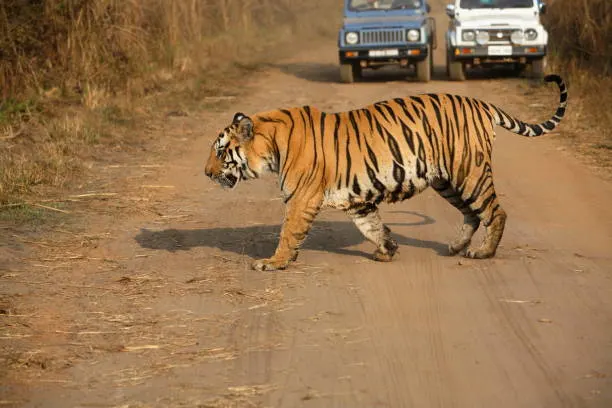
Safari jeep prices have generally fallen in the ₹6,500 to ₹7,500 range per jeep, with weekday rates running slightly lower than weekend rates. This typically includes the jeep and driver, permit charges, and guide fees, though online booking platforms may add a service charge on top.
A few things worth budgeting around beyond the base ticket price:
Camera or video fees, if applicable at your chosen gate
Guide charges, which are sometimes bundled and sometimes separate depending on how you book
Accommodation and meals, which vary widely depending on whether you choose a government resort, a private lodge, or a homestay
Always treat any price you read online — including the figures here — as a starting reference rather than a final number. Forest department rates are revised periodically, and the only way to get an exact current figure is to check at the time of booking.
What Is Navegaon Nagzira Tiger Reserve, Exactly?
Navegaon Nagzira Tiger Reserve, often shortened to NNTR, was officially notified as India’s 46th tiger reserve on 12th December 2013. It’s the fifth tiger reserve in Maharashtra, and it isn’t a single contiguous forest — it’s a cluster of five protected areas managed together: Nawegaon National Park, Nawegaon Wildlife Sanctuary, Nagzira Wildlife Sanctuary, New Nagzira Wildlife Sanctuary, and Koka Wildlife Sanctuary.
You’ll also see it referred to as Navegaon Nagzira National Park in casual conversation and in some older articles. Technically that’s not quite accurate — the “national park” is just one piece of the larger tiger reserve — but the terms get used interchangeably often enough that it’s worth knowing they mean roughly the same place.
What makes this reserve worth watching right now isn’t its size. It’s the direction it’s heading. The forest department has been actively translocating tigers into NNTR to strengthen the resident population — tigresses like NT2 and NT3 were introduced as part of this program, and NT2 was recently seen with three cubs. That’s not a minor detail. A reserve where the tiger population is actively growing, rather than just being marketed as tiger territory, is a genuinely different proposition for a visitor than a static, long-established park.
Best Time to Visit Navegaon Nagzira Tiger Reserve
Winter (November–February) is the most comfortable season, with mild daytime temperatures and peak migratory bird activity. This is also when most of the reserve’s public events — bird surveys, butterfly counts — take place.
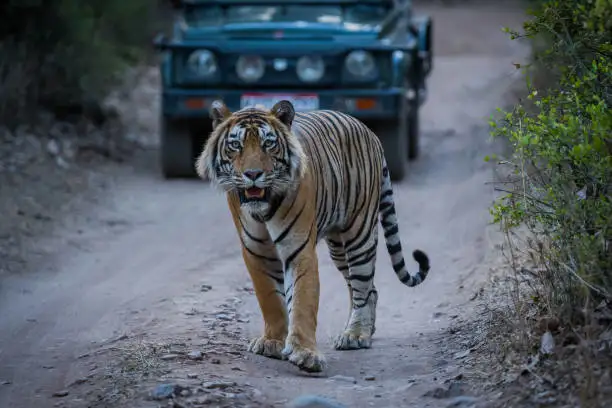
Summer (March–May) is counterintuitively the better window for tiger sightings. As temperatures climb past 40°C, water sources shrink, and animals become more predictable around the remaining waterholes. It’s uncomfortable, but if a tiger sighting is your top priority, don’t rule it out.
Monsoon (roughly July–September) — the reserve closes to tourists during this period so the forest and safari tracks can recover. Closure dates shift slightly each year, so always confirm before booking rather than assuming last year’s schedule holds.
Best Time to Visit Navegaon Nagzira Tiger Reserve
A Brief History and Biography of Navegaon Nagzira Tiger Reserve
Most people assume the reserve’s story starts in 2013, when it was notified. It doesn’t. It starts in the year 1300.
Navegaon Lake — the heart of the Navegaon side of the reserve — was built by two brothers from the Kohali community, Kolhu and Chimna Patil, under the patronage of Rani Durgawati, wife of the Gond king Dalpatshah. The lake wasn’t built for tourism or wildlife — it was an irrigation project, one of hundreds commissioned across the region to support farming communities dependent on unreliable monsoon rains. Labourers were reportedly paid in shells and cowries. A temple to Hanuman was built alongside the dam wall. There’s even a local legend about a fish released into the lake, adorned with gold, that was spotted for years afterward.
The Indian government took over management of the dam in 1951. Decades later, in 1975, Navegaon National Park was formally established, protecting the forest and wetland ecosystem that had grown up around the lake. Nagzira Wildlife Sanctuary, on the more forested and hilly side of the reserve, was declared separately in 1970. It wasn’t until 2012 that the state government began the process of merging these areas into a unified tiger project, culminating in the 2013 notification that created NNTR as it exists today.
This history matters for one practical reason: it’s why the reserve feels like two different places stitched together, because it genuinely is. Understanding that origin makes the next section make a lot more sense.
Navegaon Nagzira Tiger Reserve Booking
Navegaon Nagzira Tiger Reserve Booking: How It Actually Works
Booking a safari here isn’t complicated, but there are a few things worth knowing before you commit.
How to book Navegaon Nagzira Tiger Reserve safaris:
Decide which side you’re prioritizing — Nagzira for wildlife, Navegaon for birding — since gate selection depends on this
Book through the official forest department’s online booking system where available, or through a registered private operator
Confirm your gate, date, and time slot in writing before traveling
Carry a printed or digital copy of your booking confirmation and valid photo ID to the gate
Online safari booking for Navegaon Nagzira Tiger Reserve is generally the more reliable route compared to booking on arrival, particularly during winter weekends when demand from Nagpur-based weekend travelers spikes. Walk-in availability exists but isn’t something to count on if your travel dates are fixed.
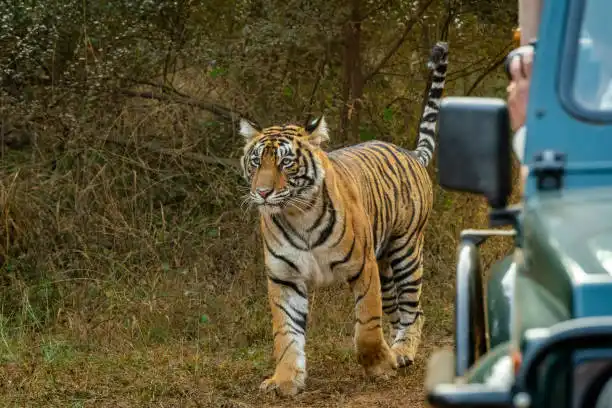
For jeep safari booking specifically, note that vehicles are typically capped at six passengers, and prices are per jeep rather than per person — so the actual cost per traveler drops significantly if you’re in a full group versus booking alone.
Lorem ipsum dolor sit amet, consectetur adipiscing elit. Ut elit tellus, luctus nec ullamcorper mattis, pulvinar dapibus leo.
Navegaon vs. Nagzira: They're Not the Same Experience
This trips up more visitors than anything else. People arrive expecting one uniform safari experience and get confused when the terrain, wildlife, and pace shift depending on which side of the reserve they’re on.
The Navegaon side is built around the lake. It’s flatter, more open, and this is where the birding happens — the Dr. Salim Ali Bird Sanctuary here holds close to 60% of all bird species recorded in Maharashtra. If you’re the kind of traveler who’d rather sit quietly with binoculars than bounce around in a jeep chasing pug marks, this side will suit you better.
The Nagzira side is hillier, denser, and part of the Gaikhuri Hills in the southern Satpura range. This is where the tiger and leopard sightings concentrate, along with gaur, sambar deer, and sloth bears. Most serious wildlife photographers gravitate here.
| Feature | Navegaon Side | Nagzira Side |
|---|---|---|
| Terrain | Open, lake-centric | Hilly, dense forest |
| Best for | Birdwatching, families, relaxed visits | Tiger and leopard sightings, photography |
| Signature experience | Boating, 200+ bird species | Jeep safaris through forest and hills |
| Ideal for one-day visitors | Yes, if birds are the priority | Yes, if big cats are the priority |
If your group has mixed interests — say, one person who wants tiger photos and another who just wants a peaceful boat ride — a two-day visit covering both sides works far better than trying to force one side to deliver everything.
Navegaon Nagzira Tiger Reserve Packages
If coordinating gates, timings, accommodation, and transport sounds like more logistics than you want to manage yourself, packages bundle these together. A typical package might include:
Two to three nights of accommodation
Multiple safari slots across both the Nagzira and Navegaon sides
Local transport between your stay and the entry gates
A guide for the duration of your visit
Packages are worth considering for first-time visitors, families managing kids’ schedules, and international tourists who’d rather not coordinate multiple bookings across an unfamiliar system. If you’re a confident independent traveler, though, booking safaris and accommodation separately usually works out more affordable.
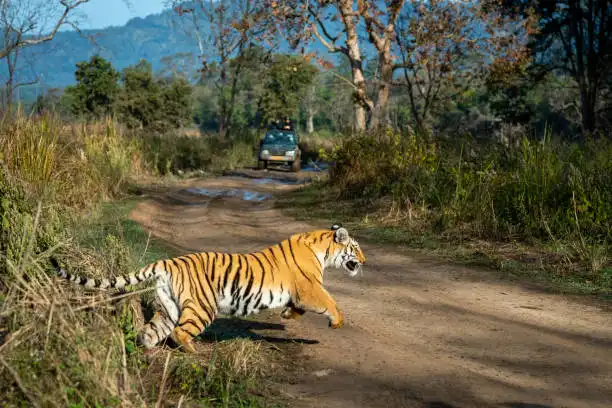
Navegaon Nagzira Tiger Reserve Packages
| Navegaon Nagzira Tiger Reserve vs. Tadoba: Which Should You Pick? | ||
| This comparison comes up constantly, because both reserves sit within a few hours of Nagpur and get cross-shopped by the same travelers. | ||
| Factor | Navegaon Nagzira | Tadoba Andhari |
|---|---|---|
| Tiger sighting probability | Improving, not guaranteed | Higher, more established |
| Crowd levels | Low | High, especially weekends |
| Cost | More affordable | Generally higher |
| Birdlife | Excellent | Good, but not the main draw |
| Best for | First-timers wanting a calmer trip, birders, repeat visitors seeking something different | Visitors prioritizing tiger sightings above all else |
Neither reserve is the “correct” choice in isolation. If you’ve already done Tadoba and want a genuinely different forest experience on your next trip to the region, NNTR delivers that. If this is your first-ever tiger safari and a sighting is non-negotiable, Tadoba’s higher density gives you better odds.
Flora and Fauna of Navegaon Nagzira Tiger Reserve
The forest cover here ranges from dry mixed deciduous forest to moist deciduous patches, with teak, haldu, jamun, mahua, and bamboo among the dominant species. It’s not a monoculture forest, which is part of why the wildlife diversity holds up despite the reserve’s relatively modest size.
On the animal side, here’s what’s actually documented in the reserve:
Big cats: Tiger and leopard, with sightings improving as the translocation program matures
Other mammals: Gaur (Indian bison), sloth bear, wild dog (dhole), sambar deer, spotted deer, wild boar, langur, and jungle cat
Birds: Over 200 recorded species, including migratory waterfowl that arrive at Navegaon Lake every winter
Reptiles and insects: A healthy population of reptile species, plus an active butterfly population — a Plumbeous Silverline butterfly was recorded here for the first time in recent years, which is the kind of detail that tells you the reserve is still being actively studied, not just administered
Birding in Navegaon Nagzira Tiger Reserve
If there’s one thing this reserve does better than almost anywhere else in the state, it’s birding. The lake habitat at Navegaon draws serious numbers of migratory species through the winter months, and the reserve runs annual bird survey events that invite citizen participation — a genuinely good way to combine a visit with hands-on conservation work rather than just observing from a jeep.
Serious birders should plan around November through February, carry a good pair of binoculars rather than relying on a camera lens, and consider joining one of the organized survey weekends if the timing lines up with your trip.
Navegaon Nagzira National Park Timings
Safari timings typically run in two windows:
Morning safari: around 6:30 AM to 10:30 AM
Evening safari: around 2:00 PM to 6:00 PM, shifting earlier to around 5:00 PM during winter months
Entry gates open and close strictly on schedule — arriving even fifteen minutes late can mean missing your slot entirely, since vehicles move out together. Build in extra travel time, especially if you’re coming from Nagpur on the morning of your first safari.
How to Reach Navegaon Nagzira Tiger Reserve
From Nagpur (the nearest major airport and rail hub): roughly 140 km, about 3 hours by road. This is the standard route for most domestic and international visitors.
From Gondia and Bhandara: these towns sit much closer to the reserve and have their own rail connectivity, making them a practical base if you’re arriving by train rather than flying.
For international tourists: fly into Nagpur, then arrange a car with driver for the onward journey rather than attempting to self-drive on unfamiliar rural roads. Most accommodation providers can arrange pickup if you share your arrival details ahead of time.
Where to Stay
Three realistic tiers exist here, and which one suits you depends on priorities more than budget alone.
Government resorts (FDCM properties): Closest to the forest, budget-friendly, basic but functional. Good for travelers who’d rather spend on extra safaris than a fancy room.
Private lodges and resorts: More comfort and service, often bundled into Navegaon Nagzira Tiger Reserve packages. Better suited to families, honeymooners, and luxury travelers.
Homestays in Sakoli or Gondia town: The most affordable option, and genuinely valuable for travelers interested in the region’s Gond and tribal heritage — a connection you won’t get from a resort stay.
Sample Itinerary
Two days, covering both sides of the reserve:
Day 1 morning: Nagzira-side safari (Chorkhamara Gate 1 or 2) for tiger and gaur odds
Day 1 evening: Pitezari gate, which borders Navegaon Lake and offers a mix of birdlife and forest wildlife in one safari
Day 2 morning: Boating or birdwatching at Navegaon Lake
Day 2 evening: Second Nagzira-side safari if your first sighting wasn’t satisfying, or a relaxed visit to Itiadoh Dam (about 20 km away) for scenery and photography
FAQs
Is Navegaon and Nagzira the same place? Not exactly. They’re two zones within one combined tiger reserve — Navegaon is lake-centric and best for birding, Nagzira is forested and hilly with better tiger and leopard odds.
What is the ticket price for Navegaon Nagzira Tiger Reserve? The prices for jeep safaris typically range from ₹6,500 to ₹7,500 per jeep, which includes permit and guide fees. However, these rates are subject to periodic revisions, so it is advisable to verify the current pricing at the time of booking.
How do I book Navegaon Nagzira Tiger Reserve safaris online? Book through the official forest department’s online booking portal or a registered private operator, selecting your preferred gate and time slot in advance, especially for winter weekends.
What is the best time to visit Navegaon Nagzira Tiger Reserve? Winter (November to February) offers the most comfortable weather and best birding; summer (March to May) offers better tiger sighting odds due to concentrated waterholes.
Is Navegaon Nagzira Tiger Reserve better than Tadoba? Neither is universally better. Tadoba offers higher tiger sighting probability with more crowds and cost; NNTR offers a quieter, more affordable trip with excellent birdlife and improving tiger sightings.
What is the best way to access Navegaon Nagzira Tiger Reserve? The nearest major airport and rail hub is Nagpur, roughly 140 km and about 3 hours away by road. Gondia and Bhandara are closer regional towns with their own rail connectivity.
Are packages worth it for Navegaon Nagzira Tiger Reserve? Packages are useful for first-time visitors and families who want accommodation, transport, and safaris bundled together, though independent travellers can often book each piece separately for less.
Navegaon Nagzira Tiger Reserve isn’t trying to be Tadoba, and that’s exactly its appeal. It’s a reserve built on a 700-year-old lake, actively growing its tiger population through translocation, and quietly holding some of the best birdwatching in Maharashtra — all without the crowds that make bigger reserves feel more like a queue than a jungle.
If you go in with realistic expectations about tiger sightings and genuine curiosity about what the Navegaon side offers beyond the safari jeep, this reserve rewards the kind of traveller who isn’t just chasing a checklist.
Ready to Plan Your Trip?
Check current gate availability, confirm this season’s safari pricing, and lock in your dates before the winter weekend rush fills up the best slots. A well-timed two-day visit covering both the Nagzira and Navegaon sides is the single best way to see what this reserve actually offers — book your safari and stay today.