Rajaji Tiger Reserve
- Home
- Rajaji Tiger Reserve
Rajaji Tiger Reserve
Rajaji Tiger Reserve: The Complete Guide to Safaris, Charges, Timings & Wildlife
Somewhere between Haridwar’s ghats and Dehradun’s hills, there’s a forest most travelers drive past without a second thought. That’s a shame, because Rajaji Tiger Reserve happens to be one of the few places in India where you can watch a herd of wild elephants cross a riverbed in the morning and be back in time for the Ganga aarti by evening.
If you’ve landed here after reading three other pages that all say the same five facts in a different order, this guide is built to actually solve your planning problem — what it costs, which zone to pick, when to go, and what you’ll realistically see once you’re there.
Birding in Rajaji Tiger Reserve
Birding in Rajaji Tiger Reserve
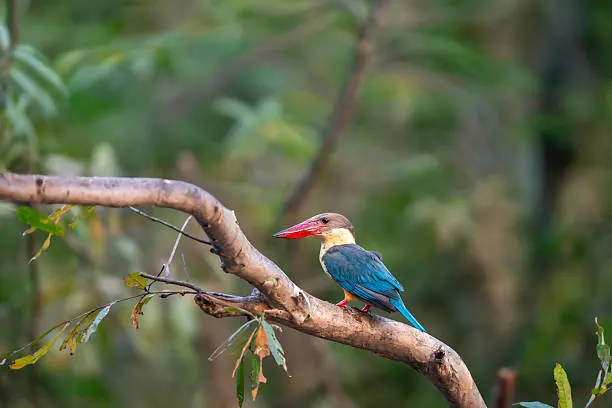
If wildlife photography is your reason for the trip, don’t sleep on the birds. Rajaji hosts over 300 recorded species, and the birding here holds up against dedicated birding reserves elsewhere in India.
The Gohari zone is the standout for this — it stays open almost year-round (closed only in August and September) and is known among regular visitors for raptor sightings, including the crested serpent eagle and Pallas’s fish eagle. The great hornbill also shows up here, along with woodpeckers, partridges, and a strong winter influx of migratory species crossing over from the Himalayas.
Practical tip: if birding is your main goal, bring a 400mm lens or longer. Rajaji’s forest cover means birds rarely sit at roadside distance the way they might in more open parks like Bharatpur.
What Is Rajaji Tiger Reserve?
Rajaji Tiger Reserve spreads across roughly 1,075 square kilometers in the Shivalik foothills of Uttarakhand, covering parts of Dehradun, Haridwar, and Pauri Garhwal districts. It’s named after C. Rajagopalachari, a prominent freedom fighter and the final Governor-General of India — we will delve into his story shortly, as it is far more captivating than the usual trivia associated with naming parks.
What sets this reserve apart from the dozen other tiger reserves in India is the Ganga. The river actually cuts through the park, dividing it into an eastern section (Chilla) and a western section (Motichur and Rajaji), and both halves feed one of the most important elephant corridors left in the country.
| Detail | Information |
|---|---|
| Location | Uttarakhand (Dehradun, Haridwar, Pauri Garhwal districts) |
| Total area | ~1,075 sq km (820 sq km core + 255 sq km buffer) |
| Tiger reserve status since | 2015 |
| Nearest cities | Haridwar, Rishikesh, Dehradun |
| Nearest airport | Jolly Grant Airport, Dehradun |
| Best time to visit | Mid-November to mid-June |
| Entry fee (Indian) | ₹150–200 per person |
| Entry fee (Foreigner) | ₹600–800 per person |
History of Rajaji Tiger Reserve
The park’s story starts long before “tiger reserve” was even part of its name. Back in 1948, the area was protected as a sanctuary. It stayed that way, quietly, for decades — three separate patches of forest known as Rajaji, Motichur, and Chilla, each managed on its own.
In 1983, forest officials merged these three sanctuaries into a single national park. That merger mattered more than it sounds like it should. Combining smaller protected patches into one contiguous forest gave wildlife — especially elephants, who need large ranging territory — a much better shot at long-term survival than three fragmented pockets ever could.
The tiger reserve status came in 2015, nearly two decades after Project Tiger had already transformed conservation strategy across India. Along with the upgrade came an additional 255.63 sq km buffer zone, expanding the total protected area to around 1,075 sq km and formally linking Rajaji into the broader Rajaji-Corbett elephant and tiger corridor — a stretch of connected forest that lets animals move between the two reserves without crossing into human settlements.
Rajaji Tiger Reserve Zones — Which One Should You Pick?
This is the part that actually determines whether your trip feels worth it, and it’s the section most other guides skip entirely.
Rajaji isn’t a single gate — it’s six distinct entry zones, each with different wildlife strengths, seasons, and crowd levels.
| Zone | Best For | Open Season | Distance From | Crowd Level |
|---|---|---|---|---|
| Chilla | Elephants, best overall odds | Nov 15 – Jun 15 | ~10 km from Haridwar | High |
| Motichur | Elephants, quieter than Chilla | Nov 15 – Jun 15 | ~15 km from Rishikesh | Moderate |
| Ranipur | General wildlife, low crowds | Nov 15 – Jun 15 | ~20 km from Haridwar | Low |
| Mohand/Chillawali | Chital, scenic river crossings | Nov 15 – Jun 15 | Near Delhi-Dehradun highway | Low |
| Gohari | Birding, goral | Year-round (except Aug–Sep) | Interior, plan ahead | Low |
| Jhilmil | Swamp deer, wild elephants | Oct 15 – Jul end | ~40 km from Haridwar | Low |
A quick way to decide: if this is your first Rajaji safari, go to Chilla. It’s busier, but it’s busy because it works — the infrastructure is better and the sighting odds are the highest in the park. Save Ranipur, Gohari, or Jhilmil for a second visit once you know what you’re looking for.
How to Book Rajaji Tiger Reserve: Safari Booking Explained
Booking is where most first-time visitors run into friction, mainly because it isn’t as centralized as booking, say, a Ranthambore safari online.
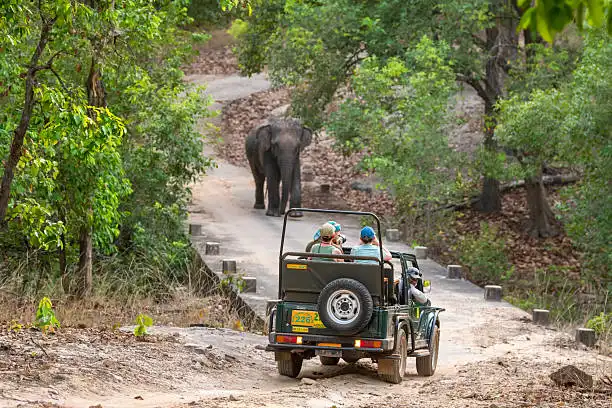
At the gate: You can walk up and book a permit and gypsy directly at any of the entry gates. This works fine on weekdays or outside peak season, but during December through February — and especially around long weekends — gypsies routinely sell out by mid-morning.
Through your hotel or a local operator: This is the more reliable route if you’re traveling on a weekend or during peak months. Most resorts and homestays near Chilla and Haridwar can arrange your permit, gypsy, and guide a day in advance, which removes the risk of showing up to a fully booked gate.
Online safari booking for Rajaji Tiger Reserve: Unlike some of India’s more heavily marketed reserves, Rajaji doesn’t have one single, widely used centralized online booking portal that travelers reliably use. In practice, most visitors book jeep safaris either through the forest department’s regional office or through registered tour operators who handle the permit process on your behalf. If you’re booking from outside India or from another city, going through a registered operator is genuinely the path of least resistance — they handle the paperwork and gypsy allocation so you’re not gambling on gate availability after a long drive.
Jeep safari booking tip: always confirm your gypsy number and driver name a day before your safari slot, particularly in peak season. It’s a small step that avoids a surprisingly common problem — turning up to find your “confirmed” vehicle was double-booked.
How to Book Rajaji Tiger Reserve
A Short Biography: Who Was Rajaji?
Rajagopalachari — known to most of India simply as “Rajaji” — wasn’t a wildlife figure at all. He was one of the most prominent leaders of India’s independence movement, a close political ally of Mahatma Gandhi, and the only Indian to ever hold the post of Governor-General after independence.
Naming a tiger reserve after a statesman rather than a geographic feature is unusual in India, and it’s part of why the park carries a bit of historical weight beyond its wildlife credentials. If you’re the kind of traveller who likes context behind a place name, this is one of the more genuinely interesting stories in the country’s protected-area system.
| Rajaji Tiger Reserve Safari Charges and Ticket Price | ||
|---|---|---|
| Here is a clear presentation of the number breakdown that individuals typically search for, rather than having it concealed within a fee schedule. | ||
| Item | Indian Visitors | Foreign Visitors |
| Entry/ticket price | ₹150–200 per person | ₹600–800 per person |
| Gypsy hire (per safari) | ~₹3,500 (shared across group) | ~₹3,500 |
| Vehicle road fee | ₹250–300 per entry | ₹500 per entry |
| Guide fee (general) | ₹800 | ₹800 |
| Guide fee (bird/wildlife specialist) | ₹1,200–1,800 | ₹1,200–1,800 |
| Still camera | Usually free | ₹50 |
Do the math on a group booking: a family of four splitting a gypsy typically pays somewhere between ₹1,200 and ₹1,800 per person for a full 3-hour safari, guide included. That specialist guide fee looks steep on paper, but if you’re serious about photography, the difference in positioning and sightings usually justifies it.
One thing worth flagging honestly — these fees do get revised periodically, so treat this table as a strong estimate and confirm the exact figure at the gate or with your booking operator before you travel.
Best Time to Visit Rajaji Tiger Reserve
Best Time to Visit Rajaji Tiger Reserve
The park is open from mid-November to mid-June and closed through the monsoon, when forest tracks flood and become unsafe for both vehicles and wildlife.
November to February: Crisp, comfortable weather and strong visibility. This also overlaps with peak tourist season in Haridwar and Rishikesh, so it’s an easy stretch to combine both trips — just book your safari a day ahead since demand is highest here.
March to April: The sweet spot for most travelers. Pleasant temperatures, the forest is still green, and animal activity stays high without summer’s heat.
May to June: Genuinely hot, but this is peak sighting season — animals cluster around dwindling water sources, which makes them far easier to spot. If you can handle the heat, this window rewards patient photographers the most.
If you’re set on visiting outside this main window, Gohari (open almost all year) and Jhilmil (October through July-end) are your two options — everything else shuts for the monsoon.
Flora and Fauna of Rajaji Tiger Reserve
Most articles rush past the plant life to get to the animals, but the forest itself is worth understanding — because it explains why certain zones are better for certain sightings.
Flora: Rajaji sits in a transition zone between the Indo-Gangetic plains and the Himalayan foothills, and that shows in its vegetation. You’ll find sal forests dominating large stretches, mixed with shisham, khair, bamboo, and palash. Higher elevations shift toward chir pine, while the southern belt opens into grasslands and riverine scrub along the seasonal streams locals call “raus.” This variety is exactly why the park supports such a wide range of species — dense sal cover for elephants and deer, open grassland for grazing herbivores, and rocky slopes for goral.
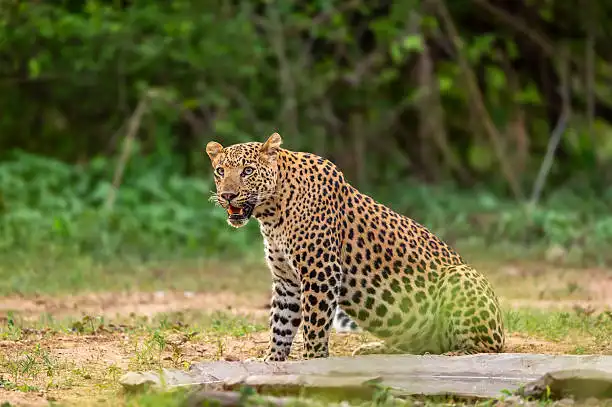
Fauna: The headline species is the Asian elephant, and Rajaji genuinely delivers here — this is one of the more reliable places in India to see wild herds, sometimes 15 to 20 animals strong, especially near water sources from March through June. Tigers and leopards are present but far less predictable. Alongside them, you’ll find sambar, chital, barking deer, nilgai, wild boar, sloth bear, and — in the Jhilmil zone specifically — barasingha (swamp deer), a species that’s genuinely uncommon outside a small number of Indian reserves.
Rajaji Tiger Reserve Timings
Safaris run twice a day, and the exact window shifts slightly with the season:
Summer months: Morning slot 6:00 AM–9:00 AM, afternoon slot 3:00 PM–6:00 PM
Winter months: Morning slot 7:00 AM–10:00 AM, afternoon slot 2:30 PM–5:30 PM
The park itself operates from sunrise to sunset, and gates close firmly at the end of each slot — arriving even 15 minutes late can mean losing your booked gypsy to the next group in line, so build in buffer time, especially if you’re driving in from Haridwar or Dehradun that morning.
How to Reach Rajaji Tiger Reserve
By air: Jolly Grant Airport in Dehradun is closest, about 35–45 minutes from the Motichur side. Delhi’s IGI Airport works well if Rajaji is one stop on a longer North India itinerary, with a 5–6 hour road or rail connection onward.
By rail: Haridwar Junction is the most convenient station for Chilla and Ranipur, with excellent connectivity to Delhi. Dehradun and Rishikesh stations suit the Motichur side better.
By road: Delhi to Haridwar is roughly 200–220 km, about 4.5–5 hours by car. From Dehradun, Chilla gate is under an hour away. From Rishikesh, Motichur is closer still — around 15–20 minutes.
As a rule of thumb: arriving via Haridwar, head to Chilla. Arriving via Rishikesh or Dehradun, Motichur saves you a cross-town drive.
Resorts Near Rajaji Tiger Reserve
Where you stay shapes the whole trip, so it’s worth matching your choice to what you actually want out of it.
Forest rest houses: Basic but atmospheric, booked directly through the Uttarakhand Forest Department. You’re sleeping right at the edge of the reserve, which is hard to replicate anywhere else.
Mid-range resorts: Several resorts near Rajaji Tiger Reserve, particularly on the Chilla and Haridwar side, now bundle safari bookings into their stay packages — a convenient option if you’d rather not coordinate permits separately.
Luxury lodges: A smaller set of higher-end properties near Rajaji and toward Corbett offer private decks, guided nature walks, and premium safari vehicles — worth it if this is a dedicated wildlife holiday rather than a quick add-on trip.
Homestays: Villages around Ranipur and Mohand offer simple, budget-friendly homestays for travelers who’d rather have a local, low-key base than resort amenities.
Families tend to do best staying close to Chilla for convenience. Couples and photographers often prefer the quieter Motichur or Ranipur side.
| Rajaji vs Corbett: A Quick Comparison | ||
|---|---|---|
| Since this comparison comes up constantly when people plan a Uttarakhand wildlife trip, here's the honest breakdown: | ||
| Factor | Rajaji Tiger Reserve | Corbett Tiger Reserve |
| Tiger sighting odds | Lower | Higher |
| Elephant sighting odds | Very high | Moderate |
| Crowd levels | Lower | Higher (especially Dhikala zone) |
| Distance from Delhi | ~4.5–5 hours | ~6–7 hours |
| Best for | Elephants, birding, quieter safaris | Serious tiger tracking |
If tigers are the whole point of your trip, Corbett is the stronger bet. If you want a strong chance at wild elephant herds, solid birding, and a less touristy experience closer to Delhi, Rajaji holds its own — and it’s a lot easier to combine with Haridwar and Rishikesh in the same trip.
Suggested Itineraries
1-Day Chilla Safari: Early morning safari (6–9 AM), breakfast back in Haridwar, afternoon free for the ghats. Works well as a day trip if time is tight.
2-Day Wildlife + Ganga Aarti Combo: Day 1 — arrive Haridwar, evening Ganga aarti at Har Ki Pauri. Day 2 — early Chilla safari, followed by an afternoon in Rishikesh.
3-Day Deep Dive: Day 1 — Chilla safari plus Haridwar evening. Day 2 — Gohari or Motichur for birding, then Rishikesh in the afternoon. Day 3 — Jhilmil for swamp deer (in season) before departure.
Frequently Asked Questions
Is Rajaji Tiger Reserve better than Corbett for tiger sightings? No. Corbett has significantly higher tiger density and better sighting odds. Rajaji’s real strength is elephants, not tigers — go there for that reason, not to guarantee a tiger sighting.
What is the entry ticket price for Rajaji Tiger Reserve? Indian visitors pay roughly ₹150–200 per person, and foreign visitors pay ₹600–800 per person, before gypsy hire, guide, and vehicle fees.
What are the Rajaji Tiger Reserve timings? Safaris run twice daily — roughly 6–9 AM and 3–6 PM in summer, shifting to 7–10 AM and 2:30–5:30 PM in winter.
How do I book a jeep safari at Rajaji Tiger Reserve? You can book at the gate directly, through your hotel, or through a registered tour operator. During peak season (December–February), booking a day in advance is strongly recommended since gypsies sell out fast.
Which zone is best for a first-time visitor? Chilla. It has the best infrastructure, easiest access from Haridwar, and the highest overall sighting probability of any zone.
Can foreign tourists visit Rajaji Tiger Reserve? Indeed, international visitors are required to pay a higher fee for entry and photography. They must present their passport for the gate registration and have the option to request an English-speaking guide, which is best arranged in advance during peak months.
Is Rajaji Tiger Reserve open during the monsoon? No, the park closes from mid-June to mid-November. Gohari and Jhilmil zones are the exceptions, each with their own separate seasonal calendar.
How many days should I plan for Rajaji Tiger Reserve? One day covers a single solid safari. Two to three days let you explore multiple zones and pair the trip with Haridwar or Rishikesh — the better option if you’re traveling any real distance to get here.
The Rajaji Tiger Reserve does not aspire to be like Corbett, and this distinction is precisely what renders it a worthwhile destination in its own right. It’s the place to go if you want a genuine shot at watching wild elephants move through Sal forest, a birding session that rivals dedicated bird sanctuaries, and a trip that folds naturally into a Haridwar or Rishikesh visit without adding a full extra day of travel.
Pick your zone based on what you actually want to see, book your gypsy ahead of time during peak months, and go in with realistic expectations about tigers — do that, and Rajaji delivers an experience that’s easy to underestimate from the outside.
Ready to Plan Your Rajaji Tiger Reserve Trip?
Whether you need help locking in a jeep safari during peak season, comparing zones for your group, or building a full Haridwar-Rishikesh-Rajaji itinerary, getting the logistics right in advance is what separates a smooth trip from a frustrating one.
Get in touch to check current safari availability, confirm today’s ticket prices, and book your Rajaji Tiger Reserve safari before the gypsies sell out.