
Ratapani Wildlife Sanctuary
- Home
- Ratapani Wildlife Sanctuary
Ratapani Wildlife Sanctuary and Tiger Reserve
Ratapani Wildlife Sanctuary: The Complete Visitor's Guide
Search “Ratapani Wildlife Sanctuary” and you’ll get a handful of pages that half-answer your question. One tells you the history. Another shows pretty photos. None of them tell you what a safari actually costs, how the online booking system works, or what time to actually show up at the gate.
This guide fixes that. Everything here — the charges, the timings, the booking steps, the wildlife you’ll actually see — comes from checking the current details rather than recycling the same three paragraphs every other page repeats.
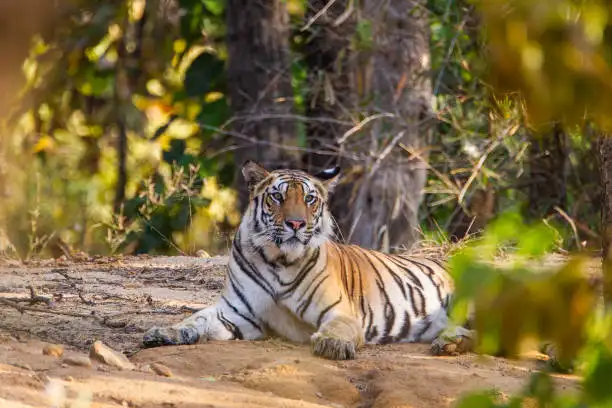
Best Time to Visit Ratapani Wildlife Sanctuary
Best Time to Visit Ratapani Wildlife Sanctuary
Winter (November to February) — Comfortable days, genuinely cold mornings, and the best window for birding as migratory species settle around the reservoirs. Pack real layers for the early safari slot; an open jeep at 6:30 AM in December is colder than most people expect.
Summer (March to June) — Peak tiger-sighting season. As temperatures rise, water sources shrink to a handful of dependable spots, and animals — tigers included — become far more predictable about showing up near them. It’s hot, but this is when sighting odds are genuinely highest.
Monsoon (roughly July to September) — Core zone safaris typically close during this window, in line with standard tiger reserve practice across India. Exact closing and reopening dates shift slightly each year, so confirm with the forest department before locking in monsoon-season travel.
Quick way to decide: chasing a tiger sighting, go April to June. Prioritizing comfort and birds, go December to February.
What Is Ratapani Wildlife Sanctuary?
Ratapani Wildlife Sanctuary sits in the Vindhya hill range, spread across the Raisen and Sehore districts of Madhya Pradesh, about an hour’s drive from Bhopal. The Narmada River runs along its northern edge, and the Kolar River forms its western boundary — which is why the terrain shifts between dry teak forest, rocky hills, and reservoir-fed wetlands within the same reserve.
It’s officially known today as Ratapani Tiger Reserve, though most people still search for it by its older name. Both refer to the same landscape — the “tiger reserve” tag simply reflects its 2024 upgrade under the National Tiger Conservation Authority, with a defined core zone (safari-only, stricter protection) and a buffer zone (where regulated tourism and local villages coexist).
What makes it stand out isn’t just the tigers. It’s the location. Few tiger reserves in India sit this close to a state capital. Forest staff have documented tigers moving along the buffer zone near Bhopal’s outskirts occasionally — locals call them “city tigers.” Add in the Bhimbetka rock shelters, a UNESCO World Heritage Site with paintings over 30,000 years old, sitting inside the same landscape, and you get a reserve that pairs wildlife with genuinely deep human history.
History and Biography of Ratapani Wildlife Sanctuary
The sanctuary was first notified in 1976 and extended in 1983, largely to protect the teak forests and the tiger population moving between the Vindhya hills and the Narmada belt.
For decades, it operated as a standard wildlife sanctuary — quieter, less commercialized, and overshadowed by better-known Madhya Pradesh reserves like Kanha and Bandhavgarh. That changed in December 2024, when it was formally declared the state’s 8th tiger reserve and India’s 57th overall, following a rising tiger count and a push from the state government to bring it under stronger federal protection.
Here’s a detail that trips up a lot of people researching this place: you’ll find one source quoting the sanctuary’s area as roughly 826 sq km, and another quoting 1,271 sq km for the tiger reserve. Both are correct — they’re just measuring different things. The smaller number is the original sanctuary boundary. The larger one includes the newly added buffer zone that came with the tiger reserve declaration. If you’re citing a figure anywhere, be clear about which one you mean.
The area also carries older history than the tiger reserve tag suggests. Ashoka is believed to have visited the Saru Maru caves nearby. Ginnourgarh Fort traces back to the Gond kingdom before it was absorbed into Bhopal State. And Bhimbetka’s rock art predates all of it by tens of thousands of years. Few reserves let you experience a functioning wild ecosystem and a genuine Stone Age site on the same day trip.
Online Booking for Ratapani Wildlife Sanctuary
Online safari booking for Jhiri and Delawadi gates runs through the Madhya Pradesh Forest Department’s official portal.
Register on the forest department’s e-booking portal with a valid ID and phone number.
Select your gate, date, and preferred time slot — either morning or evening.
Select vehicle type (shared jeep or private jeep, where available).
Pay online and download your confirmation — you’ll need to show this at the gate.
Arrive at least 30 minutes before your slot for verification and briefing.
Book at least a few days ahead during peak season (April to June), since slots fill up quickly. If you’re arriving without a reservation, Bhimbetka gate is your fallback — it accepts on-site jeep safari booking and even permits self-drive vehicles, which the other two gates don’t.
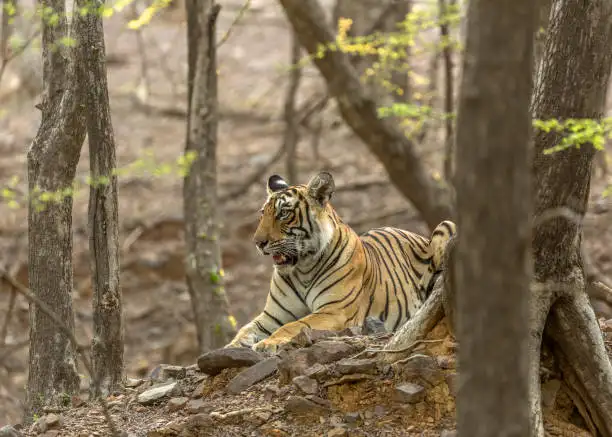
Online Booking for Ratapani Wildlife Sanctuary
Ratapani Wildlife Sanctuary Safari Booking, Charges, Timings & Packages
This is the part most guides skip entirely, so let’s actually walk through it gate by gate.
The Three Safari Gates
| Gate | Distance from Bhopal | Best For | Booking Type |
|---|---|---|---|
| Jhiri Gate | ~34 km | Core-zone tiger and leopard sightings | Online, in advance |
| Delawadi Gate | ~52 km | Birding, heritage combo trips, jungle camps | Online, in advance |
| Bhimbetka Gate | ~44 km | Same-day Bhimbetka + safari combo, spontaneous trips | On-site walk-in, self-drive allowed |
Ratapani Wildlife Sanctuary Safari Charges and Ticket Price
Entry fees are charged per person, with an additional vehicle fee and a separate camera fee for DSLR or professional camera equipment (phone cameras are usually free). Charges differ slightly by gate and vehicle type, and the forest department revises them periodically — so treat any number you see online as indicative and confirm the current ticket price directly on the booking portal or with your gate before paying.
Ratapani Wildlife Sanctuary Packages
If planning your own gate, jeep, and stay feels like too much coordination, several local operators and resorts near the reserve sell ready-made Ratapani Wildlife Sanctuary packages — usually bundling safari slots, accommodation, and a Bhimbetka or Sanchi add-on into one booking. These work well for first-time visitors or groups who’d rather not juggle three separate reservations.
Flora and Fauna of Ratapani Wildlife Sanctuary
The forest here is a mix of dry and moist deciduous types, with teak covering roughly 55% of the area and bamboo stands filling out much of the rest. That variety of habitat is exactly why the wildlife list is longer than you’d expect from a lesser-known reserve.
Big cats and carnivores:
Bengal tiger — around 40-plus individuals, including cubs, based on recent counts
Indian leopard, in solid numbers
Dhole (Indian wild dog), striped hyena, golden jackal, Indian fox, sloth bear
Herbivores:
Chital, sambar, nilgai, four-horned antelope (chausingha), chinkara (an endangered species found here), wild boar, langur and rhesus macaque
Birdlife:
Over 150 recorded species, including the paradise flycatcher (Madhya Pradesh’s state bird), coppersmith barbet, black drongo, kingfishers, sunbirds, and a strong seasonal presence of migratory waterfowl
Reptiles and reservoir life:
Python, cobra, viper, monitor lizards, and crocodiles in the Ratapani reservoir
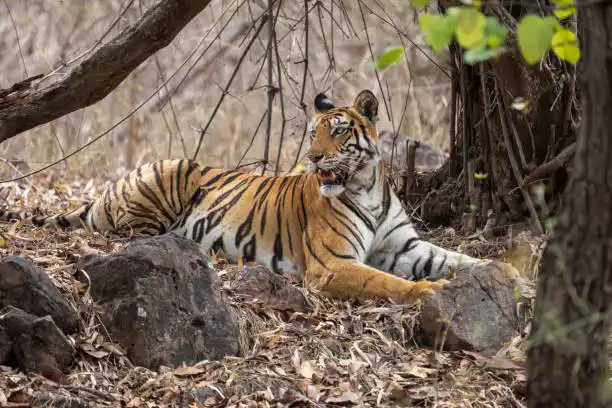
A practical note worth setting straight: most safaris don’t end in a tiger sighting. You’re far more likely to see deer, birds, maybe a leopard or sloth bear, and — if you’re lucky — fresh tiger pugmarks near a waterhole. That’s not a flaw in the reserve. It’s how wild tiger habitat actually works, and it’s worth knowing before you go in expecting a guaranteed photo.
Resorts and Stays Near Ratapani Wildlife Sanctuary
Resorts and Stays Near Ratapani Wildlife Sanctuary
Ratapani Jungle Lodge — the most polished option, around 30 km from Bhopal and right next to the reserve, with lake-view cottages, a boat club, and a pool. Best for couples, honeymooners, and travelers who want real comfort after an early wake-up call.
MPT Sagoun Retreat — roughly 5 km from Delawadi gate, a solid government-run mid-range option, conveniently close to Salkanpur Temple for a spiritual add-on.
Delawadi Jungle Camp and local homestays — budget-friendly, tribal-guided, eco-tourism-focused, and ideal for student groups or travelers who want a more grounded, low-impact stay.
Match your stay to your travel style: the lodge for comfort-first travelers, Sagoun Retreat for balanced mid-range trips, and homestays for anyone prioritizing an authentic, low-cost experience.
What a Jeep Safari at Ratapani Actually Feels Like
Before you finalize your jeep safari booking, it helps to know what you’re actually signing up for.
Picture 6:30 AM, still dark, climbing into an open jeep with a driver and guide who both grew up in villages bordering the forest. The first twenty minutes are properly cold — not jacket-weather cold, glove-and-scarf cold.
As the jeep moves deeper in, the forest opens into clearings and closes back into dense teak. Most routes stop briefly at a small Mahadev temple and a watchtower with views over the canopy — usually the only spot with a restroom along the way. Near a quiet waterhole, the jeep slows and waits. Sometimes you hear movement in the undergrowth. Sometimes it’s fresh pugmarks in the dirt and nothing more. That’s often the whole story, and it’s a genuinely memorable one even without a tiger stepping into view.
Along the way, expect peacocks crossing clearings, birdsong you can’t always identify, and occasionally a rock painting site echoing Bhimbetka’s style with none of the crowds. By the time you’re back at the gate three hours later, the sunrise over the hilltop watchtower tends to stick with you more than the wildlife checklist does.
How to Reach Ratapani Wildlife Sanctuary
By air — Bhopal Airport is the nearest, with regular domestic flights from Delhi, Mumbai, and other major cities.
By rail — Bhopal Junction is the main railhead; Narmadapuram (Hoshangabad), Budni, and Mandideep stations sit closer to specific gates depending on your route.
By road — Bhopal connects well to Jabalpur, Nagpur, Indore, and Balaghat, making a self-drive trip or a hired cab an easy option if you’re combining this with a wider Madhya Pradesh itinerary.
For international visitors, Bhopal is the sensible base — it has enough hotel infrastructure and English-speaking guides to make the last leg into the reserve straightforward.
Birding in Ratapani Wildlife Sanctuary
If tigers are the headline, birds are the reserve’s quiet strength. With over 150 recorded species, Ratapani rewards a slower, more patient visit — ideally on foot or from a stationary jeep near one of the reservoirs rather than a fast-moving core-zone drive.
Winter is the strongest birding season, when migratory waterfowl join the resident population around the water bodies. Look out for the paradise flycatcher, coppersmith barbet, black drongo, and various kingfisher species. Bring binoculars and a longer lens if photography is the goal — most birding activity happens early morning, overlapping with the first safari slot.
Sample Itinerary: Combining Ratapani With Nearby Heritage Sites
Day 1 — Early morning safari from Jhiri or Delawadi gate, breakfast at your stay, afternoon visit to Bhimbetka rock shelters, overnight near the reserve.
Day 2 — Morning at Kathotiya rock art or Ginnourgarh Fort, then a stop at Sanchi Stupa or Bhojpur Temple on the way back to Bhopal.
Short on time? A single morning safari through Bhimbetka gate followed by a same-day Bhimbetka visit works comfortably as a day trip — no overnight stay required.
Ratapani Wildlife Sanctuary Timings
Safaris run in two daily slots:
Morning slot — starts around 6:00–6:30 AM, roughly 3 hours long
Evening slot — afternoon start, also around 3 hours
Timings shift slightly with sunrise and sunset across seasons, so double-check the exact slot times for your travel month when booking.
FAQs About Ratapani Wildlife Sanctuary
How do I book Ratapani Wildlife Sanctuary safaris? Book Jhiri and Delawadi gate safaris online through the Madhya Pradesh Forest Department’s e-booking portal. Bhimbetka gate accepts on-site, walk-in bookings if you haven’t planned ahead.
What are the safari charges at Ratapani Wildlife Sanctuary? Charges include a per-person entry fee, a vehicle fee, and an optional camera fee for professional equipment. Rates vary by gate and are revised periodically, so confirm the current ticket price on the booking portal before your visit.
What are the safari timings at Ratapani Wildlife Sanctuary? Two daily slots — an early morning safari starting around 6:00–6:30 AM and an afternoon/evening slot — each running about 3 hours.
Can I drive my own vehicle inside the reserve? Only through Bhimbetka gate, which permits self-drive entry. Jhiri and Delawadi gates require the assigned safari jeep.
How many tigers live in Ratapani Wildlife Sanctuary? Recent counts put the population at around 40-plus tigers, including cubs, though the number shifts slightly with each census update.
Is Ratapani open during the monsoon? Core zone safaris typically close from around July to September, similar to other Indian tiger reserves. Confirm exact dates with the forest department for your travel year.
Is Ratapani a good day trip from Bhopal? Yes. A morning safari through Bhimbetka gate paired with a same-day Bhimbetka rock shelter visit works well without an overnight stay.
How is Ratapani different from Bandhavgarh, Kanha, or Pench? It’s smaller and far closer to a major city, which means fewer crowds and easier access — but also a lower guaranteed tiger-sighting rate than the more resourced, more famous reserves.
Ratapani Wildlife Sanctuary isn’t trying to compete with Bandhavgarh or Kanha on sheer scale, and it doesn’t need to. What it offers instead is a genuinely rare combination: a growing tiger population living within reach of a state capital, a UNESCO World Heritage rock art site in the same landscape, and safaris that still feel uncrowded compared to India’s more famous reserves.
Go in with realistic expectations — birds and deer more often than tigers, a real forest rather than a guaranteed wildlife show — and this becomes one of the more rewarding, underrated safari experiences in Madhya Pradesh.
Ready to Plan Your Trip?
Check live safari slot availability on the Madhya Pradesh Forest Department’s booking portal before your travel dates fill up, especially if you’re planning an April-to-June visit. And if you’d rather not juggle gate selection, timing, and stay bookings on your own, save this guide and use it as your checklist when you sit down to book.