Sasan Gir National Park
- Home
- Sasan Gir National Park
Sasan Gir National Park
Sasan Gir National Park: The Complete Guide to Safaris, Lions, and Planning Your Trip
If you’ve typed “Sasan Gir National Park” into Google more than once, you already know the problem: half the results read like a government notice, and the other half are travel agencies trying to sell you a package before you’ve even decided which safari zone you want. Nobody quite tells you what happens when you try booking a permit at midnight and find every good morning slot already gone.
That’s the gap this guide fills. Real safari charges. The actual booking process. Which zone suits your trip and which doesn’t. And a few honest opinions along the way, because generic advice doesn’t help anyone plan an actual trip.
Best Time to Visit Sasan Gir National Park
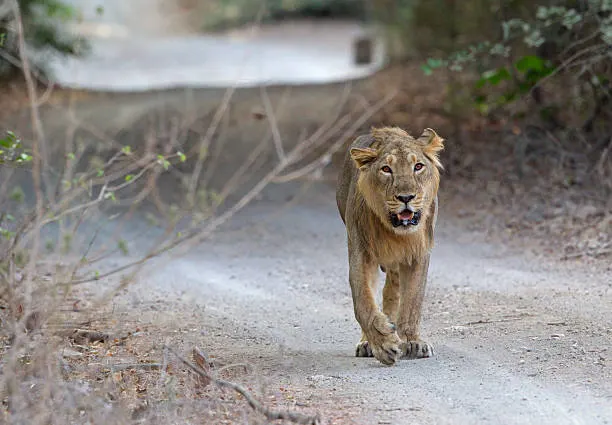
Best Time to Visit Sasan Gir National Park
Most articles stop at “November to March is best,” which isn’t wrong, but it’s only half the picture.
The park closes completely from mid-June to mid-October for monsoon — that part’s non-negotiable, so plan around it. Within the open season, though, the trade-offs shift month by month:
November to February (winter): Comfortable temperatures, easy on families, kids, and older travellers. The catch — post-monsoon vegetation is still dense, which gives animals more cover and makes spotting genuinely harder.
March to mid-June (summer): Counterintuitively, this is when serious photographers often prefer to visit. As heat rises and vegetation thins out, animals — lions included — spend more time near waterholes and open clearings, which noticeably improves both visibility and activity. April and May get properly hot by midday, but early morning safari slots more than make up for it.
A simple way to decide: photographers and wildlife enthusiasts chasing better sightings should target March through May and book the first morning slot. Families and older travellers who prioritize comfort should stick to winter. Couples and leisure travellers pairing the safari with a resort stay will likely enjoy winter more too, since it suits lounging by a pool or garden far better than 40-degree afternoons.
Sasan Gir National Park: A Quick Overview
Sasan Gir sits across the Junagadh, Gir Somnath, and Amreli districts of Gujarat, tucked into the lower part of the Kathiawar peninsula. It’s the only place on the planet, outside Africa, where lions still roam free in the wild — specifically the Asiatic lion, a subspecies that once ranged across the Middle East and into central India and now survives only here.
A few numbers worth knowing upfront: the full protected area spans roughly 1,410 sq km, split between a core national park zone and a much larger surrounding sanctuary. The lion population has grown steadily over the decades, from barely a dozen animals in the early 1900s to several hundred today — the forest department releases updated census figures periodically, so check the latest count before you go quoting numbers in your own trip notes.
One quick clarification that trips up a lot of first-time visitors: Sasan, Gir, Gir Forest, and Sasan Gir National Park all refer to the same destination. Sasan is technically the small gateway town where most safaris begin, but the name has become interchangeable with the park itself.
Who should actually come here? Wildlife photographers get some of the best big-cat access in Asia outside a zoo. Families get a manageable half-day activity that keeps kids engaged without exhausting them. Couples get a genuinely offbeat, romantic setting most itineraries skip. History and culture enthusiasts get Junagadh, Girnar, and Somnath within easy reach. If you’re expecting a guaranteed, up-close lion sighting on every safari, though, it’s worth resetting that expectation now — this is wild forest, not a drive-through zoo.
Sasan Gir National Park Safari Zones: Jungle Safari vs. Devalia vs. Kankai
This is the part almost nobody explains clearly, and it’s the single biggest source of first-timer confusion. There isn’t one safari experience at Gir — there are three, and picking the wrong one for your trip is the most common regret visitors mention afterward.
| Zone | Sighting Odds | Cost Level | Duration | Best Suited For |
|---|---|---|---|---|
| Gir Jungle Safari (core zone) | Moderate, not guaranteed | Higher | ~3 hours | Photographers, wildlife enthusiasts, repeat visitors |
| Devalia (Interpretation Zone) | Near-certain | Lower, fixed fee | 30–45 minutes | Families with young kids, time-crunched visitors, first-timers |
| Kankai Safari | Moderate | Similar to jungle safari | ~3 hours | Visitors who missed jungle safari slots, quieter alternative |
Gir Jungle Safari takes you through the actual sanctuary along numbered routes that rotate daily. It’s real, undisturbed forest — no guarantees, but genuine wild behavior for anyone who wants the authentic version.
Devalia, a fenced 4 sq km enclosure, exists specifically for visitors who can’t secure a jungle permit or don’t have time for the full three-hour drive. Sightings are near-certain here, which makes it ideal for families and anyone visiting on a tight schedule — just know going in that it’s a managed environment, not the wild sanctuary.
Kankai Safari is a newer, quieter route often used as a backup when jungle safari slots are sold out, or by visitors who prefer a less crowded experience.
A practical rule of thumb: if you only have one day, do Devalia in the morning and spend the afternoon in Junagadh or at Girnar’s base. If you have two or three days, prioritize the jungle safari — ideally book it on two separate days, since one quiet drive shouldn’t define your whole trip.
How to Book Sasan Gir National Park Safari Online
Booking is where most of the frustration in trip planning actually happens, so let’s go through it properly.
Lorem ipsum dolor sit amet, consectetur adipiscing elit. Ut elit tellus, luctus nec ullamcorper mattis, pulvinar dapibus leo.
Sasan Gir National Park Safari Timings
Each safari day is split into fixed slots — typically early morning, mid-morning, and afternoon. The early morning slot is the most sought-after, since animals are more active before the heat sets in, which means it also sells out first. If your travel dates are fixed, book the moment the online window opens rather than waiting to finalize the rest of your itinerary.
Sasan Gir National Park Booking Process
Permits go through the official Gujarat forest department portal, not third-party sellers, though plenty of agents will happily “arrange” one at a markup. Here’s roughly how it works:
Bookings open a set number of weeks in advance, with a separate, smaller tatkal (last-minute) quota released closer to the date.
Choose your date, safari zone, and preferred time slot.
Enter ID details for every visitor in your group — have everyone’s information ready beforehand, especially for larger families or groups.
Complete payment online to confirm your slot.
If your first-choice date is sold out, check the tatkal quota a day or two before your visit, or fall back on Devalia or Kankai rather than trusting an unofficial “guaranteed slot” seller.
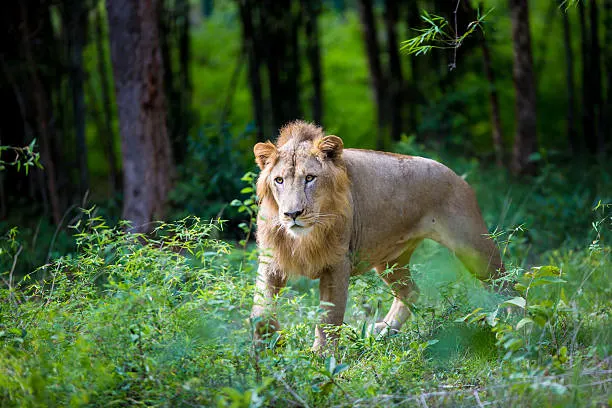
Sasan Gir National Park Booking Process
Sasan Gir National Park Safari Charges and Ticket Price
Here’s what actually goes into the total cost, since no single number tells the full story:
Entry/permit fee — different rates apply for Indian and foreign nationals
Jeep/gypsy hire — usually charged per vehicle and shared across your group
Guide fee — mandatory, and genuinely worth it, since guides track where animals were last active
Camera fee — a separate charge if you’re bringing a DSLR or serious camera setup
Rates get revised periodically by the forest department, so always check current figures on the official portal before finalizing your budget rather than relying on numbers from an older blog post — this one included.
Jeep Safari Booking Tips
A few things worth knowing before you book your jeep safari:
Book your jeep and guide together through the same portal booking — you can’t show up and hire one independently at the gate.
Larger groups can share a single jeep, which brings the per-person cost down noticeably.
Confirm your pickup point with your hotel in advance; most properties near Sasan will arrange transport to the gate as part of your stay.
Sasan Gir National Park Tour Packages vs. Booking It Yourself
If managing permits, jeep hire, and accommodation separately feels like too much coordination, several tour operators bundle everything into a single Sasan Gir National Park tour package — useful for first-timers, larger groups, or anyone short on planning time. That said, booking each piece yourself through the official portal usually works out cheaper if you’re comfortable handling the logistics, and it’s genuinely not complicated once you’ve done it once.
History of Sasan Gir National Park
The story of how Gir survives at all is worth knowing before you visit, because it changes how you see the place.
By the end of the 19th century, hunting had reduced the Asiatic lion population across Asia to barely a dozen animals, all confined to this one forest, which at The period was the exclusive hunting territory of the Nawab of Junagadh. British colonial officials, alarmed at how close the species had come to disappearing, pushed the Nawab to protect what remained. That protection eventually became formal in 1965, when the area was declared a sanctuary, with a core zone designated as a national park a decade later.
What makes this history genuinely remarkable is the recovery curve. From a population hovering near extinction, numbers climbed past 200 by the late 1960s, crossed 400 by 2010, and have continued rising with each subsequent census. It’s one of the more successful large-carnivore conservation stories anywhere in the world, driven by decades of forest department work, local community involvement, and strict habitat protection.
Understanding this background matters practically, too — it’s part of why permits are limited, why guides are mandatory, and why off-track driving is banned. The rules exist because this forest was rebuilt from almost nothing.
Resorts Near Sasan Gir National Park
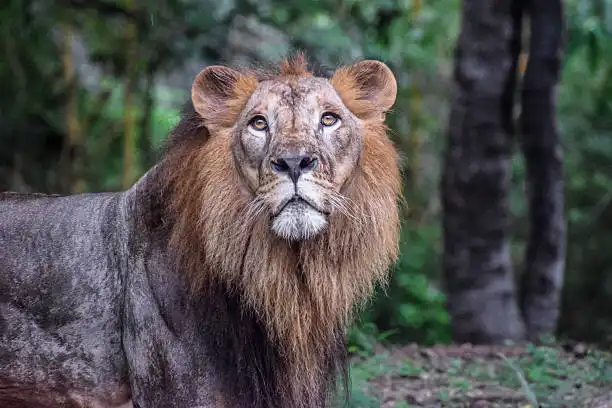
Resorts Near Sasan Gir National Park
Accommodation clusters mainly around Sasan village itself, with more options spreading out toward Junagadh and Veraval.
Budget stays — simple guesthouses and forest department lodges right in Sasan, ideal if you just need a bed near the gate before an early safari.
Mid-range resorts — comfortable properties with restaurants and easy gate access, the practical choice for most families and leisure travelers.
Luxury properties — a handful of well-known jungle lodges and heritage-style resorts offering pools, spas, curated dining, and sometimes their own resident naturalists for guests wanting a fuller experience alongside the wildlife trip.
Here’s the thing that matters more than star ratings: proximity to the safari gate. If your morning slot starts at 6 AM, a 20-minute drive means waking up uncomfortably early. Staying within a 5–10 minute radius of the entrance is worth prioritizing over a marginally nicer room further away.
The Flora and Fauna of Sasan Gir National Park
Lions get all the attention, and understandably so, but Gir’s ecosystem runs much deeper than its most famous resident.
The forest itself is classified as dry deciduous, dominated by teak in the eastern half, mixed with acacia, ber, banyan, and flame-of-the-forest trees. It’s actually the largest tract of dry deciduous forest in western India, which shapes everything about how wildlife behaves here — animals cluster around water sources as the dry season progresses, which directly affects your sighting odds (more on that below).
Beyond lions, you’re realistically likely to spot:
Chital (spotted deer) and nilgai — abundant, seen on almost every safari
Sambar deer — the largest Indian deer species, present but less common
Chausingha (four-horned antelope) — found almost nowhere else in the world
Striped hyenas and golden jackals — smaller carnivores, often seen at dawn or dusk
Marsh crocodiles can be found congregating around Kamleshwar Dam, where they are easily observed sunbathing on the riverbanks.
Leopards — present in real numbers, but far more elusive than lions
Let’s be honest about the lions specifically: sightings are good, especially in the drier months, but not guaranteed on any single drive. This is genuinely wild forest. If a confirmed sighting matters more to you than authenticity, the Devalia zone (covered further down) removes that uncertainty entirely.
Birding in Sasan Gir National Park
Birdwatching in Gir is seriously underrated compared to how much attention the lions get. The park holds more than 300 recorded bird species, and several are hard to spot anywhere else in India.
Keep an eye out for the crested serpent eagle, changeable hawk-eagle, brown fish owl, and the strikingly colored Indian pitta. Early morning safaris provide optimal conditions for bird activity, which conveniently coincides with the prime time for lion sightings as well — there is no significant compromise between pursuing big cats and birding on the same drive, just a matter of keeping your eyes moving across all levels of the forest, not just the ground.
If birding is a real priority for you, mention it to your guide before setting off — most know specific spots where raptors and owls have been active recently, and they’ll happily adjust the route’s pace for you.
How to Reach Sasan Gir National Park
By air: Keshod is the nearest airport, though connectivity is limited. Rajkot and Diu are more commonly used, both requiring a road transfer of a couple of hours.
By rail: Junagadh and Veraval serve as the main railway hubs with regular connections to major Gujarat cities. There’s also a small local station at Sasan itself.
By road: Well connected via state highway to Ahmedabad, Rajkot, and Somnath. A Rajkot-to-Sasan drive is manageable in a few hours and pairs naturally with other stops across Saurashtra.
For international visitors: The most practical routing is flying into Ahmedabad, then continuing to Rajkot or Diu before the final road transfer. Arranging a hotel pickup in advance removes a lot of guesswork if this is your first trip to the region.
Common Mistakes First-Time Visitors Make
Assuming Devalia is the “real” safari. It’s a great option for guaranteed sightings, but going in expecting the wild jungle experience will leave you disappointed by the fencing and crowds.
Booking too late. Prime winter morning slots sell out weeks ahead — book as soon as your travel dates are confirmed.
Trusting unofficial “guaranteed slot” sellers. These are almost always a markup on the tatkal quota at best, or an outright scam at worst.
Underestimating summer heat. A 7 AM jeep ride in April is pleasant; by 9:30 it’s a different story entirely.
Pressuring guides to “find the lion.” It’s tempting on a single-safari trip, but rushing drivers off-track stresses wildlife and reduces everyone’s actual odds of a calm, good sighting.
Visiting Responsibly
Gir isn’t an empty forest set aside purely for lions — it’s also home to the Maldhari, a pastoral community who’ve lived alongside these animals for generations, and whose livestock still make up part of the local predator diet. Balancing conservation with a community that predates the sanctuary itself is an ongoing, delicate effort.
A few small things go a long way as a visitor: tip your guide fairly, since their knowledge is the actual reason you saw anything. Stay on your permitted route rather than asking for detours. Keep the excitement quiet when you do spot a lion — sound carries, and it disturbs the very animal you came to see.
Frequently Asked Questions
Is Sasan Gir National Park worth visiting? Yes, especially if wildlife, photography, or an offbeat Indian travel experience appeals to you. It’s the only place in the world to see wild Asiatic lions, which makes it genuinely unique even among India’s wildlife parks.
What are the Sasan Gir National Park safari charges? Charges include an entry/permit fee, jeep hire, a mandatory guide fee, and a separate camera fee if you’re bringing a DSLR. Rates differ for Indian and foreign nationals and are revised periodically, so check the official portal for current figures.
How do I book a Sasan Gir National Park safari online? Through the official Gujarat forest department portal — select your date, zone, and time slot, enter visitor ID details, and complete payment. Avoid third-party sellers promising guaranteed slots outside this system.
What are the Sasan Gir National Park safari timings? Safaris run in fixed daily slots — early morning, mid-morning, and afternoon — with the early morning slot being the most popular and the first to sell out.
Gir Jungle Safari vs. Devalia — which should I choose? Choose the jungle safari for an authentic wild experience, ideal for photographers and serious wildlife enthusiasts. Choose Devalia for near-guaranteed sightings, especially with young children or limited time.
What’s the best time to visit Sasan Gir National Park? Winter (November–February) for comfort; March–May for better sightings and photography, since dry conditions push animals toward waterholes and open clearings.
How many days are enough for a Gir trip? Two to three days works well for most travellers — enough time for two safari attempts plus a visit to Junagadh, Girnar, or Somnath nearby.
What’s the nearest airport and railway station to Sasan Gir? Keshod is closest by air but limited; Rajkot and Diu have better connectivity. Junagadh and Veraval are the main rail hubs, with a smaller local station at Sasan itself.
Sasan Gir rewards planning more than luck. Book your safari slot early, pick the zone that actually matches what you want from the trip, budget realistically for the jeep and guide fees on top of the entry ticket, and go in knowing that a wild lion sighting is likely, not guaranteed — that honesty is exactly what makes it feel earned when it happens.
Ready to Plan Your Gir Safari?
Check current safari availability on the official Gujarat forest portal before your travel dates fill up, or reach out for help building a custom day-by-day Gir itinerary tailored to your travel style, whether that’s a quick family weekend or a full photography-focused trip.