Bandipur Tiger Reserve
- Home
- Bandipur Tiger Reserve
Bandipur Tiger Reserve
Bandipur Tiger Reserve: The Complete Guide to Safaris, Wildlife & Planning Your Trip
You’ll know you’ve reached Bandipur Tiger Reserve before any sign tells you so. The highway from Mysore just quietly turns into forest — teak trunks pressing close on both sides, the air changing, and more than a fair chance you’ll be braking for an elephant before you’ve checked into your hotel.
That first-impression magic is exactly why so many people search for this place and then come away disappointed with what they find online. Half the pages are dry government fact sheets. The other half are two-paragraph tourism blurbs that tell you nothing about what a visit actually costs, how booking really works, or whether you’ll see a tiger at all.
This guide fixes that. Everything here — the fees, the booking process, the best months, where to stay — is written for someone actually planning a trip, not writing a school report.
What Is Bandipur Tiger Reserve?
Bandipur Tiger Reserve spans about 1,456 sq km in Karnataka’s Chamarajanagar district, right where the Deccan Plateau meets the Western Ghats. That geography matters more than it sounds — it’s the reason the park has such a wide mix of habitats packed into one place, from dry scrubland to lush moist-deciduous forest.
It was declared a tiger reserve in 1973 under Project Tiger, India’s flagship conservation program. But it’s not an isolated patch of green on a map. Bandipur connects directly to Nagarhole, Mudumalai, and Wayanad, forming one of the largest unbroken tiger habitats in South India. Wildlife doesn’t recognize state borders — an elephant herd photographed in Bandipur on a Tuesday might be spotted crossing into Mudumalai by the weekend.
| At a glance: | |
|---|---|
| Detail | Info |
| Area | ~1,456 sq km |
| State | Karnataka |
| Established | 1973 (Project Tiger) |
| Nearest city | Mysore (80 km) |
| Nearest airport | Mysore |
| Best time to visit | October to March |
| Ideal trip length | 1–2 days |
How to Book Bandipur Tiger Reserve
How to Book Bandipur Tiger Reserve
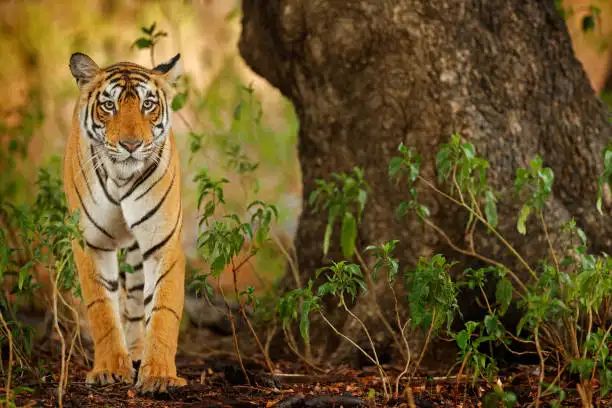
Booking sounds simple until you’re standing at a counter realizing the slot you wanted sold out an hour ago. Here’s how to actually get it right.
Bandipur Tiger Reserve Online Booking Process
Book in advance through the official portal. Jeep safaris especially sell out days ahead during peak season (December–January), so don’t leave this for the morning of your visit.
Keep your ID ready. Indian nationals need Aadhaar, PAN, or a driving license; foreign nationals need a passport, and should ideally book earlier since some slots prioritize advance foreign-national reservations.
Arrive 30 minutes early at the counter with your original ID — not a photo of it.
Book your stay and safari together if you’re using an in-park lodge. This one detail saves you money: booking them separately means paying the park entry fee twice.
Understand the fine print before paying. Safari bookings are non-refundable, and permits are otherwise first-come-first-served, subject to availability.
Check seasonal closures. Safaris are generally paused during the monsoon, roughly June to September.
Jeep Safari Booking Tips
Jeep safari booking for Bandipur Tiger Reserve is the one most people miss out on simply because they book too late. If a jeep safari matters to you — say you’re a photographer who wants control over when the vehicle stops — book it as one of the very first things you plan for the trip, not an afterthought once you’ve sorted travel and stay.
History of Bandipur Tiger Reserve
The short biography of Bandipur Tiger Reserve reads almost like a redemption arc. It started in 1931 as the Venugopala Wildlife Park — a hunting ground set aside by the Maharaja of Mysore, covering just 90 sq km. Hunting grounds and conservation don’t usually share a family tree, but this one eventually did.
In 1973, nearly 800 sq km was added to that original patch, and the whole area was formally declared a tiger reserve as part of Project Tiger’s very first wave of protected zones. Thirteen years later, in 1986, it became part of the Nilgiri Biosphere Reserve, linking its fate to a much larger conservation landscape stretching across Karnataka, Tamil Nadu, and Kerala.
That history isn’t just trivia. It explains why Bandipur today feels less like a fenced-off park and more like a living corridor — because that’s exactly what decades of deliberate expansion were designed to create.
Is Bandipur Worth Visiting? A Realistic Look at Sightings
Here’s something most travel blogs won’t tell you upfront: go to Bandipur expecting a tiger, and you’ll probably leave disappointed. Tigers are solitary, mostly active at dawn, dusk, and night, and extremely good at staying hidden. Most single-safari visitors don’t see one — and that’s true across nearly every tiger reserve in India, not just here.
What you’re genuinely likely to see is a different story. Elephant herds are common enough that your guide might barely react while you’re photographing the moment of your life. Gaur — the Indian bison — graze right beside the safari tracks, and they’re startlingly large in person, often compared to a small car in size. Spotted deer, langur, and peacocks show up on almost every drive.
If you go in with the mindset of “I’m here for the forest, and a tiger would be a bonus,” you’ll have a genuinely great time. Go in expecting a guaranteed tiger photo, and you’re setting yourself up to miss everything else that’s actually in front of you.
Best Time to Visit Bandipur Tiger Reserve
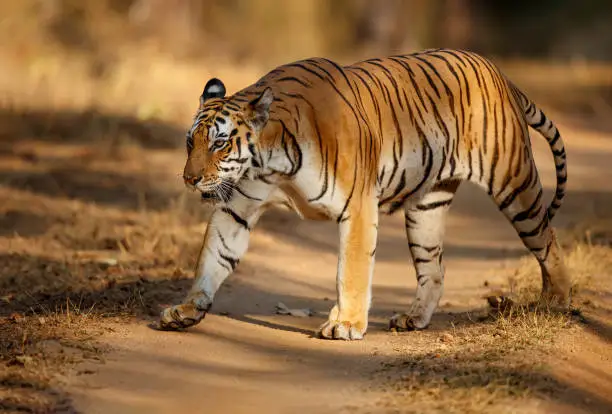
“October to March” is the answer everyone gives, but the months inside that window aren’t interchangeable.
Summer (March–May): Hot and dry, but often genuinely the best stretch for spotting large mammals. As natural water sources shrink, animals gather at the remaining waterholes, making elephants and gaur easier to find. Just plan around the midday heat.
Monsoon (June–September): Safaris are largely suspended. The forest turns a spectacular green if you’re just driving through, but this isn’t the season to build a dedicated wildlife trip around.
Winter (October–February): Peak season — comfortable weather, active wildlife, and by far the best window for birdwatchers thanks to migratory species passing through. Expect bigger crowds and book well ahead.
If sightings matter more to you than comfort, aim for April–May. If birding or general comfort matters more, go December–February.
Best Time to Visit Bandipur Tiger Reserve
How to Reach Bandipur Tiger Reserve
Getting here is straightforward, and the route itself is often part of the appeal.
From Bangalore: About 220 km, roughly 5 to 5.5 hours by road via Mysore. This is the most common route for a weekend trip.
From Mysore: Just 80 km, around 2 hours — the easiest and most popular base for a day visit.
From Coorg: Around 130 km via Gonikoppal and Gundlupet, roughly 3.5 hours.
From Ooty: About 65 km. If you’re doing an Ooty trip, you’ll actually drive straight through Bandipur on the way, so it’s worth building in a stop rather than just passing through.
The closest airport and train station are located in Mysore. One practical note: the highway running through the reserve has restricted night traffic (roughly 9 PM to 6 AM), a rule that followed the death of a well-known elephant hit by a bus in 2018. If you’re planning to drive through after dark, check current restrictions before you go — this has been a point of ongoing debate between transport operators and the forest department.
Bandipur Tiger Reserve Safari Charges and Ticket Price
This is the part that most individuals have come here for, so let us be exact. Prices at Indian forest reserves do get revised periodically, so treat these as a reliable working estimate and confirm on the official booking portal before you pay.
Bandipur Tiger Reserve ticket price (entry fee):
Adults (Indian nationals): ₹250
Children: ₹125
Lorem ipsum dolor sit amet, consectetur adipiscing elit. Ut elit tellus, luctus nec ullamcorper mattis, pulvinar dapibus leo.
| Safari charges, by vehicle type: | |||
|---|---|---|---|
| Safari Type | Approx. Price (Indian Nationals) |
Approx. Price (Foreign Nationals) |
Group Size |
| Bus safari | ₹850 per seat | ₹2,500 per seat | Large group |
| Gypsy/Jeep safari | ₹3,000–4,500 per vehicle | Higher rate applies | Up to 5–6 people |
| Canter (open vehicle) | Similar to bus pricing | Higher rate applies | Medium group |
A DSLR camera with a lens above 200mm usually attracts an additional per-trip charge, so factor that in if photography is your main reason for visiting.
Bandipur Tiger Reserve Safari Timings
Safaris run in two daily windows, split into shorter sessions:
Morning: Roughly 6:30 AM to 9:30 AM
Evening: Roughly 3:30 PM to 6:30 PM
Exact slot timings shift a little by season, so it’s worth checking the day before your visit rather than assuming last month’s schedule still applies.
Bandipur Tiger Reserve Tour Packages
Bandipur Tiger Reserve Tour Packages
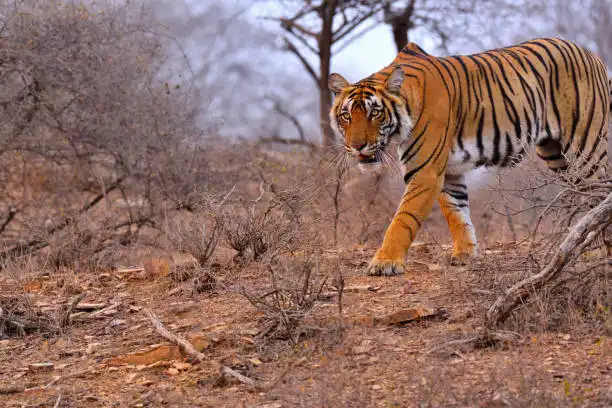
One-day trip: Best as a stopover between Mysore and Ooty. Do the morning safari, grab breakfast nearby, then continue your journey. Fine for a quick taste, but you’re relying on one shot at sightings.
Two-day trip: Morning safari on day one, afternoon visit to Himavad Gopalaswamy Betta — the reserve’s highest point, topped by a temple with genuinely good views over the forest — evening safari, then one more morning safari before heading out. Two safaris meaningfully improve your odds, and this is the structure I’d actually recommend if your schedule allows it.
Longer wildlife circuit: Bandipur pairs naturally with Nagarhole, Mudumalai, and Wayanad. If you’re not up for planning all the logistics yourself, most Bandipur Tiger Reserve tour packages sold by South India travel operators are built around exactly this multi-park loop, running 4–7 days.
Flora and Fauna of Bandipur Tiger Reserve
The reserve’s habitat ranges from dry deciduous forest to moist deciduous patches and open shrubland, shaped by an elevation swing from about 680m to over 1,450m. That range is exactly why the species list here is so long.
Mammals to look for: Bengal tiger, Indian leopard, Asian elephant, gaur, sloth bear, dhole (wild dog), four-horned antelope, spotted deer, sambar, and gray langur.
Reptiles: Spectacled cobra, Indian rock python, mugger crocodile, and monitor lizards — most commonly spotted near water bodies during safaris.
Flora: Teak, rosewood, sandalwood, and Indian kino tree dominate the canopy, alongside bamboo groves and flowering trees like the flame of the forest, which turns parts of the reserve a striking orange in dry season.
Birding in Bandipur Tiger Reserve
If you’re a birder, don’t treat this as a side note — it’s a genuine reason to visit on its own. Bandipur has recorded over 200 bird species, including crested serpent eagles, changeable hawk-eagles, ospreys, and hoopoes, with a strong influx of migratory raptors and kingfishers in winter. Bring binoculars regardless of what safari vehicle you book; a lot of the best birding happens from wherever you’re staying, not just inside the park.
Resorts Near Bandipur Tiger Reserve
Where you stay changes the whole feel of the trip.
In-park forest lodges (like Bandipur Safari Lodge or Jungle Lodges properties): The closest you can get to actually sleeping inside the reserve. Rooms are limited and go fast in winter, so book well ahead.
Gundlupet: About 20 minutes out, and the practical, budget-friendly base for backpackers, student groups, or anyone prioritizing cost over ambience.
Masinagudi and the Tamil Nadu border resorts: A short drive across the state line, with a noticeably stronger concentration of boutique and luxury properties — a better fit if you want a nicer room without giving up proximity to the forest.
Visitor Rules and Safety Tips
Stay inside your vehicle at all times unless your guide says otherwise.
Skip the flash photography — it stresses the animals and isn’t allowed.
Keep noise down. Loud groups are the most common reason a safari ends without a good sighting.
Wear earthy tones like green, brown, or khaki rather than bright colours.
Carry water, sunscreen, and insect repellent, and wear closed, sturdy shoes.
Foreign nationals should carry an actual passport, not a copy, for verification.
| Bandipur vs Nagarhole vs Mudumalai: Quick Comparison | |||
|---|---|---|---|
| Factor | Bandipur | Nagarhole | Mudumalai |
| Tiger sighting odds | Moderate | Slightly higher | Moderate |
| Best for | Convenience, elephants, gaur | Serious wildlife photographers | Extension of an Ooty trip |
| Access | Easiest (near Mysore) | Slightly farther from Mysore | Easiest from Ooty |
| Stay options | Wide range | Fewer, more premium | Growing but limited |
| Ideal for | First-time visitors, families | Repeat wildlife travellers | Combined Nilgiris trip |
FAQs
Is Bandipur Tiger Reserve good for a one-day trip? Yes. It works well as a day trip or a stopover between Mysore and Ooty, though a two-day visit with two safaris gives you noticeably better sightings odds.
What is the Bandipur Tiger Reserve ticket price? Entry is around ₹250 for adults and ₹125 for children, separate from the safari charge, which depends on whether you choose a bus, jeep, or canter.
How do I book a jeep safari at Bandipur? Book online through the official portal as early as possible — jeep safaris are the most limited option and often sell out days in advance during peak season.
Are foreign nationals allowed without special permission? No special permit is required, but foreign visitors should carry a passport, expect slightly higher safari rates, and book ahead of their travel dates.
Is Bandipur better than Nagarhole or Mudumalai? They’re not really rivals — they’re pieces of the same forest corridor. Nagarhole edges ahead for tiger odds, Bandipur wins on convenience and access, and Mudumalai is the natural add-on if you’re heading toward Ooty.
Is Bandipur Tiger Reserve closed during monsoon? Safaris are generally suspended from roughly June to September. Always confirm current status before planning a visit in this window.
What’s the best time to visit Bandipur Tiger Reserve? October to March overall, with April–May being a strong alternative specifically for large-mammal sightings around waterholes.
Bandipur isn’t a place you visit for a guaranteed photograph — it’s a place you visit for the forest itself, and the tiger, if it happens, is the bonus round. Once you go in with that mindset, book your safari early, and pick a base that matches how you actually want to travel, the trip mostly plans itself.
Ready to Plan Your Trip?
Book your Bandipur Tiger Reserve safari on the official portal now, especially if you’re traveling between December and January when jeep slots disappear fast. Still deciding? Compare it against Nagarhole and Mudumalai above, or start narrowing down a resort near the reserve that fits your group and budget.