
Ranthambore Fort Tour
- Home
- Ranthambore Fort Tour
Ranthambore Fort Tour
Ranthambore Fort Tour: The Complete Guide for Every Kind of Traveller
A Ranthambore Fort tour takes you nearly 700 feet above the Aravalli hills, into one of Rajasthan’s oldest and least-talked-about hill forts. It’s built into the core of Ranthambore National Park, so most people plan it around a tiger safari. But this fort earns its own trip. It’s a UNESCO World Heritage Site, part of the Hill Forts of Rajasthan group, and the setting for one of the most dramatic sieges in Rajput history.
This guide covers everything you need before you go: the real story behind the ruins, what a Ranthambore Fort tour package actually costs, how to plan your visit around the right crowd and weather, and which parts of the fort matter most depending on why you’re there.
Key Takeaways
Entry to Ranthambore Fort is free. No safari permit is needed to visit it.
The fort is famous for the 1301 CE siege by Alauddin Khilji, Hammir Dev’s last stand, and the jauhar of Rani Ranga Devi.
Budget 2 to 2.5 hours for a full visit, including a 15-20 minute uphill walk from the parking area.
Weekday mornings are quieter. Saturdays, Sundays, and Wednesdays draw the heaviest crowds.
A Ranthambore Fort tour price mainly covers a guide fee (roughly ₹200-400) or a bundled package if you book through an operator, not an entry ticket.
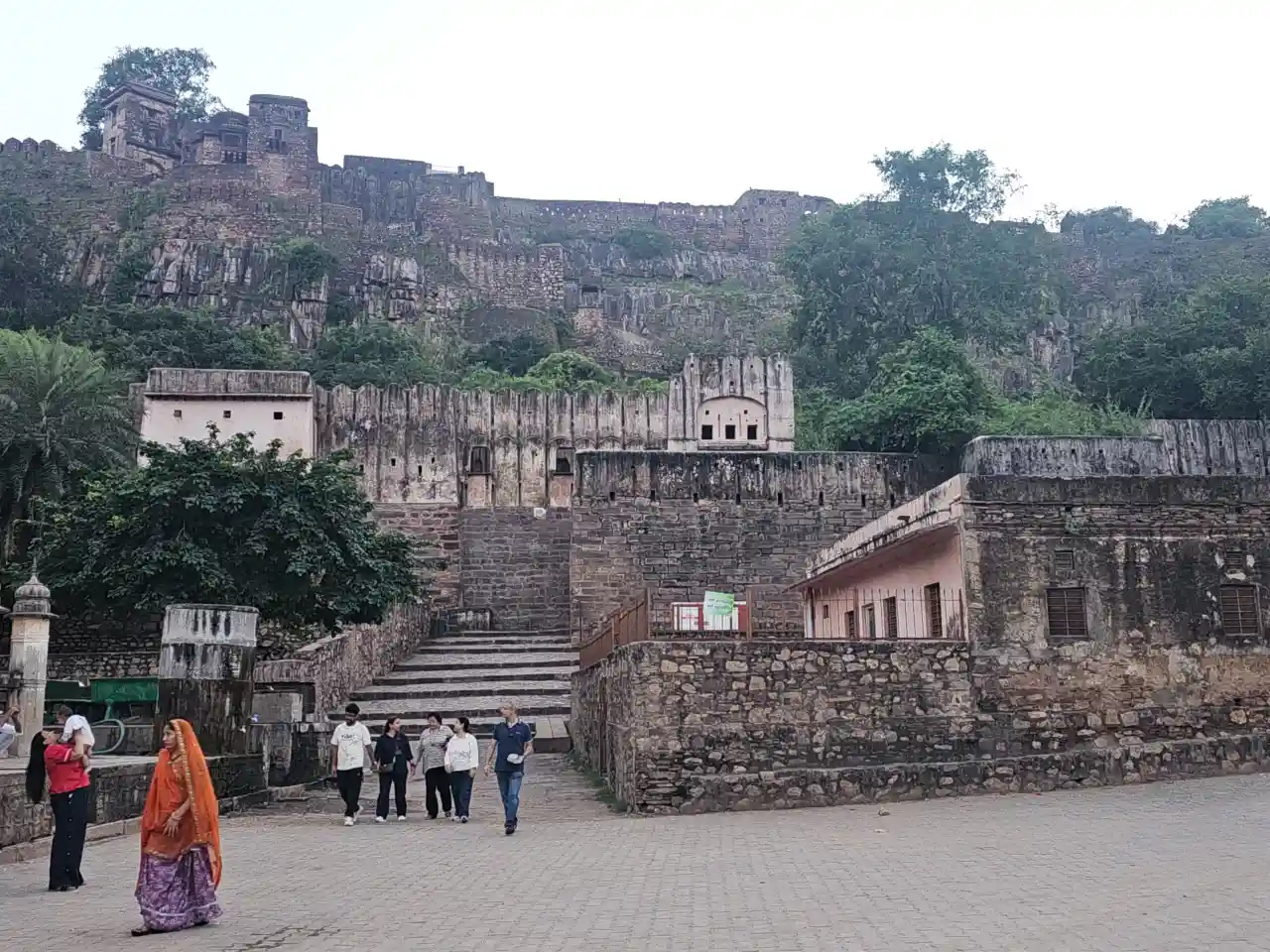
Ranthambore Fort at a Glance
Ranthambore Fort at a Glance
The fort dates back to the 10th century, built under the Chauhan dynasty. It changed hands several times over the centuries, passing between Rajput rulers, the Delhi Sultanate, and eventually the Mughals, before becoming part of Jaipur state.
Today, it sits inside the boundary of Ranthambore National Park, but it isn’t locked behind the same restrictions as the tiger safari zones. You can drive up, park, and walk in without booking anything in advance.
Here’s the quick version:
Location: Situated within Ranthambore National Park, close to Sawai Madhopur, Rajasthan
Built: 10th century, Chauhan dynasty
Designation: UNESCO World Heritage Site (Hill Forts of Rajasthan)
Entry fee: Free
Timings: Sunrise to sunset, daily
Permit required: No
Ranthambore Fort History: The Legend Behind the Siege
To understand Ranthambore Fort history, you have to start with 1301 CE.
That year, Alauddin Khilji, the Delhi Sultan known for expanding his empire through relentless military campaigns, laid siege to the fort. It was ruled at the time by Hammir Dev, a Chauhan king who had refused to hand over refugees who’d sought protection within his walls.
The siege dragged on for months. When defeat became unavoidable, Hammir Dev chose to ride out and die in battle rather than surrender. According to Rajput oral tradition, the women of the court, led by Rani Ranga Devi, performed jauhar, a mass self-immolation, to avoid capture.
It’s worth being precise here: the siege and Hammir Dev’s death are documented history. The finer details of the jauhar come largely through oral tradition and later chronicles, so historians treat some elements as legend layered onto real events.
Either way, this is the story that gives the fort its weight. The temples and courtyards you’ll walk through aren’t just old stone. They’re the setting for all of it, and most guides will point out the specific locations tied to the siege as you go.
Architecture and What You'll Actually See Inside
The fort has seven gates in total, and you’ll pass through several on the way up. Two are worth knowing by name:
Naulakha Pol — one of the original entry gates, reportedly named for its construction cost of nine lakh rupees in old currency.
Ganesh Pol — a later gate leading toward the fort’s most-visited temple.
Once you’re inside, focus your time on these:
Trinetra Ganesh Temple. This is genuinely unusual as pilgrimage sites go. It’s dedicated to a three-eyed form of Ganesh, and local tradition holds it as the place families mail wedding invitations before a ceremony. You’ll see stacks of them at the temple in person.
Ramlakshman Temple and the Jain temples. Quieter and smaller, these reward a slower look if you’re into architecture rather than just photos.
Badal Mahal (“Cloud Palace”), step-wells, and granaries. These show the practical, lived-in side of royal life, not just the ceremonial parts.
Padam Talao and Jogi Mahal, at the base of the fort. This is where you get the classic view: the lake, the fort walls reflected in the water, and often a crocodile sunning on the bank.
If your time is limited, prioritize Trinetra Ganesh and the lake viewpoint over the granaries and step-wells.
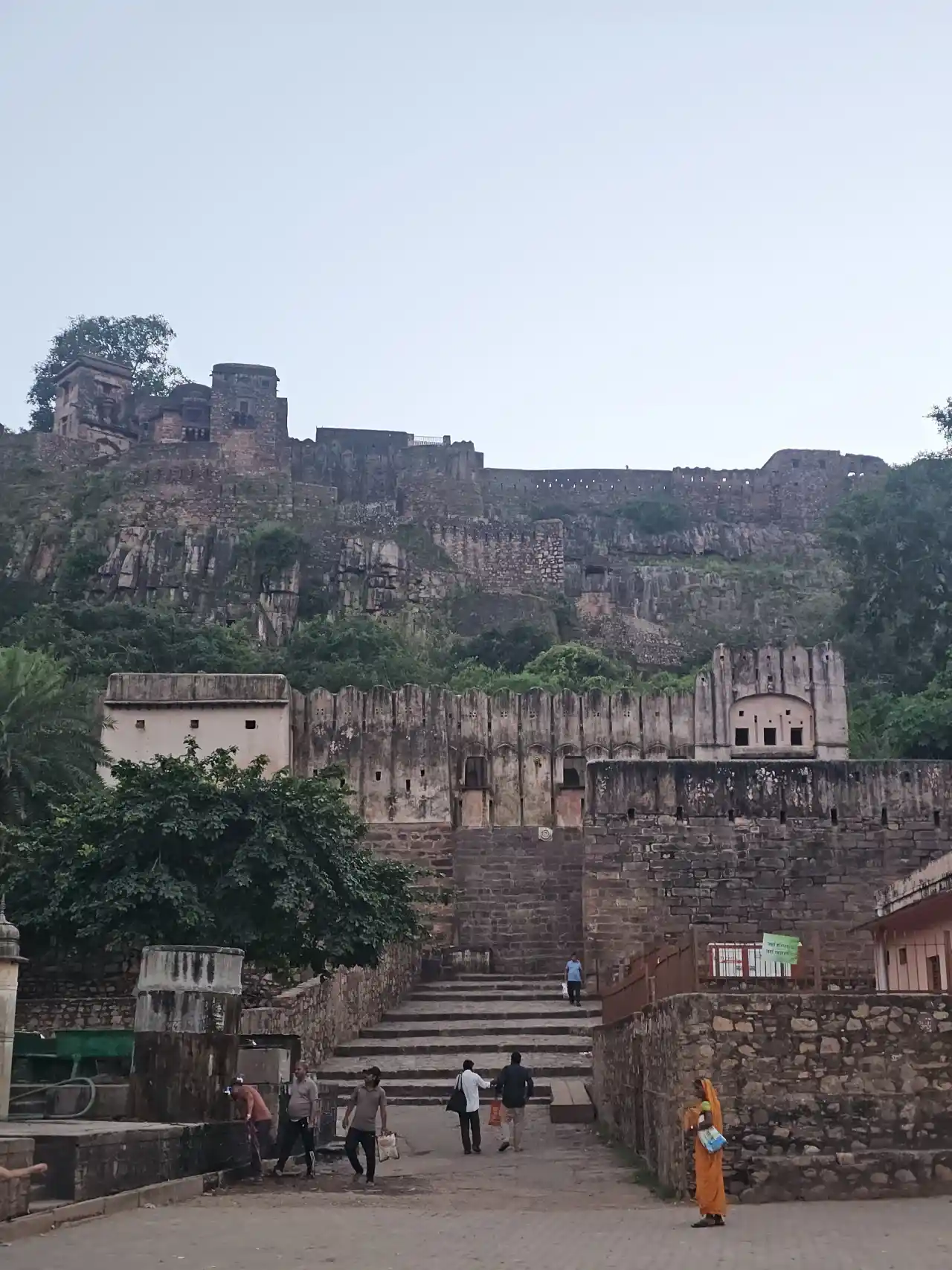
RANTHAMBORE FORT UNESCO WORLD HERITAGE SITE
Planning Your Ranthambore Fort Tour: Price, Tickets, and Logistics
This is the part most guides skip, and it’s exactly what most people planning a Ranthambore Fort tour actually need to know first.
Is there a Ranthambore Fort tour ticket price?
No. There’s no separate ticket price for fort entry, which surprises a lot of first-time visitors because it’s different from the national park’s safari zones, where entry runs on paid, permit-based tickets. The fort itself is free and open to the public.
So what does a Ranthambore Fort tour price actually cover?
Typically, one of two things:
A local guide fee, usually somewhere between ₹200 and ₹400, paid directly at the entrance.
A bundled Ranthambore Fort tour package through a travel operator, which often combines the fort visit with a safari slot and sometimes transport or a stay in Sawai Madhopur.
If you’re visiting independently, budget for the guide fee and nothing else. If you’re booking through an operator, ask exactly what’s included before you pay.
Do you need a permit to enter?
No. Safari permits control access to the tiger reserve’s core and buffer zones. The fort sits within the reserve’s boundary but is separately accessible without any permit.
Can you drive up?
Mostly, yes. A paved road takes vehicles most of the way. From the last parking area, it’s a 15-20 minute walk up a stone path with a moderate incline and some real stairs. It’s manageable, but not flat, so pace yourself if you’re traveling with elderly parents or young kids.
When should you go?
Early morning, right after sunrise, gives you the coolest temperatures and the best light for photos. The last two hours before sunset give you golden-hour views over Padam Talao. Avoid the middle of the day in summer, since there’s minimal shade on the climb.
Which days should you avoid?
Saturdays, Sundays, and Wednesdays see noticeably heavier domestic tourist traffic, partly tied to temple visits at Trinetra Ganesh. A weekday morning is a much quieter experience.
How much time should you budget?
Plan for 2 to 2.5 hours total. That breaks down to roughly 20 minutes for the climb, an hour or so exploring the temples and viewpoints, and time built in for the walk back down.
| Detail | Information |
|---|---|
| Entry Fee | Free |
| Guide Fee (Optional) | ₹200–400 |
| Ticket Required | No |
| Permit Required | No |
| Vehicle Access | Yes, up to the main parking area |
| Climb | 15–20 minutes, moderate incline with stairs |
| Recommended Visit Length | 2–2.5 hours |
| Best Time of Day | Early morning or last 2 hours before sunset |
Independent Visit vs. Guided Tour Package
Deciding between visiting on your own or booking a Ranthambore Fort tour package comes down to time, budget, and how much history you want explained rather than self-discovered.
| Factor | Independent Visit | Guided Tour Package |
|---|---|---|
| Cost | Free entry + optional ₹200–400 guide fee | Varies by operator, often ₹1,000–3,000+ if bundled with safari/transport |
| History and Context | Limited signage on-site | Guide explains the siege, temples, and architecture in detail |
| Flexibility | Full control over pace and timing | Fixed schedule, set by the operator |
| Best For | Repeat visitors, budget travelers, photographers who want flexible timing | First-time visitors, history enthusiasts, families wanting a structured experience |
| Transport | Own arrangement needed | Usually included |
Neither option is objectively better. If you already know the fort’s history and just want photos at your own pace, go independent. If this is your initial visit and you wish to have the complete story detailed on-site, investing in a package is justified by the additional expense.
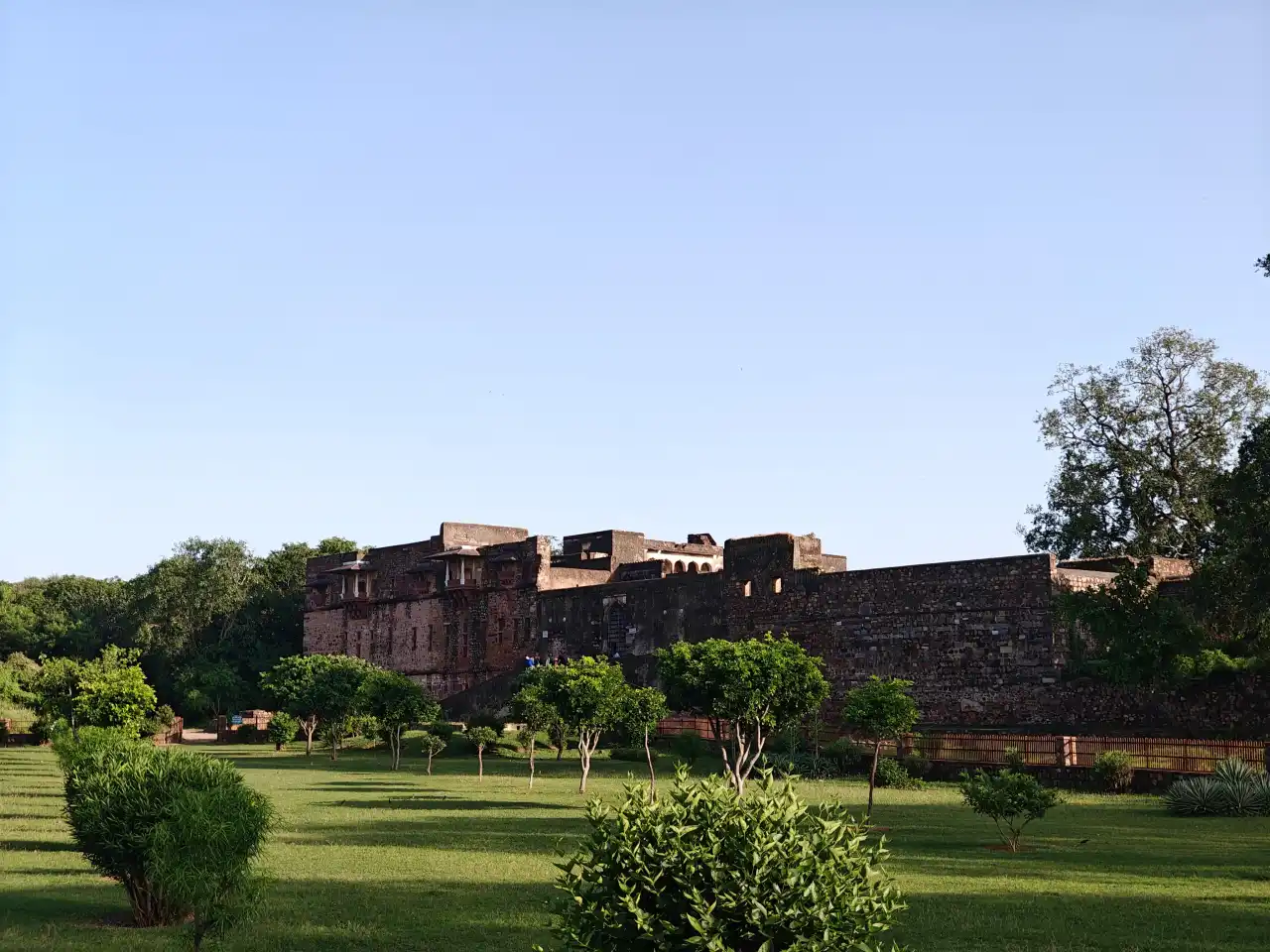
Ranthambore Fort King Palace
Ranthambore Fort and the Tiger Reserve: A Shared Story
Here’s a connection almost nobody explains: the forest surrounding this fort was once the private hunting ground of the Maharajas of Jaipur. That history of protected, royal-controlled land is part of why enough wildlife survived here by the mid-20th century for it to be declared a wildlife sanctuary in 1955, and Subsequently, one of India’s inaugural Project Tiger reserves was established in 1973.
The very walls that were constructed to protect a kingdom now serve as a backdrop for one of India’s most remarkable tiger conservation efforts. It is not unusual for safari-goers to spot a tiger resting at the base of the fortifications, or a leopard moving along the cliffs overlooking Padam Talao. There are few locations where one can explore 800-year-old ruins while simultaneously observing the territory of a wild predator in the same day.
A Ranthambore Fort Tour for Every Type of Traveler
Not everyone visits for the same reason. Here’s how to adjust your visit based on what brought you here.
Wildlife lovers, photographers, and birdwatchers
The fort overlooks lakes and forest that are part of the active tiger reserve. Leopards, and occasionally tigers, have been spotted near the fort walls, particularly in the early morning. Please bring a zoom lens to capture the lake views below, where storks, kingfishers, and crocodiles are frequently seen around Padam Talao. If you’re also doing a safari that day, visit the fort first and save your safari slot for later.
Families and student groups
The climb suits most kids over six or seven, but bring water and take it slow with younger children since shade is limited. For school groups, the siege story makes for genuinely memorable history lessons that go beyond dates and dynasties. Keep an eye on food and shiny objects near the temples, since monkeys are common and opportunistic.
History and culture enthusiasts
Hire a local guide at the entrance instead of relying on signage, which is minimal. A good guide will point out details you’d otherwise miss, like the gate associated with Hammir Dev’s final battle and inscriptions on the Jain temples. Allocate the complete 2.5 hours to this task.
Couples, honeymooners, and luxury travelers
Time your visit for the last two hours before sunset. Crowds thin out, the light over the lake improves dramatically, and the walk down at sunset is one of the more understated romantic experiences in Sawai Madhopur. Several nearby luxury properties can arrange a private guide for a slower, more curated visit.
Foreign and international tourists
Modest dress (covered shoulders and knees) is appreciated at the temples inside the fort, though it isn’t strictly enforced. English-speaking guides are available at the entrance, but availability isn’t guaranteed on busy days, so arrive early. Carry cash in small denominations, since card payment isn’t reliably available on-site.
| Best Time of Year to Visit | |||
|---|---|---|---|
| Season | Weather | Crowd Level | Recommendation |
| Winter (Nov–Feb) | Cool and pleasant, best for the climb | High | Best overall time; book accommodation in advance. |
| Summer (Mar–Jun) | Very hot, often 40°C+ | Lower | Visit early morning only; avoid the midday climb. |
| Monsoon (Jul–Sep) | Humid, occasional heavy rain | Lowest | Fort stays open, but paths can be slippery; check park closure notices, since core zones close seasonally. |
Nearby Attractions to Combine With Your Visit
Padam Talao and Jogi Mahal — the lake and lodge at the fort’s base, easy to combine with your descent.
Ranthambore School of Art — a small gallery of local wildlife art, worth a short stop if you’re curious how the reserve has shaped local culture.
Chamatkar Ji Jain Temple — a quieter pilgrimage site near the fort, good to pair with the temple circuit inside.
A sensible full-day plan: visit the fort first thing in the morning, have lunch back in Sawai Madhopur, and use the afternoon for a safari if you’ve booked one.
FAQs
Is a Ranthambore Fort tour worth doing without a safari? Yes. The fort is a standalone historical and architectural site with its own free entry, and many visitors come purely for the history and views without booking a safari at all.
Is there a Ranthambore Fort tour ticket price? No. Entry is free. There’s no separate ticket, unlike the national park’s safari zones, which charge per-permit fees.
What does a Ranthambore Fort tour price usually include? Most costs come from an optional local guide fee (₹200-400) or a bundled tour package from an operator that includes transport and sometimes a safari slot.
Can you visit the fort without a guide? Yes, but a guide adds real value here since on-site signage is minimal and doesn’t explain the fort’s history.
What duration do you require for the visit? Budget 2 to 2.5 hours, including the climb, exploring the temples, and time at the lake viewpoint.
Is it secure for individuals traveling alone or for senior visitors? Generally yes. It’s a well-visited public site with a paved path and no permit checks. Elderly visitors should plan for a slower pace on the climb and carry water.
What is the optimal time of day for a visit? Early morning for cooler temperatures and better wildlife-spotting chances, or the last two hours before sunset for the best light and thinner crowds.
A Ranthambore Fort tour gives you something most single-purpose attractions can’t: a genuine overlap of history and wildlife in one visit. Whether you’re drawn by the 1301 siege, the temple architecture, or the chance of spotting a leopard near ancient ruins, this fort earns its place on your itinerary independent of any safari plans.
Plan around the practical details covered here (free entry, no permit, a moderate climb, and a realistic 2-2.5 hour visit) and you’ll get far more out of it than most visitors who treat it as a quick stop.
Ready to Plan Your Visit?
Check current Ranthambore Fort tour packages and pricing from local operators, or book a safari to pair with your visit. Either way, aim for an early morning start to beat both the heat and the crowds, and bring a guide along if this is your first time hearing the story of Hammir Dev.