
Ranthambore Fort
- Home
- Tour Package
- Ranthambore Fort
Ranthambore Fort
Ranthambore Fort: The Complete History, Ticket Price & Visitor Guide
Most people book Ranthambore for the tigers. Then they hear about the fort, shrug, and almost skip it because it sounds like “just another old building.”
That would be a mistake, and here’s why: Ranthambore Fort isn’t a side attraction bolted onto the national park. It’s the reason the park exists in its current shape at all. For close to a thousand years, this hill was the thing every major power in northern India wanted — Chauhans, Delhi Sultans, Mughals, the kings of Mewar and Jaipur — and the forest below it stayed wild largely because the fort’s rulers kept it as a hunting reserve, not farmland.
So when your safari guide points up at the fort walls from the jeep, you’re not looking at a backdrop. You’re looking at the reason there’s still a forest there to safari in.
This guide walks you through everything you’d actually want to know before going: the real history, what the entry ticket costs (and why every website quotes a different number), when to go, what’s inside, and specific advice depending on who you’re traveling with.
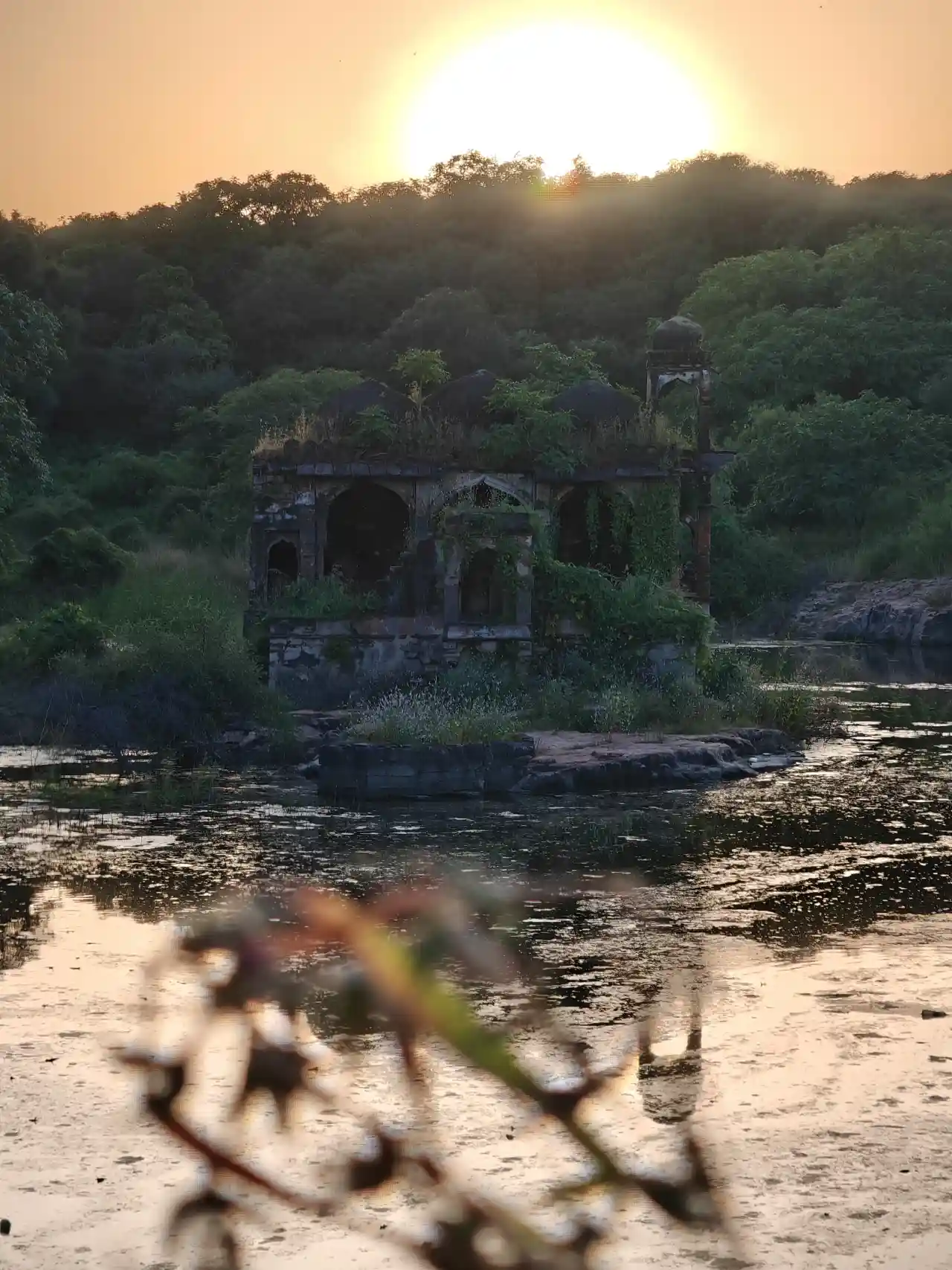
Ranthambore Fort History
Ranthambore Fort History
Strip away the date-list version of this story and you get something much more interesting: Ranthambore Fort is arguably the most fought-over fort in Rajasthan’s history.
It began with the Chauhan (Chahamana) dynasty, somewhere between 944 CE and 1110 CE. Historians still debate exactly which king ordered it built — some credit King Sapaldaksha, others point to King Jayant — but everyone agrees on why this particular hill was chosen. A 700-foot rise surrounded by dense forest is naturally hard to besiege. Armies couldn’t approach quietly, and water tanks inside the fort meant defenders could outlast a long siege.
That defensive advantage is exactly what made it worth capturing, again and again:
1192 – The Delhi Sultanate takes control.
1226 – The Mamluk dynasty captures it.
1235 – The Chauhans retake it.
1259 – A Mamluk sultan finally succeeds on his third attempt, after failing twice before.
1326–1364 and 1433–1468 – The rulers of Mewar hold it, on and off.
1532 – Bahadur Shah seizes it.
1558 – The Mughal Emperor Akbar brings it under Mughal rule, where it remains for roughly two centuries.
The last twist is my favourite part of this story, because it’s more human than the rest. As Mughal authority weakened, Jaipur’s Maharaja Sawai Madho Singh tried negotiating for the fort. When the Mughals initially refused, he didn’t wait around — he fortified a nearby village instead and named it after himself. That village is the town you’ll actually stay in today: Sawai Madhopur. He eventually did secure the fort in 1765, and it remained under Jaipur’s royal family from there on.
If you take a guide up with you (worth every rupee, by the way), ask them to point out where you can still see the layered architecture — Rajput stonework next to later Mughal additions. It’s a physical timeline of everyone who’s ever owned this hill.
Ranthambore Fort History in Hindi
रणथंभौर किले का निर्माण चौहान वंश ने लगभग 10वीं शताब्दी में करवाया था। यह किला लगभग 700 फीट ऊँची पहाड़ी पर स्थित है और सदियों तक दिल्ली सल्तनत, मामलुक वंश, मेवाड़ के शासकों और मुगलों के बीच संघर्ष का केंद्र रहा। वर्ष 1558 में सम्राट अकबर ने इसे मुगल साम्राज्य के अधीन कर लिया, और अंततः 1765 में यह जयपुर के महाराजा सवाई माधो सिंह को सौंप दिया गया। वर्ष 2013 में इसे यूनेस्को विश्व धरोहर स्थल घोषित किया गया, जो “राजस्थान के पहाड़ी किलों” की श्रेणी में शामिल है। किले के भीतर त्रिनेत्र गणेश मंदिर एक प्रमुख आकर्षण है, जहाँ भगवान गणेश की तीन आँखों वाली मूर्ति स्थापित है।
Ranthambore Fort Inside: Architecture & What to See
You’ll enter through one of seven gates, called pols — and each one has its own personality rather than being interchangeable stone archways.
Navlakha Pol – Faces east, and still carries a copper plate inscription.
Suraj Pol – The smallest gate, also on the eastern side.
Ganesh Pol and Sat Pol – Both on the south, with Ganesh Pol being the route most visitors take toward the temple.
Andheri Pol, Hathi Pol, Delhi Pol – Covering the northern, southeastern, and northwestern approaches.
Once you’re through the gates, here’s what’s worth your time:
Bada Mahal, Hammir Court, Dhula Mahal, Phansi Ghar – The old palace and court complex, largely in atmospheric ruin. Hammir Court is where Hammir Dev Chauhan made his final stand against the Delhi Sultanate — worth a pause if you know the story.
Toran Dwar, Mahadeo Chhatri, Sametonki Haveli – Smaller structures most rushed visitors walk straight past. Slow down here.
Jain temples and stepwells – Quiet, less-crowded corners built from the same red Karauli stone used across the fort.
The lookout points – This is the real payoff. The views over Padam Talao lake and Jogi Mahal from the fort’s edges are why photographers keep coming back.
Ranthambore Fort Ticket Price
Here’s something you should know before you Google this yourself: almost every website quotes a different number for the Ranthambore Fort ticket price. Some say ₹0 for adults and ₹0 for children. Some say entry is completely free. A few mention a separate rate for foreign visitors.
This isn’t sloppy reporting on any one site’s part — it’s that fort entry, safari zone charges, and guide fees genuinely get bundled, unbundled, and updated inconsistently across different platforms. Rates also get revised periodically by the relevant state authority.
The practical takeaway: carry small denominations (₹0 in change) just in case there’s a nominal fee at the gate, and confirm the exact current rate with your hotel or a local guide on the morning of your visit. Don’t let an outdated blog post be the reason you’re scrambling for cash at the entrance.
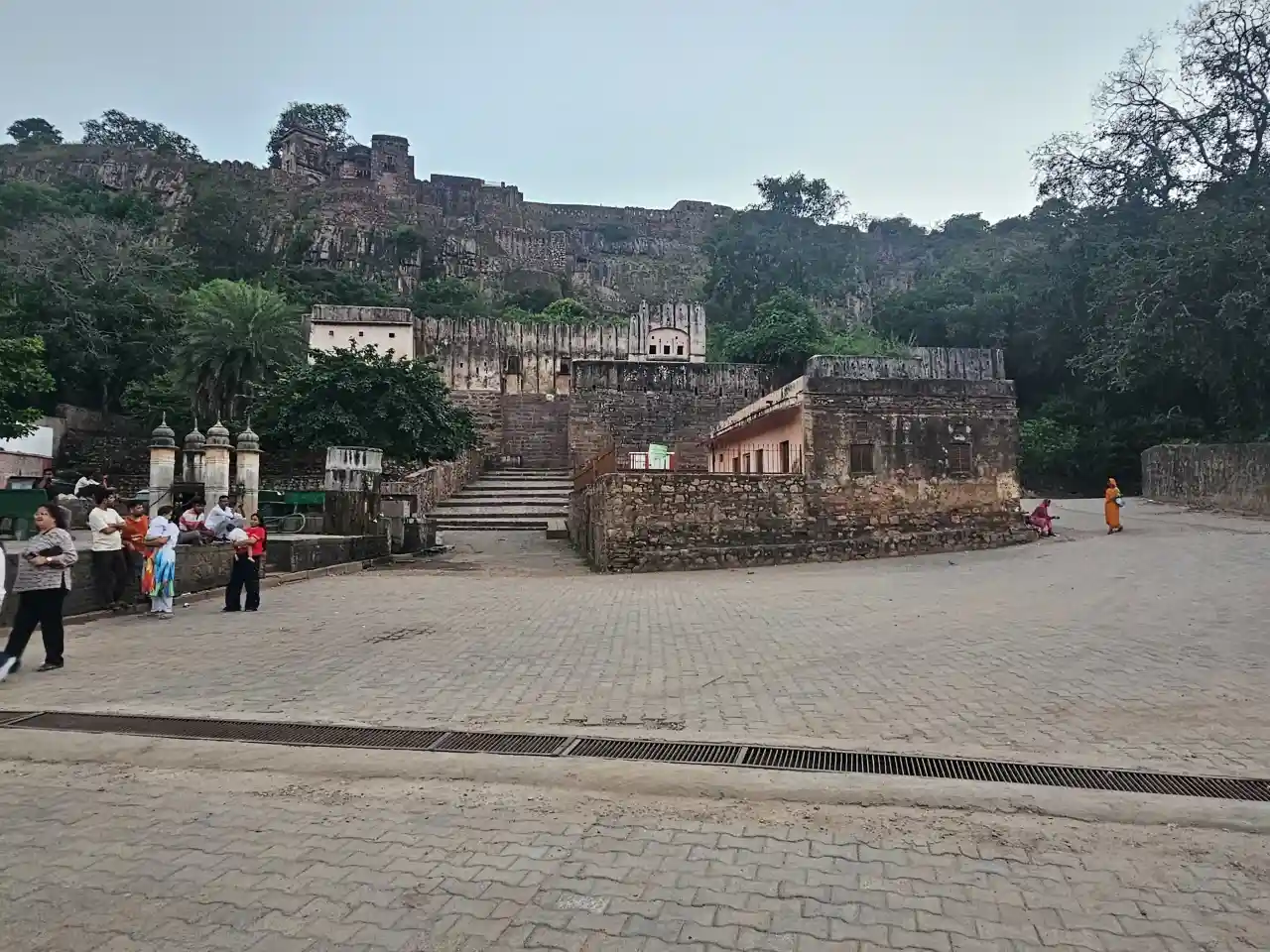
Ranthambore Fort Ticket Price
Who Built Ranthambore Fort?
The short answer: the Chauhan (Chahamana) dynasty, most likely in the 10th or early 12th century CE.
The longer, more honest answer is that historical records don’t fully agree. Some sources credit King Sapaldaksha around 944 CE. Others attribute it to King Jayant in 1110 CE. What’s not in question is the dynasty — this was Chauhan territory before the Delhi Sultanate, Mamluks, Mewar rulers, Mughals, and finally Jaipur’s royal family each took their turn controlling it.
Ranthambore Fort Ganesh Temple
The Trinetra Ganesh Temple is the fort’s biggest draw, and it earns that reputation.
What makes it different from any other Ganesh temple in India: the idol here is depicted with a third eye — hence “Trinetra,” meaning three-eyed. Devotees consider it a wish-fulfilling shrine, and there’s a tradition tied to it that genuinely surprises first-time visitors: families across India mail wedding invitations directly to the temple, believing Lord Ganesh should be personally “invited” to every marriage.
A few practical notes if you’re visiting:
Ganesh Chaturthi brings serious crowds — plan for it or plan around it.
Any other day, it’s a calm, contemplative stop rather than a tourist scrum.
Dress modestly — shoulders and knees covered is the safe default near the temple.
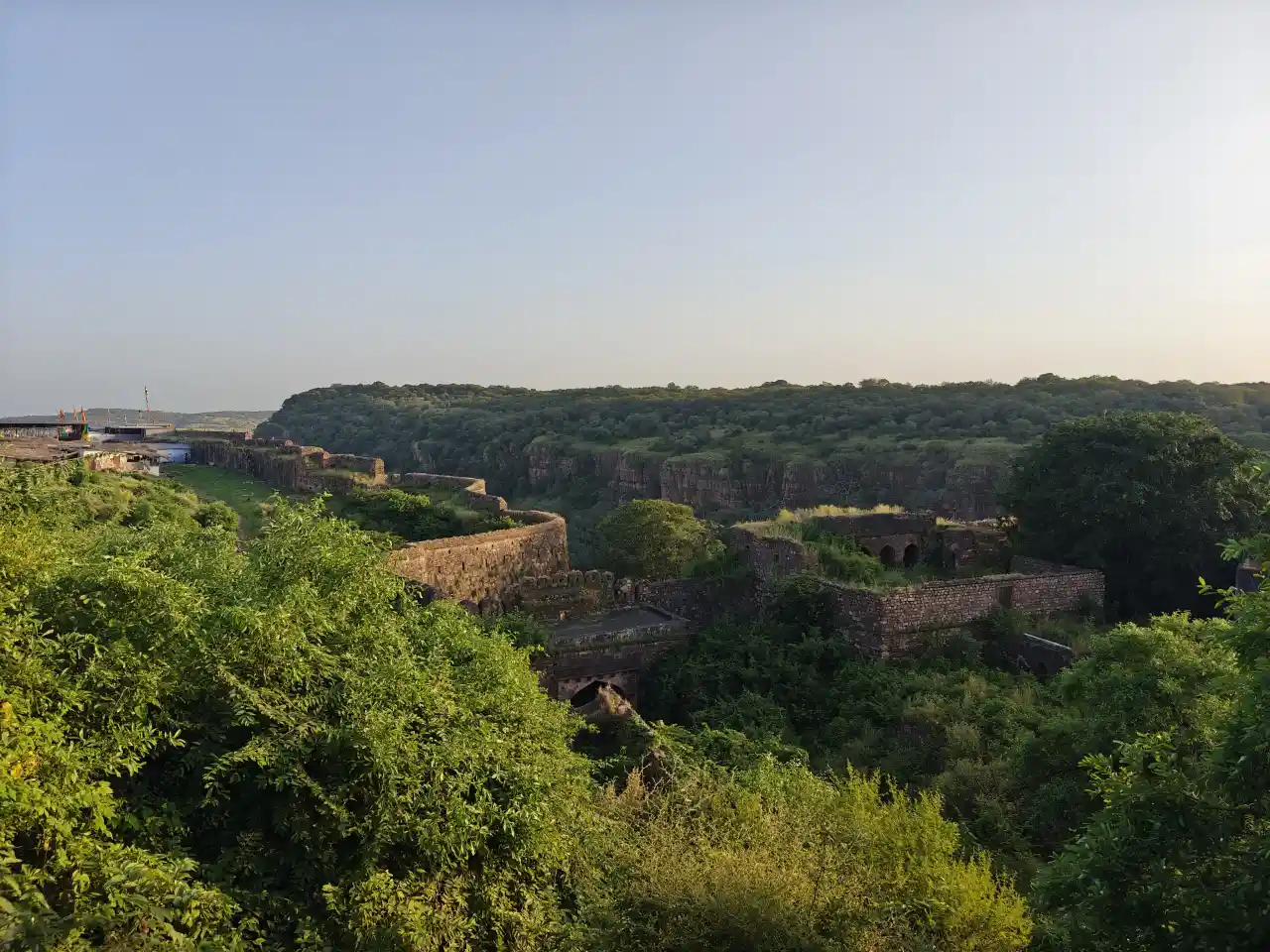
Ranthambore Fort Timings
Ranthambore Fort Timings
The fort is generally open from 6:00 AM to 6:00 PM, though some sources describe it as sunrise-to-sunset access — so build in a buffer and aim to arrive no later than 3:30–4:00 PM if you want to explore without rushing to beat closing time.
An often overlooked detail is that the fort tends to remain open for a longer duration throughout the year compared to the safari zones. Most of Ranthambore’s safari zones close during monsoon season (roughly July to September), but the fort can remain a viable visit outside that window too — useful if your trip dates don’t line up with peak safari season.
Within a single day, timing changes the entire experience:
Early morning – Best light for photography, cooler temperatures, fewer crowds.
Midday – Avoid if possible; minimal shade on the climb makes this the least comfortable window.
Late afternoon – A strong second choice, especially for sunset views from the western lookout points.
Ranthambore Fort Tiger Sightings — What's Realistic
Let’s set expectations honestly, because this is where a lot of visitors get let down.
Yes, tigers occasionally move through the forest visible from the fort’s ramparts. No, this isn’t something to plan your visit around. The fort sits within the national park’s boundary, and its forested surroundings are genuinely part of the tiger habitat — but a sighting from the fort is a bonus, not a guarantee, and nowhere near as likely as a sighting on an actual safari drive.
If seeing a tiger is your priority, that’s what your safari slots are for. Visit the fort for the history, the architecture, and the views — and treat any wildlife glimpse as a pleasant surprise on top of an already worthwhile trip.
How to Combine the Fort with a Safari in One Day
A realistic plan looks like this:
Morning safari (roughly 6:30–10:00 AM)
Breakfast and a short rest
Fort visit from around 12:00–3:00 PM — this uses the warmer midday hours productively instead of “wasting” prime tiger-sighting light on a walk
Afternoon safari, if you’ve booked a second one
Give the fort itself 2–3 hours once you factor in the climb, the temple stop, and time to actually enjoy the lookout points. Don’t try to squeeze it into a rushed 45-minute gap.
| Ranthambore Fort vs. Other Rajasthan Hill Forts | |||
|---|---|---|---|
| If you're deciding whether Ranthambore Fort fits into a wider Rajasthan trip, here's how it stacks up against the state's other major UNESCO-listed hill forts. | |||
| Fort | Best Known For | Entry Effort | Pairs Well With |
| Ranthambore Fort | Tiger-habitat setting, Trinetra Ganesh Temple | ~600 steps, moderate climb | Tiger safari |
| Jaisalmer Fort | "Living fort" with residents still inside | Easy, gradual walk | Desert/Thar experiences |
| Chittorgarh Fort | Largest fort in India, Rajput valor legends | Large area, mostly flat driving/walking | Historical deep-dives |
| Kumbhalgarh Fort | Second-longest wall in the world after the Great Wall of China | Extensive walking across ramparts | Wildlife sanctuary visits |
Ranthambore’s distinct edge is simple: it’s the only major Rajasthan fort where your visit realistically overlaps with a wildlife safari on the same trip.
How to Reach Ranthambore Fort
Sawai Madhopur is your starting point — the nearest railhead, well connected to Jaipur and Delhi, and roughly 20–30 minutes by car from the base of the fort.
From there, a vehicle drops you at the bottom of the hill, and the rest is on foot. There’s no road access to the summit, so you’re looking at:
Around 600 stone steps, commonly cited across visitor accounts
15–30 minutes of climbing, depending on fitness and pace
Uneven terrain in places, with limited shade for most of the route
If you’re travelling with elderly family members or anyone with mobility concerns, plan for this honestly. It’s a manageable climb for most reasonably fit adults, but it is genuinely a climb — not a flat walk-through.
What to Pack for the Climb
Water — more than you think, especially outside the October–March window
Closed, sturdy shoes — the steps can be uneven and slightly slippery
Sun protection — a hat or scarf, since shade is inconsistent
A light jacket if visiting in winter mornings, which can be surprisingly cold before the sun’s fully up
Ranthambore Fort Reviews — What Visitors Actually Say
Across travel forums and review platforms, a few themes come up again and again:
Most visitors call it worth the climb, especially for the views over Padam Talao.
A recurring tip: hire a local guide, since the fort has minimal signage and the history doesn’t come through from a self-guided walk alone.
Common complaint: the midday heat and limited shade, which is exactly why the early-morning or late-afternoon timing advice above matters.
Frequent praise for the Trinetra Ganesh Temple as an unexpectedly moving stop, even for visitors who came purely for the history or the safari.
The consistent thread: people who pair the fort with their safari day rarely regret it, and the ones who skip it often mention wishing they hadn’t.
FAQs About Ranthambore Fort
Is Ranthambore Fort free to enter? Reports vary. Some sources cite a small fee (around ₹15 for adults, ₹10 for children); others describe it as free. Confirm the current rate locally, since online sources are inconsistent.
Who built Ranthambore Fort? The Chauhan (Chahamana) dynasty, likely between 944 CE and 1110 CE, though the exact king credited with construction is debated among historians.
How many steps does the Ranthambore Fort climb involve? Around 600 steps, taking roughly 15–30 minutes depending on your pace and fitness level.
Can you see tigers from Ranthambore Fort? Occasionally, at a distance — but it’s not guaranteed and shouldn’t be the reason you visit. Treat it as a possible bonus, not the main event.
What are Ranthambore Fort’s timings? Generally 6:00 AM to 6:00 PM, though some sources describe sunrise-to-sunset access. Arrive by 3:30–4:00 PM to explore comfortably.
Is Ranthambore Fort worth visiting? Yes. It combines genuine historical depth, distinctive architecture, and panoramic views, and it fits naturally alongside a Ranthambore safari without requiring a separate trip.
Is the fort suitable for senior citizens or young children? It’s manageable for most people in reasonable health, but the uneven steps, limited shade, and lack of vehicle access to the summit are worth planning around carefully for anyone with mobility limitations.
Ranthambore Fort isn’t a detour from your tiger safari — it’s the backstory. Once you’ve climbed those 600 steps and stood at a lookout point watching the same forest your safari jeep drove through that morning, the whole trip clicks into place differently. You’re not just visiting a national park anymore. You’re standing on the reason it stayed wild.
Whether you’re chasing history, a good photograph, a quiet temple moment, or just a fuller version of your Rajasthan trip, the fort delivers on all of it — as long as you time your visit right and know what to expect on the climb.
Ready to Plan Your Visit?
Check current safari slot availability and build a day plan that pairs your fort visit with the right safari timing — or reach out for a custom Ranthambore itinerary that gets both right without the guesswork.