
Amreshwar Mahadev Waterfall
- Home
- Tour Package
- Amreshwar Mahadev Waterfall
Amreshwar Mahadev Temple, Sawai Madhopur
Amreshwar Mahadev Temple, Sawai Madhopur: The Complete Visitor Guide
There’s a stretch of road between Sawai Madhopur and Ranthambore National Park where every vehicle slows down for the same reason: potholes, not sightseeing. Most people driving through don’t even notice the narrow forest path branching off into the trees. That path leads to Amreshwar Mahadev Temple — a Shiva shrine that’s been sitting quietly in these hills for around 1,200 years, mostly ignored by the safari crowds rushing past it.
That’s a shame, because it’s one of the few places near Ranthambore where you get history, nature, and a genuine sense of stillness in one stop — without an entry fee, a ticket counter, or a queue.
This guide pulls together what you actually need before you go: how old the temple really is, when to time your visit around the waterfall, what the walk in feels like, and what past visitors have said about it — good and bad.
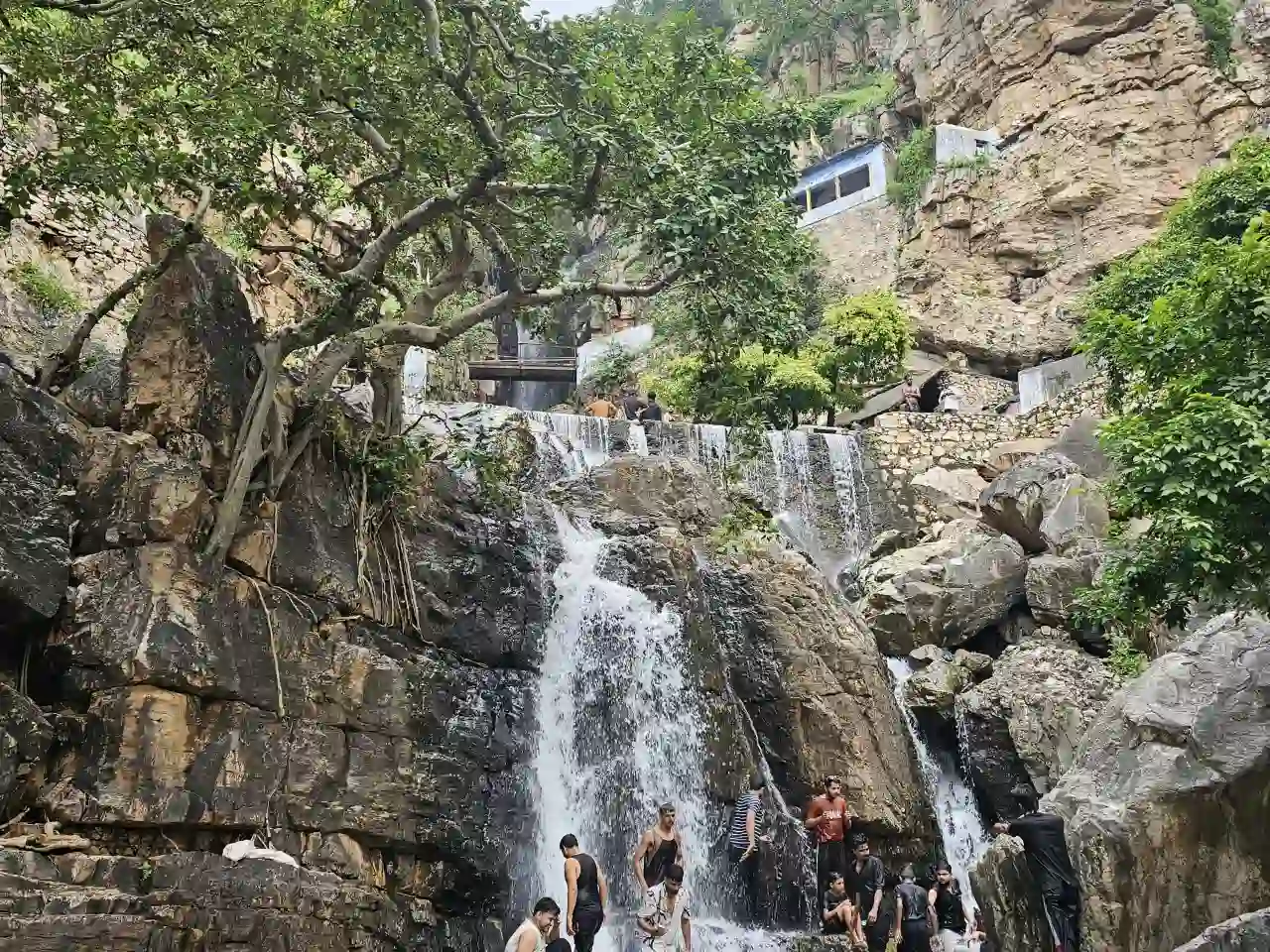
Amreshwar Mahadev Temple Sawai Madhopur
Amreshwar Mahadev Temple, Sawai Madhopur: What It Is
Amreshwar Mahadev Temple sits inside a forested gorge just off the main road connecting Sawai Madhopur town to Ranthambore National Park. It’s dedicated to Lord Shiva, and locally, “Mahadev” and “Amreshwar” are used interchangeably for the deity here — you’ll also see it spelled Amareshwar Mahadeo in older references.
One clarification worth making early, because it confuses a lot of first-time searchers: this is not the Omkareshwar-Amareshwar Jyotirlinga in Madhya Pradesh, one of the twelve major Jyotirlingas in Hindu tradition. That’s a much larger, nationally significant pilgrimage site hundreds of kilometers away. This Amreshwar Mahadev is a smaller, regional shrine specific to Sawai Madhopur — no less meaningful to the people who visit it, just a different scale entirely.
What makes it worth the trip isn’t grandeur. It’s the setting — a cave-style sanctum built into rock, surrounded by the same forest that shelters Ranthambore’s tigers a few kilometers further down the road.
Amreshwar Mahadev Temple History
The temple’s age is usually put at around 1,200 years, placing its origins in roughly the same era as the earliest construction at nearby Ranthambore Fort. This temple is considered old by most criteria — however, the more intriguing aspect of its history lies not in its age, but in the gap that exists.
For a long stretch of time, this part of the forest was dense enough that the shrine simply wasn’t reachable. There was no real path, no maintained access — the temple effectively disappeared from regular use. Local accounts describe it being rediscovered a few hundred years later by villagers moving through the forest, long after regular worship at the site had lapsed.
That’s different from most old temples, which tend to have continuous records of worship and upkeep. Amreshwar Mahadev has a documented silence in the middle of its history, and that’s part of what gives it a slightly different character locally — less “ancient monument,” more “forest secret that got found again.”
Architecturally, it reflects that story. The sanctum is cut into the rock face rather than built up from the ground, which is typical of older hillside Shiva shrines across this part of Rajasthan. There’s no elaborate carving or towering shikhara here — the temple is modest by design, and the forest setting does most of the visual work.
Amreshwar Mahadev Temple, Ranthambore: Location and How to Reach
The temple’s proximity to Ranthambore National Park is really its defining feature — most visitors aren’t coming for the temple alone, they’re folding it into a Ranthambore trip.
Distance and access points:
From Sawai Madhopur railway station: roughly 6–7 km
From the Ranthambore National Park entry gate: roughly 3 km
Located directly along the main road used for safari transfers, so you’ll pass close to it regardless
Getting there:
Autos and taxis from Sawai Madhopur town run this route constantly, since it’s the same road used for park transfers. If you’re taking an auto specifically for the temple, say so clearly — drivers default to assuming you mean the park gate, and the turn-offs are easy to miss from a moving vehicle.
If you’re self-driving, you’ll spot a marked turn from the main Ranthambore road. Parking is informal — a cleared patch of ground near the path entrance, not a proper lot.
The walk in: This is the part most listings skip entirely. From the parking area, it’s about a 1 km walk through forest terrain to reach the temple. Part of it is a defined path; part of it is loose rock and uneven ground, especially in the last few hundred meters. Closed shoes make a real difference here — flip-flops technically work, but you’ll regret them on the rockier patches.
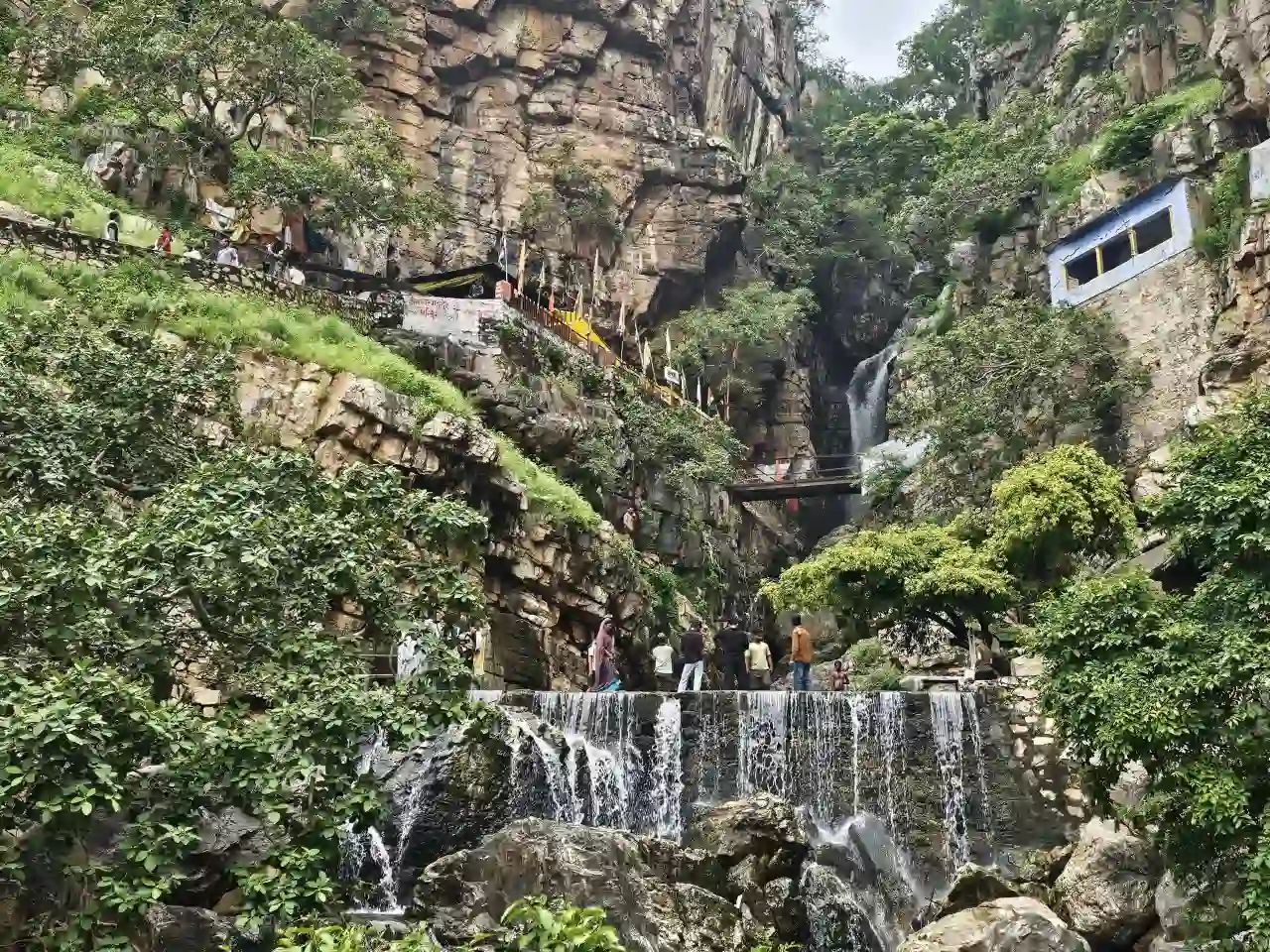
How To Reach Amreshwar Mahadev Temple
Amreshwar Mahadev Waterfall
If there’s one thing that turns casual visitors into repeat visitors, it’s this. During monsoon, seasonal water flow creates a natural cascade near the shrine — locally described as a kind of natural jal abhishek, a continuous water offering falling directly over the sacred space. It’s the single most photographed feature of the entire site, and it’s genuinely different from typical temple photography — more waterfall-in-the-forest than temple-courtyard shot.
A few practical notes if the waterfall is your main reason for visiting:
Timing matters: July through September is the reliable window. Outside monsoon, the water source can reduce significantly or dry up altogether.
The path gets slippery: Wet rock plus loose stone is a real combination here — grippy shoes aren’t optional during this season.
It draws crowds on weekends: If you want quieter waterfall photography, a monsoon weekday morning is your best bet.
Combine it with birdwatching: Monsoon greenery in this forest stretch tends to bring out more birdlife than the drier months, so it’s worth carrying binoculars even if you’re primarily there for the temple.
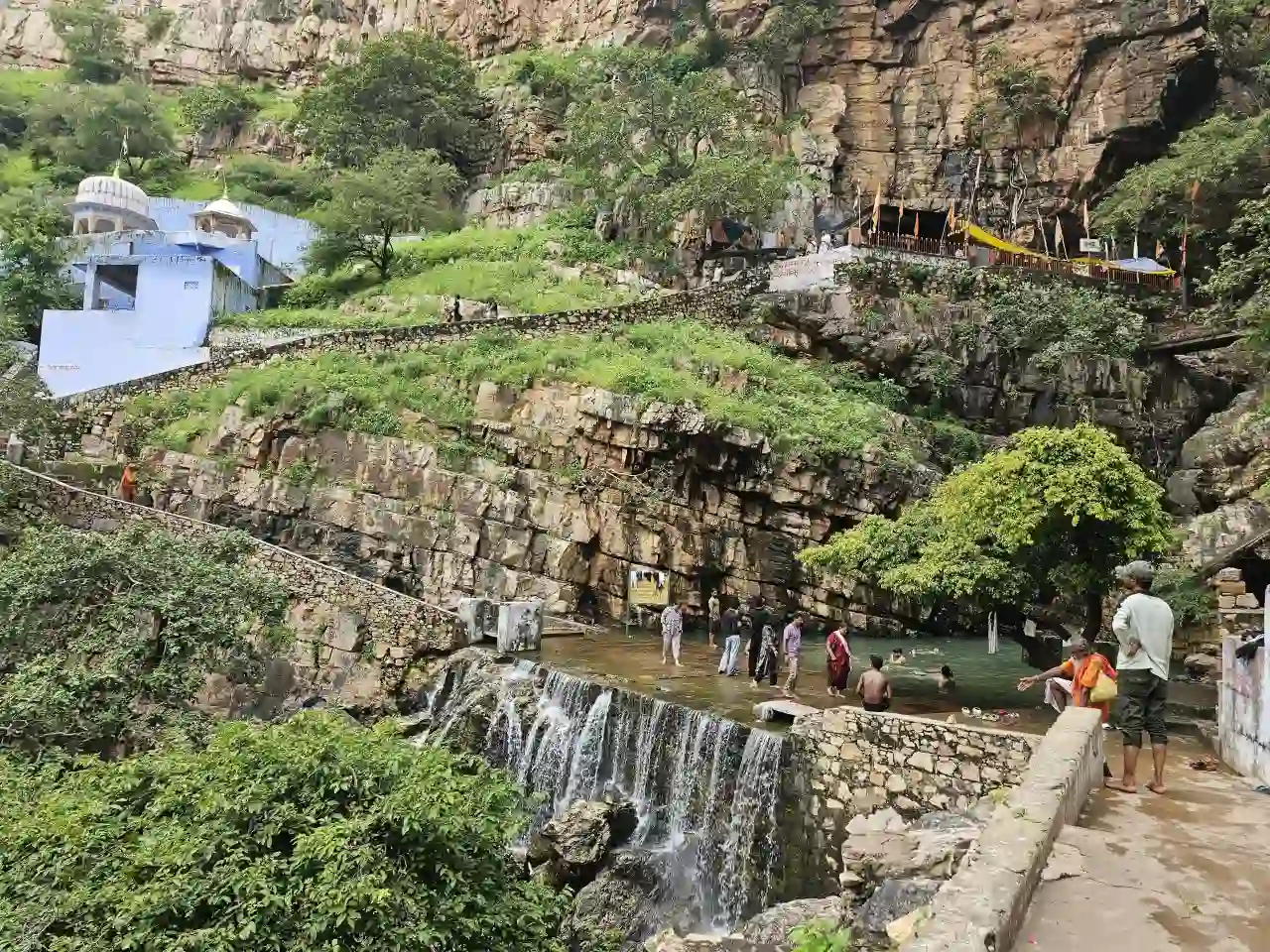
Amreshwar Mahadev Temple Timings
Amreshwar Mahadev Temple Timings
There’s no formal gate, ticket counter, or fixed closing time here — this is an active, informal place of worship rather than a monument with visiting hours.
General timings: Open through daylight hours; most visitors arrive between early morning and late afternoon
Entry fee: None
Best visiting window: Early morning (cooler temperatures, better light, fewer people) or late afternoon (softer light for photography)
Mahashivratri: The one exception to “no fixed schedule” — expect a full-day mela (fair) followed by an overnight jagaran, a vigil where devotees stay awake in worship
Shravan month (typically July–August): Higher-than-usual footfall, in line with most Shiva temples across India during this period
When organizing a Ranthambore safari, the temple’s absence of set hours is advantageous — you can easily fit it in either before or after your safari session without the concern of it being closed.
Amreshwar Mahadev Temple Reviews: What Visitors Actually Say
Rather than guessing what to expect, it helps to know what people who’ve already made the trip tend to say. A few consistent themes come up again and again in visitor feedback:
The approach road is rough. Multiple visitors mention potholes on the drive in and uneven footing on the walk up. Nobody describes it as a dealbreaker, but it’s mentioned often enough to set expectations correctly.
It feels genuinely peaceful. A common thread is how quiet and untouched the site feels compared to more commercialized temples — several describe it as a quietly moving or spiritually calming experience rather than a typical tourist stop.
Monsoon is the standout season. Reviewers who visited during the rains consistently call out the waterfall as the highlight, sometimes describing it as one of the more unexpectedly beautiful natural sights near Ranthambore.
It’s a hidden gem, not a headline attraction. Several reviews note that it isn’t well known even among people who’ve visited Ranthambore multiple times — which, depending on your travel style, is either a selling point or a reason it gets skipped.
The overall pattern: modest expectations on infrastructure, high marks on atmosphere and setting.
| Comparison: Amreshwar Mahadev Temple vs. Other Sawai Madhopur Attractions | ||||
|---|---|---|---|---|
| If you're deciding how to split your time in Sawai Madhopur, here's how Amreshwar Mahadev stacks up against the other major nearby sites: | ||||
| Attraction | Type | Distance from Town | Time Needed | Best For |
| Amreshwar Mahadev Temple | Forest cave shrine | ~6–7 km | 1–1.5 hrs | Nature lovers, photographers, quiet reflection |
| Ranthambore Fort | Historic hilltop fort | ~10 km (inside park) | 2–3 hrs | History enthusiasts, families, first-time visitors |
| Ganesh Temple (inside the Fort) | Active pilgrimage site | ~10 km | 30–45 mins | Devotees, cultural travelers |
| Chamatkar Jain Temple | Jain pilgrimage site | ~3 km | 30–45 mins | Jain pilgrims, culture enthusiasts |
| Kala Gaura Bhairav Temple | Local Shiva-associated shrine | ~5 km | 30 mins | Quick devotional stop |
Amreshwar Mahadev is the clear pick if you want nature and solitude over a polished monument — everything else on this list has more infrastructure and more people.
Who This Temple Is Best For
Wildlife photographers and birdwatchers: The forest walk itself is often more rewarding than the destination, especially early morning
Couples and honeymoon travellers: A quiet, low-key alternative to the fort’s crowds
History and culture enthusiasts: The rock-cut architecture is worth comparing against Ranthambore Fort’s construction style
Adventure-minded travellers: A short, satisfying forest walk, especially rewarding in monsoon
Families with older kids: Manageable terrain for reasonably fit visitors, though not stroller- or wheelchair-friendly
Foreign and international tourists: A more authentic, unpolished glimpse of regional worship — just go with a local driver or guide, since there’s no English signage on site
Practical Tips Before You Go
Wear closed, grippy footwear — this matters more than almost any other single tip on this list
Carry your own water; there are no shops or stalls at the site itself.
The mobile network gets patchy on the forest path, so save your route offline beforehand.
Stay on the marked path — you’re in terrain adjacent to Ranthambore’s tiger reserve buffer zone, and monkeys are common around the shrine
Visit in daylight hours; there’s no lighting once the sun goes down
If devotional significance matters to you, plan around Shravan month or Mahashivratri; if you’d rather have the place to yourself, avoid both
Frequently Asked Questions
Where is Amreshwar Mahadev Temple located? It’s located just off the main road connecting Sawai Madhopur town to Ranthambore National Park, roughly 6–7 km from the railway station.
What are the Amreshwar Mahadev Temple timings? There’s no fixed opening or closing time — it’s open through daylight hours. Early morning and late afternoon are the most comfortable windows to visit.
Is there an entry fee for Amreshwar Mahadev Temple? No, entry is completely free.
Is Amreshwar Mahadev Temple the same as the Omkareshwar Jyotirlinga? No. That’s a separate, major pilgrimage site in Madhya Pradesh. This is a distinct, smaller regional shrine near Sawai Madhopur, Rajasthan.
Can I combine a visit with a Ranthambore safari? Yes — the temple sits directly along the road used for park transfers, making it easy to fit in before or after a safari session.
When does the Amreshwar Mahadev waterfall flow? Typically during monsoon, from around July to September, when seasonal water creates a natural cascade near the shrine.
Is the walk to the temple difficult? It’s a short walk, roughly 1 km, but the terrain is uneven and rocky in places. Manageable for most people at a relaxed pace, though not suited to strollers or wheelchairs.
Are reviews of Amreshwar Mahadev Temple generally positive? Yes — most visitor feedback highlights the peaceful setting and the monsoon waterfall, with the main recurring complaint being the rough approach road.
Amreshwar Mahadev Temple isn’t going to out-shine a tiger sighting, and it’s not trying to. What it offers is something Ranthambore’s bigger attractions don’t: a short walk into real forest, ending at a shrine that’s been quietly standing there for over a thousand years, largely undisturbed by tourism. If you’ve got a free afternoon between safaris, it’s one of the easiest ways to see an entirely different, quieter side of Sawai Madhopur.
Planning a Ranthambore trip and want to fit this in properly? Build it into your itinerary alongside a safari slot and Ranthambore Fort for a full day that covers wildlife, history, and this hidden temple in one loop — and if you’ve already made the trip yourself, share what you saw. Real, recent visitor accounts are exactly what future travelers need before they head out.